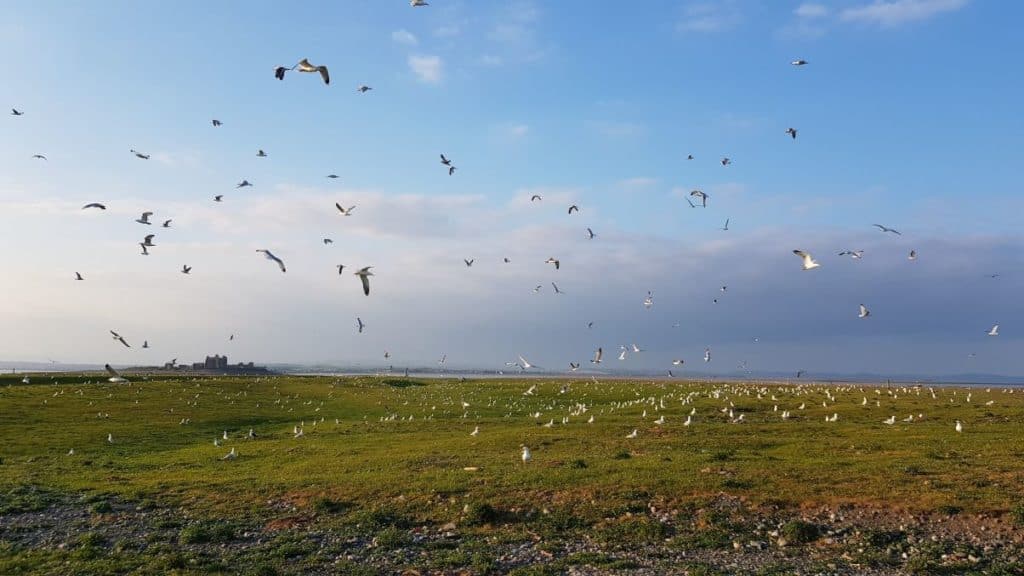
Gull chicks have fledged for the first time in six years at nature reserve near Barrow thanks to a new fox and badger-proof fence.
Over 100 lesser black-backed and herring gull chicks have been recorded at South Walney Nature Reserve this summer.
Cumbria Wildlife Trust, which manages the site, said it was a dramatic turnaround in the fortunes of this gull colony.
South Walney Nature Reserve once hosted the largest colony in Europe, and in the 1970s had an amazing 45,000 pairs of lesser black-backed and herring gulls.
However, numbers have declined in recent years, to just 449 pairs this year.
Sarah Dalrymple, South Walney Nature Reserve warden for Cumbria Wildlife Trust, said: “The numbers have been in decline since the local rubbish tip shut in the 1990s and since at least 2015 not a single chick has fledged.
“Another reason for the decline is predation – foxes only arrived on Walney Island in the 1990s and badgers about seven years ago.
“This winter, thanks to funders including British Birds Charitable Trust, Tesco Community Grants and Natural England, and with support from Life on the Edge and Windcluster, we built a permanent predator-proof fence around the colony.
“We then had a nervous wait to see if the eggs would hatch. Would the chicks survive? Since 2017 no chicks had survived past the first week of July.
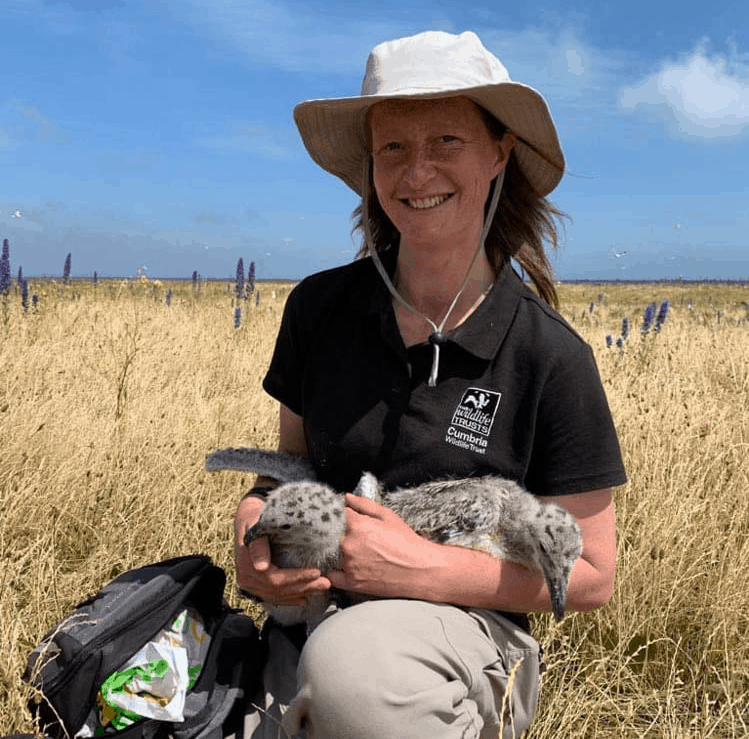
“But a couple of weeks ago, we had brilliant news: we found over 100 big, healthy chicks!
“Trained experts from Natural England and British Trust for Ornithology put coloured leg rings on the chicks so we can find out where they go once they leave here.
“The best news of all was last week, we undertook a colony check and watched the first gull chicks take flight, the first to fledge at the nature reserve since 2015.”