A Cumbrian MP has called for a more resilient electricity network to be introduced following the devastating impact of Storm Arwen.
Simon Fell, MP for Barrow and Furness, said power companies and the industry regular Ofgem need to learn lessons after the storm, which began on November 26.
Thousands of people were left without power for several days after the storm.
He said: “The initial days after the storm were extremely cold, and below freezing for a period of time. Many of these rural properties had no heat, water or means of sanitation as a result of the power cuts. Many also had no mobile signal due to storm damage to telephone lines, and mobile network masts going down.
“Lots of residents reported to me that they had no communication from their power company, and were left with little to no idea when power would be restored.
“Meanwhile, homes without a gas supply, or whose water system relied on electricity had even more difficulty. Broughton-in-Furness was without water or power for 18 hours as the water pump serving most of the village relies on electricity. This resulted in no heat, light, water or sanitation facilities.
“This simply isn’t good enough, and I’ve shared the thoughts of those affected by Storm Arwen with Electricity North West, BEIS and Ofgem so that lessons can be learned for the future.”
As part of his submission, the local MP refers to further logistical challenges that households across Furness had to endure. Phone masts, electric power cables, and mobile networks all fell across areas such as Broughton, Seathwaite, and areas of Ulverston.
Many residents lost food that was stored in freezers, and were unable to check on their vulnerable relatives, neighbours, or colleagues.
Mr Fell added: “Some constituents were unable to leave their property for periods of time due to their pets, and a few could not charge their electric cars. Other vulnerable constituents were able to stay with friends, but leaving home was a challenge.
“Freezers packed with Christmas or lockdown ready food was spoiled. Some homes had no access to hot food until the Monday, when more local support/resilience group support was able to be put in place.
“Constituents explained having to drive to an area with signal to call for an update. They describe sitting for hours, even days without the usual traffic of information or comfort, unsure as to the length of time they would be without power and unsure as what to do for the best for their families.
“Older and vulnerable constituents were difficult to contact and were reliant on their neighbours or relatives highlighting their plight. We were contacted by family members from Leicestershire unable to check on the state of their 79-year-old mother’s power.
“In Ulverston, a handful of houses and a block of sheltered accommodation were not reconnected or recognised as an area requiring attention until local councillors, the MP, and multiple constituents contacted ENW. It felt to some that they were being left behind or hadn’t been included.”
Calling on lessons to be learned, so that residents receive better lines of communication from energy suppliers, and for greater resilience in Furness’ power supplies, the MP said: “Storm Arwen tested the resilience Barrow and Furness’ electricity network and found it lacking.
“Some homes experienced over a week without electricity in freezing temperatures. While ENW clearly worked hard to reconnect and communicate with customers, it is only right to ask questions about resilience for the future, especially as we are increasingly reliant on electricity for power, heating, communication and transport.
“Planning for the future will mean answering some of the major concerns of my constituents – namely building a more resilient electricity network, and ensuring that in the event of another failure, as that precipitated by Storm Arwen, that communications are meaningful and available to people, and that those who are most vulnerable and in need are prioritised.”
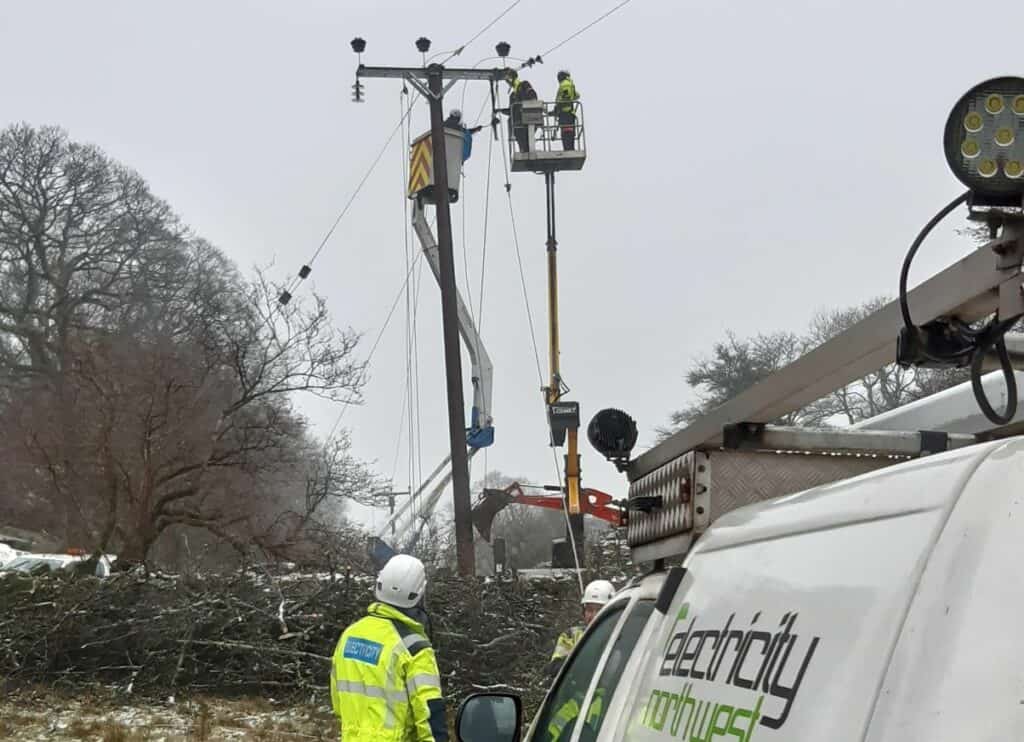
A spokesman for Electricity North West said: “Storm Arwen caused a million properties across the UK to lose power, including 100,000 in the North West, largely due to falling trees crushing overhead lines and poles. While we have specialist teams of trained tree cutters who cut trees near our lines year round, we are only able to cut trees where the landowner gives us permission to do so.
“The reliability of the power network is one of the best in the world, it is designed and built to meet or exceed all resilience standards which are set by the government and regulators.
“Reviews of these standards are important. Should any changes be made to the standards, they must be made with long-term thinking given the nation is moving a long way towards net zero over the next decade. In any discussions that do happen, a key focus must be on the resilience for those in rural communities.
“Throughout Storm Arwen, we were in very regular contact with Simon and his office and thank him and his team for their help and support throughout the incident.
“We have asked all stakeholders to provide us with specific feedback on their experience of the incident so we can include those views in our review. Lessons can always be learned when incidents like this happen, and we’re also fully engaged with the reviews being carried out by the government and energy regulator, Ofgem, so that we can contribute to and learn from any outcomes.”