It’s been a year since the first brick of the second phase on the £40 million new hospital in Whitehaven was laid and a lot has happened in those 12 months.
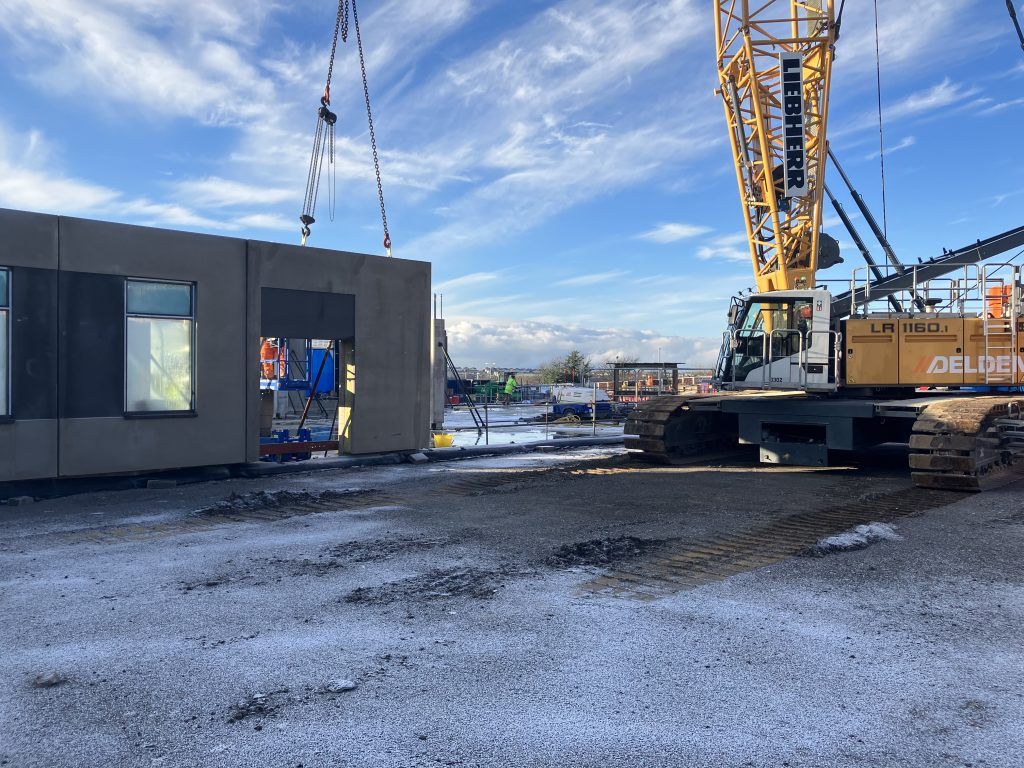
In November 2022 the extension started to take shape after months of work to prepare the ground and the whole site for this significant milestone. The first of the pre-cast concrete walls were delivered and erected on the site.
This modern and cost-effective method of construction allows for the walls to be made off site. Due to the significant weight of each panel it was necessary to transport them to site individually.
The height of each panel meant that they had to be transported using a specialist trailer which supported the panels and allowed the transporting vehicle to pass safely under motorway bridges. The panels arrived complete with their windows fitted which included integral blinds.
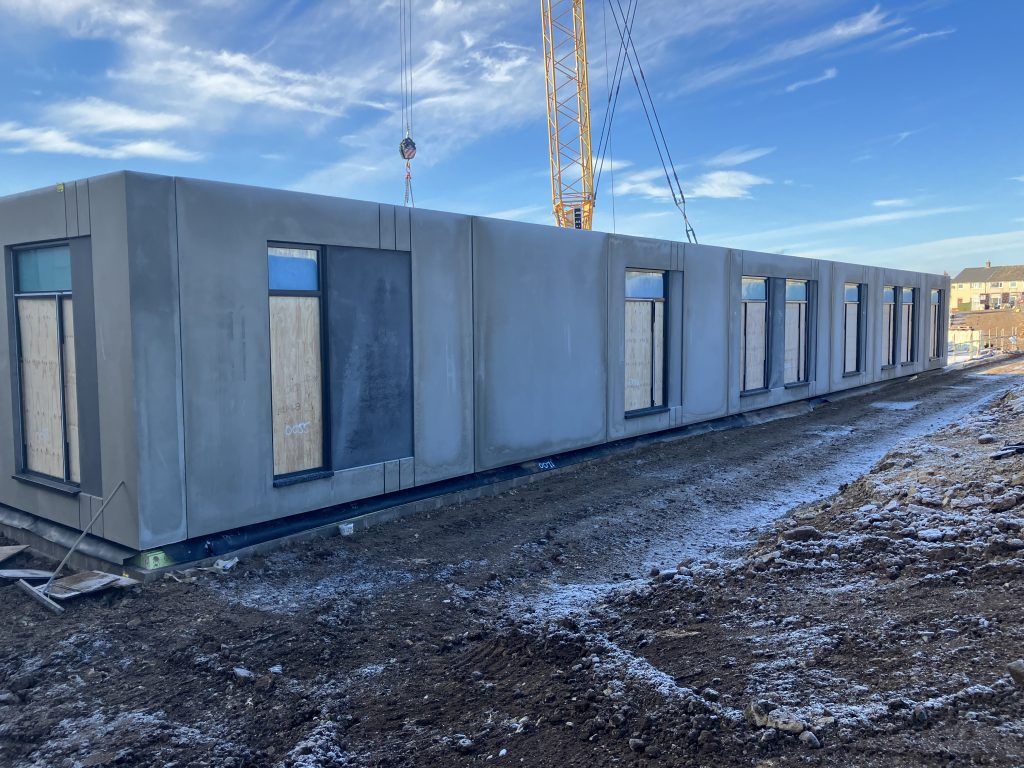
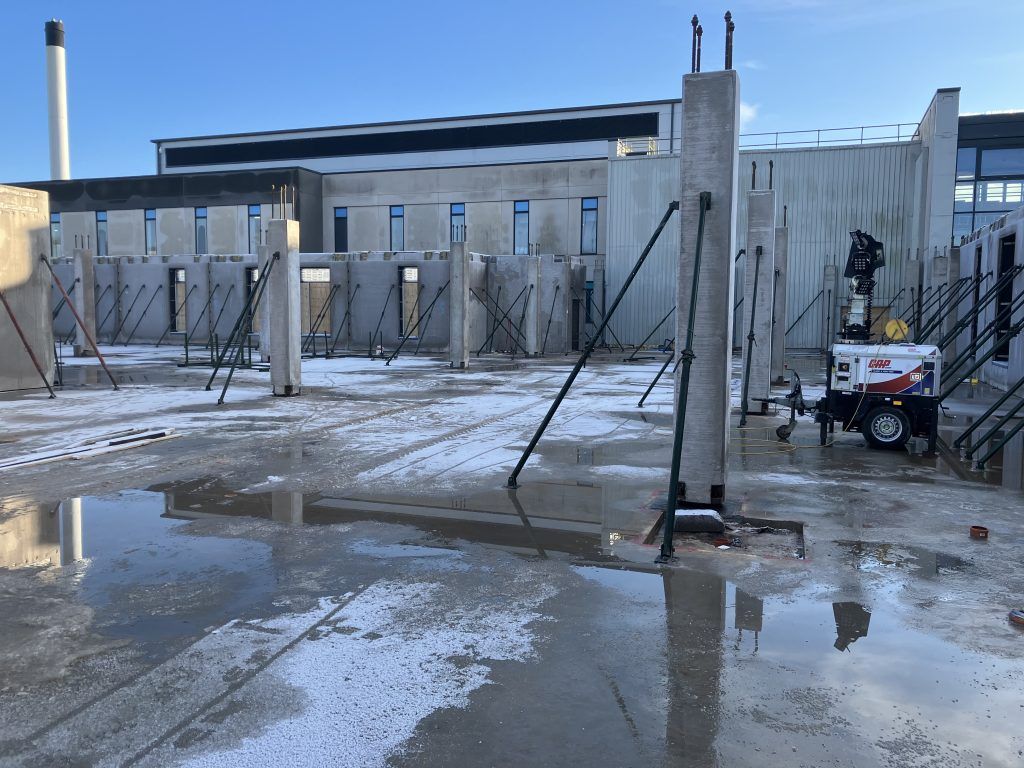
The pre-cast concrete structure was completed in April 2023, allowing the construction team to push on inside the building. A total of 190 panels, which make up the walls, have been delivered and erected on site to complete the final build. The steel frames for the rooftop plant rooms have been added this month with work ongoing to clad the plantroom frames and waterproof the roof.
Electrical cable works, water and medical gas pipe work, to connect the extension with the existing hospital, is ongoing with the majority of the building services now ready for connection.
While working on the main building, contractors Graham have also progressed the new northern section of the ring road, which was opened on the Tuesday May 2 and is now fully operational.
Some key facts and figures around the build to date are:
- Pre-cast concrete structure consists of – 190 panels, 51 columns, 519 planks
- Volume of concrete poured into foundations/slabs – 2019 m3
- Length of drainage pipes laid – 1,100m
- Linear metres of internal partitions – 800m
- Number of man hours worked – 1,932 days
- Volume of stone imported – 3,500 tonnes
- Volume of material exported – 20,124 tonnes
- Tonnage of steel for plant rooms on roof – 58 tonnes
Meanwhile plenty of refurbishment work has been taking place both inside and outside the hospital.
The new build extension will include a children’s and young people’s ward, a specialist palliative care ward, stepdown unit, care of the elderly ward and stroke rehabilitation unit.
The services that will move into the new extension are explained below:
Copeland ward and Loweswater suite
The palliative care unit will be based on the ground floor of the hospital, which will mean patients can have access to a private outdoor courtyard area. Time spent away from the ward is extremely important to patients, a space where they can sit with family or friends and enjoy a quiet moment in the fresh air is imperative.
The Loweswater unit will benefit from a private entrance and will be separate from other wards and areas. This allows the patients, their families and carers the privacy and dignity they need under difficult circumstances.
Paediatrics and maternity
The paediatric ward will move into the new build and the maternity ward will re-locate into their vacated space.
The upgrade of the post-natal ward, will mean more en-suite, private rooms with more space, allowing for birth partners to stay with the pregnant people for longer periods of time. It will also mean birth partners can stay during the induction process, something which the unit is unable to offer at this time.
Elderly care
The Care of the Elderly unit will move into the new build in 2024 and will deliver care for the elderly including those with dementia and those who are acutely frail.
The new ward boasts six four-bedded bays, eight side rooms with dedicated en suite facilities in each. There will also be a quiet room, for families and staff to use as well as a day room where patients can gather and interact with one another if they choose to.
The design of the ward has been a real collaboration between staff and the patients. The ward will be a dementia friendly space, with the colours and lay out carefully chosen with dementia patients in mind.
The staff on the ward will also benefit from a new staff room and office space and dedicated storage space, something which is lacking on the current ward.
Stroke
The Stroke rehabilitation unit will be located on the ground floor in order to give access to the private courtyard which will become an extended rehabilitation area. This will be hugely beneficial to preparing patients to return to their lives outside of the hospital; having an outdoor space to build their strength and gain confidence away from the safety net of the ward is very important.
The design of the new stroke unit was a collaborative project between the stroke team alongside input from patients and their families. One of the main issues raised was space.
There is a lot of specialist equipment used in the unit, so adequate space was vital to fully utilise this equipment and give patients the space they need to safely move around the ward.
There will be a private family room away from the ward itself so staff can meet with the families and carers to discuss treatment and discharge plans.
There is a mixture of single rooms and bays as well. Some of our patients may be with us for a longer stay and are keen to have interaction with other patients and others will want the privacy of a single room.
The new unit will have a dedicated space for staff to meet and have confidential discussions.