
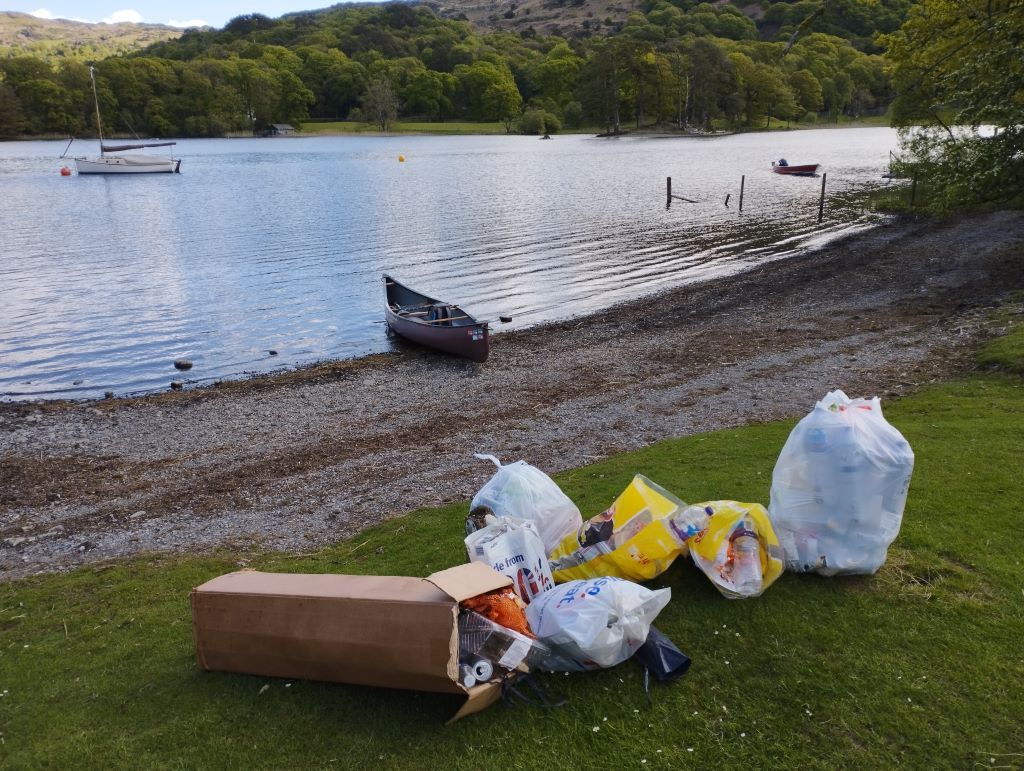
If you’ve spent time outdoors in the Lake District, you’re likely to have heard of the phrase leave no trace.
It seems straightforward, but there’s a little more to it than just taking home rubbish at the end of the day. In fact, there’s seven principles of leave no trace that everyone – both visiting and local – should follow.
We recently spoke to Steven Moss, a keen walker and wild camper from the North West who runs a YouTube channel called Walking Wild Camping UK.
For Steven, seeing stories about extreme amounts of litter being left behind in beauty spots is frustrating as a wild camper who loves national parks and outdoor spaces.
He regularly advocates for people to make memories and not mess when visiting outdoor spaces and he is well clued up on the proper Leave No Trace campaign guidelines.
So we asked him to put together a video for us to share how you can properly leave no trace and look after the Lakes this summer.
The video is all about educating rather than lecturing – so if you’re planning to go out and use outdoor spaces this summer, this is for you.
The seven main principles Steven lists are as follows:
Plan and prepare
Properly planning a trip out in the Lake District helps minimise damage to the land. Knowing your route, method of transport and packing the correct equipment are all important points Steven lists.
He also said that for wild campers, having an idea of where they plan to pitch their tent is important and that this step also helps people stay safe and mitigates the chance of getting lost and needing help.
Packing a compass and map and having route apps that work offline on a phone are also top tips listed in the video.
Travel and camp on durable surfaces
Steven explains that while walking or hiking, people should take care to use trails and paths that are already established to avoid causing erosion. This is also his advice for wild campers who he said should choose a firm durable area of ground to set up camp.
He added that locations covered in shrubs and flowers or near water sources are to be avoided.
Dispose of your waste properly
Steven explains that taking rubbish home can be made more simple. He said: “Pack out and pack in, if you can carry it out, you can carry it back.”
Repackaging food and drinks into smaller take-home containers is listed as an option and Steven also gives advice on using the toilet when there’s nowhere to go.
He adds that used toilet paper should be taken home and human waste should either be taken home or a small six to eight inch deep hole should be dug to bury and dispose of it.
Leave what you find
Steven advises that wildflowers, rocks, animal bones or stones should all be left to be part of the ecosystem and environment.
He also says that people should avoid pulling rocks from dry-stone walling or buildings to build cairns and that everything should be left as it is found to preserve the space for years to come.
Bare minimum impact for camp fires
Summer months cause dry spells and an out of control campfire can lead to a wildfire. While Steven explains there are ways to have a campfire by having them off the ground or in burn boxes, he said he feels they should be mostly avoided.
He added: “In my opinion, you don’t need a campfire, people might say I’m a spoilsport, but wild campers only need a small stove. You can cook everything on that, you don’t need to build campfires.
“If you do want a campfire with music and beers, there are plenty of other places to do this like campsites. You can check before hand if they allow it or instead, music festivals are great if that’s the kind of thing you like.
“Taking crates of beer in large groups making a lot of noise, that is not wild camping. It’s important to think about what you’re doing and be responsible and respectful at all times with a fire because it can completely destroy and environment.”
Respect wildlife
Steven lists all animals including livestock, horses and birds and says that it’s important to leave them alone. He also adds that when going through a cow or sheep field, people should cross and get out and not try to pet or interfere with animals.
He also adds that dogs should be on a lead and that even a well trained dog may hurt a sheep in a stressed moment.
Be considerate of others
For the final principal, Steven explains that it is important to be respectful of everyone else using the area you’re visiting.
He said: “Keep noise down, there’s no need to play music in these places or be shouting, just relax, hike, chat and enjoy nature. That’s why we’re all out here doing this.
“There’s other places you can go to play music in peace that will suit you more than the fells. Leaving large amounts of rubbish is not respectful and taking lots of camping equipment out and then leaving it there is not how you should act in a national park.
“I’m not preaching, these are all guidelines. But if you love the outdoors, seeing amazing views and nature, please just do a little bit of research and respect these areas and then they will be there for generations.”
Wild camping is legal when the correct guidelines are followed, but when they are not, a person attempting to wild camp in the wrong area becomes a ‘fly camper’ which is illegal.
According to the National Trust, if a campers planned pitch in the Lake District is not above the highest fell wall, this is classed as fly camping. Permission is also not given for camping in valleys, by lakeshores or any lowland area unless it is an official campsite.