
Cumbria is well and truly the last place I expected private investigators to be working.
Just the existence alone of PIs seems confined to our television screens – so it came as a shock to me to hear that they actually find regular work in our county.
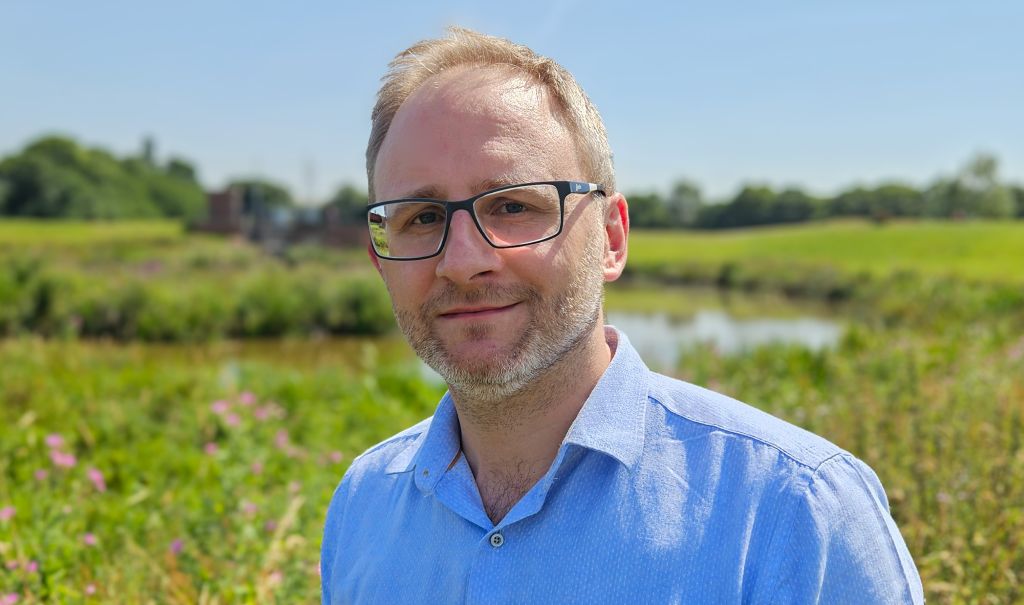
One Cumbrian PI working full time in the field is Agent Darren Wilson, who lives in the South Lakes and owns PI&SA – which stands for Private Investigation & Surveillance Agency.
The 42-year-old has been in the industry for five years now after starting his career in the military working in covert surveillance.
His job has since taken him across the county, wider UK and even abroad – where he has chased people running offshore bank accounts.
The cases he takes on range from dangerous and hostile to intense and downright bizarre, and he’s even had one near miss with becoming compromised.
All in all, it’s a gritty job that revolves around tracking people down, spying, bugging homes and hiding in plain sight.
I caught up with Darren to get an inside look at private investigation in Cumbria.
Here’s your warning – after you read this, you’ll be looking over your shoulder for weeks…
Cumbria’s most common case types
The walls of Darren’s Kendal headquarters are covered in details of active cases he’s working on – and it’s because of this that outsiders aren’t allowed in.
But deciding what kind of case to take on is a task in itself and background checks are integral for dealing with people who contact a PI directly.
Darren said: “We operate within the law, it’s all very legal, which is something people don’t realise about PI work.
“We get a lot of people ringing up and we have to do background work on them and be selective of the cases we take on – we do get some people who lie or who don’t understand how we work.
“The bulk of our work comes in mainly through solicitors who need help building evidence to win a case. We also do get companies coming to us, normally seeking to prove cases of fraud.”
Alongside his work in Cumbria where a few other PIs work with him, Darren travels to cities like London to partner with other PI agencies for bigger cases or to provide support where needed.
He is also currently carrying out work for a large well-known company that has grounds across the UK – the name of which has to remain top secret.
Common cases he takes on regularly in Cumbria include break ins, serious financial disputes between married couples, worried farmers dealing with ongoing trespassing, missing machinery or livestock and businesses dealing with employees committing fraud or theft.
He also regularly serves court papers to people and covert body cams are often used to provide video evidence for solicitors to use.
But sometimes cases aren’t so straightforward and can last up to six months – requiring intense ongoing surveillance in order to provide hard evidence for court.
Darren added: “It’s not like America, private investigators over there work much more closely with the police, but for us it’s different.
“Police in the UK have more red tape than we do, for example, we don’t have to get a ‘RIPA’ Investigatory Powers Act 2000 like they would have to.
“But we still have to work within the guidelines of the law, we can’t James Bond it!”
Where the movies get it wrong
When you think of a PI, images of trench coats, fedoras and fat cigars come to mind – and while disguises are actually a big part of the job, it’s not all like the movies.
Darren said: “It’s not your typical Monday to Friday job, but I would never change it. There’s never a same case twice, it’s always something different coming in.
“It’s a really busy industry and a lot of PI work is depicted on TV as jumping off buildings or pointing big cameras through windows – that doesn’t happen in reality, living in Cumbria where it’s more rural, a lot of work is done alone.
“It’s surprising what you can get away with hiding in plain sight. For example in the Lake District there’s a lot of dog walking, so just carrying a lead and a bag with fake soil can hide you away.
“Or even putting on a backpack and carrying walking poles – people don’t look twice, they never suspect someone who appears relaxed and normal.
“It’s never just about the person you’re tracking seeing you though, it’s also about the third eye, meaning the nosy neighbour that might spot you and tell your target straight away.”
Surveillance is the biggest part of Darren’s job and it varies from hiding in hedges in an observation post using handheld or remote hidden cameras to the classic following people on foot or by car.
He said: “We do different kinds of surveillance. Mobile surveillance takes place in vehicle and we do this in a team with cameras, filming and using voice procedures to talk to each other.
“Rural surveillance can see you hiding in a hedge for a few days and foot surveillance involves covert cameras walking in and around public areas.
“For corporate cases we bug offices and put listening devices and hidden cameras out of sight to catch people in the act. They let us in at silly o’clock at night to rig the place up and find out what is happening.
“For cases where we carry out surveillance in a home, we use listening devices and put them in mains units or in the wiring of things like kitchen appliances where a target might frequent.
“But everything has to be documented in paperwork and video footage also has to be edited, especially if it goes through court.”
He’s also occasionally tasked to find missing people or people who have disappeared to avoid paying things like child maintenance.
He added: “Sometimes we get people ringing about child maintenance when their ex-partner has gone off the grid, so I’m tasked to find them as they move around a lot.
“For those cases we have databases to find people and our systems are comparable to police systems. People are surprised that we can put surveillance on an address and the names living there.”
Even just following someone on foot is not as straight forward as it might seem.
He added: “If someone is being followed, they generally realise quickly. So we can’t just follow them obviously through a village or town, there are tactics we employ to do it covertly.
“You have to be natural at it, but people don’t ever seem to look in the places we work. Lots of people would never look into a hedge line expecting to see someone watching them back.
“The classic idea of a big long lens camera being pointed into the window of a home also doesn’t happen in reality. We can’t take photographs through windows, it classes as harassment, but we can film freely in public.
“Using tracking devices on vehicles or people also has to be done legally. We do use them but there’s laws around them, for example it’s illegal to place a tracker a partner who you think is cheating.
“Evidence can quickly become not submissible in court if it’s not found within the parameters of the law.”
Donning a disguise is also often key to making sure surveillance goes smoothly and Darren said subtlety is crucial for blending in without detection.
He added: “We do disguise ourselves, we call it props. It’s one of the most interesting parts of the job.
“A lot of the lads I know working in cities often can’t park on double yellows near a building they need eyes on and many of them use vehicle maintenance cars and put cones outside the car to blend in.
“We actually had one case where we all had hard hats, clipboards and hi-vis on. It’s all about being covert in overt situations and there’s a lot of things people are surprised that we do differently to movies.
“While we were working, a lady came out of her house to see what we were doing and used a cover story to explain we were doing a survey on speeding complaints in the area.
“She brought us coffees all day and agreed that there were speeding issues on the street, but it was her we were actually spying on.”
Successful Cumbrian cases
Darren has worked on dozens of cases over the course of his career – but there’s a few stories that have stuck with him.
On one occasion where he was nearly compromised and spotted setting up surveillance, he had to act quickly to invent a cover story for his actions.
He said: “You definitely have to think on your feet. You’ve got to have a cover story if you’re compromised. Being calm and collected is essential, because as soon as you panic people know you’re bluffing.
“99 per cent of the time you’re never compromised but there’s always that one per cent chance it might happen.
“I had one very close compromise whilst fitting a tracker on the bottom of a vehicle in Windermere on the main street at around two o’clock in the morning.
“I looked to the side of the car whilst doing it and I could see the feet of the guy who owned it stood there.
“While I was under, I quickly pulled off my wedding ring and chucked it under the car. The tracker was already on, so I needed a good cover story.
“When I came up I acted drunk and said I had lost my wedding ring, could he move his car. It worked – but you’ve got to be able to be a good actor and think on your feet in those situations.”
Darren recalls a dramatic marital dispute case that lasted six months as a personal favourite.
He said: “I had a case in Kendal between a married couple who were in business together. There was an agreement in court that the the wife would only stay as a director in the business until she died, remarried or had been living with someone for six months.
“So we worked with the client and their solicitor and established she was living with someone in Barrow. We needed six months of evidence to get her off the books as a director.
“We got some brilliant footage of her going in and out of the property, but the solicitor needed stronger evidence. So we followed her around a supermarket and videoed her buying food for more than one person.
“There were points I queued up beside her. It had to look normal so I had to shop alongside her and at the last minute pretend I had lost my card and drop my basket.
“It was one of my favourite jobs. We were up at 5am, setting cameras up for 7am as they left at 8am and if they didn’t move from the property it could be 12 hours of sitting and waiting for movement.”
One particularly dangerous case Darren was involved with revolved around an accusation of foxhunting and he’s even had people ask him to investigate claims of paranormal activity – which he leaves to the county’s ghostbusters.
He’s also tasked occasionally to gather evidence on people who are falsely claiming money from the government.
He said: “I had a case in Whitehaven where an insurance company wanted me to investigate a man they thought was committing fraud.
“They were tipped off about the man who was saying he couldn’t work because he had back problems but he had been spotted working cash in hand as a mechanic.
“We caught him climbing ladders and going under cars like it was nothing. It went to court and that was the end of that.”
Darren added that he plans to stay in his career as a private investigator for a long time.
He said: “It’s still strange telling people that I work as a PI. Everyone I tell has the same reaction and thinks I’m lying. They don’t think the job even exists, I think it’s just one of those jobs that people don’t think is actually going on in reality.
“But I’ll hopefully be doing it for the long term.”