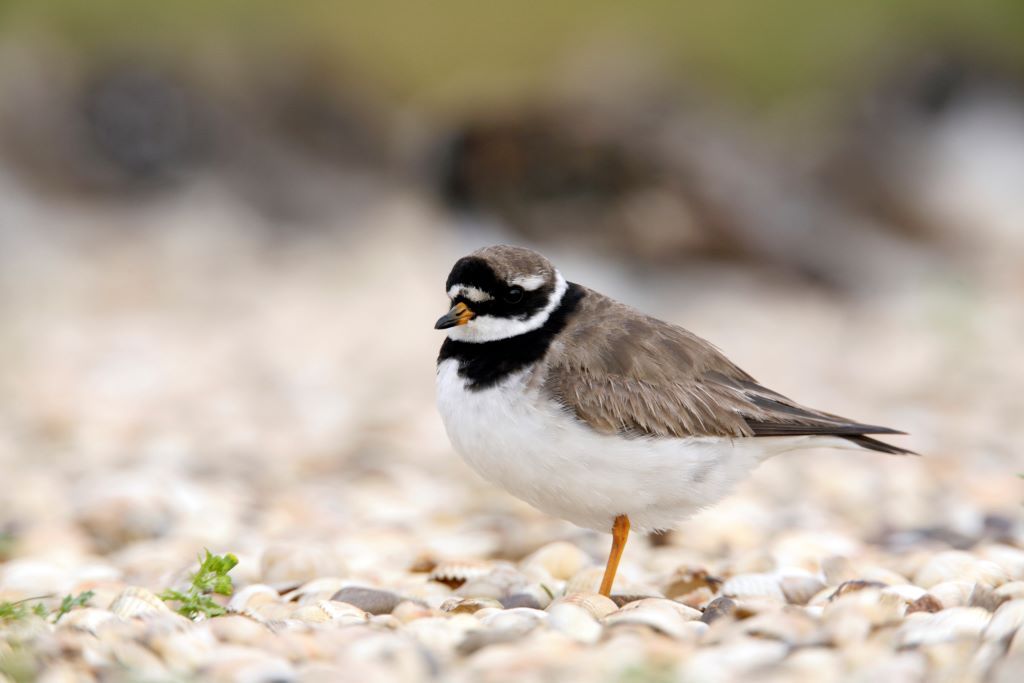
A project has been launched to help turn around the fortunes of a threatened bird along Cumbria’s coast.
Fears are growing for the Ringed Plover due to a growing number of failed nests on the county’s shingle beaches from the Solway to Ulverston.
Led by the Royal Society for the Protection of Birds (RSPB) and funded by Natural England, hopes are that this new initiative will help turn the tide on the misfortunes of this rare, short-legged wading bird in an area that covers some 100 miles of coastline.
Ringed Plovers are small birds that can be glimpsed around shingle beaches, scuttling around the stones where they nest between April and August. They are red listed, meaning they have special protection and have seen a 37% UK population decline since 1984.
Conservationist Steph Leow took up the gauntlet to become RSPB’s first beach nesting bird project officer in Cumbria in April and since then her work has involved monitoring Ringed Plover numbers, checking if chicks hatch, and then if they fledge, liaising with landowners, and attending events to raise public awareness of the problems facing these and other birds on Cumbria’s beaches.
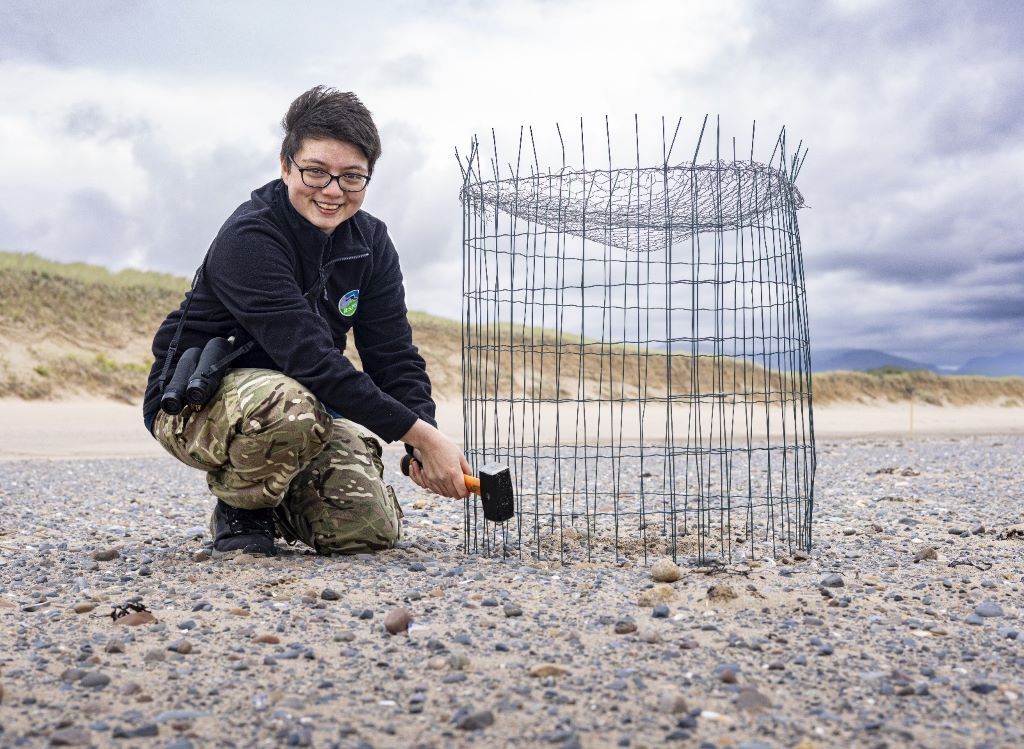
Steph has been putting up signs and installing wire nest ‘cages’ for the duration of the breeding season, along Sellafield, Seascale and Drigg beaches as part of a trial and ongoing study to prevent nests being predated.
The nest ‘cages’ are designed with holes small enough to allow the Ringed Plover to be able to walk in and out easily to get to their nest, but not large enough for predators to access. This approach is a new one currently being trialled at other sites in England, with the top priority being the Plover’s safety and survival.
Background threats such as food scarcity, predation by birds of prey/small mammals and high tides have been faced by Ringed Plover for hundreds of years.
While a healthy population can withstand such pressures if there are plenty of nesting sites and they can relocate away from danger, climate change and overpopulation of our coasts have meant that high tides are more frequent, food is frequently scarce, and there are fewer nest sites available.
Birds are also at risk from ‘urban’ predators such as foxes, crows, and gulls. The aim of the Ringed Plover project is to find out more about why nests fail and how we can protect these birds in the future.
Steph said: “If you ask a child where birds nest, they will likely say in a tree, hedge, or nest box. It’s an image we’ve all grown up with. But over half of England’s most threatened breeding bird species nest on or near to the ground and Ringed Plovers happen to choose the beach.
“On a three mile stretch of Cumbrian coast alone, there were 30 breeding pairs of Ringed Plover this breeding season and only five pairs managed to hatch chicks, and of those five pairs, only two have got chicks to fledging stage, which gives you an idea of how much they need our help.
“We’re asking for help from the public too who can look out for signs, chat to our team and keep a good distance from fenced areas to give these birds some space.”
Cumbria specifically has about 4% of the UK’s breeding Ringed Plover, with significant numbers being found on ‘unprotected land’ such as the stretch of beach from Sellafield to Drigg. The number of breeding pairs has also increased in Cumbria since 2007 but sadly fledging success is still very low.
Volunteer Dave Shackleton, a retired RSPB warden, has been out every day this summer on a stretch of beach from Sellafield to Drigg helping to monitor the birds.
Dave said: “It’s rewarding but hard work. Ringed Plovers, their eggs, and their chicks are very well camouflaged, often hunkered down amongst the rocks, and finding them can be tricky!”
The Cumbrian beach nesting bird project is part of a national programme, led by the RSPB with partners, around the English coast – with 20 other projects in areas like Norfolk, The Humber, and Northumberland. The projects are very different in scale, but all involve dedicated teams of RSPB staff and volunteers working tirelessly to protect Ringed Plover as well as Little Terns and Oystercatchers.
Steph added: “We’ve had a brilliant public response so far and we’re also grateful to the various landowners and local councils for their support. We have a long way to go, and we likely won’t see results this year, but people are responding to help and that will hopefully lead to an increase in chick survival rates next year.
“Progress can be slow but it’s important to have an eye on the long term and how, if we continue this work, we will eventually see results. Patience is the name of the game.”
This new Ringed Plover initiative is in addition to existing beach nesting bird conservation measures in Cumbria, which have been running for several years. As the breeding season nears to an end, the bird ‘cages’ will be removed from the beaches this month until the following spring.
It is hoped Cumbria’s Ringed Plover project will extend beyond April 2025 and the RSPB is urging Natural England to continue their funding for this important work.
The RSPB hopes to create a team of local volunteers from right across the Cumbrian coast to help monitor their local beaches.
Anyone interested in volunteering to help Ringed Plover and other beach nesting birds can email [email protected]