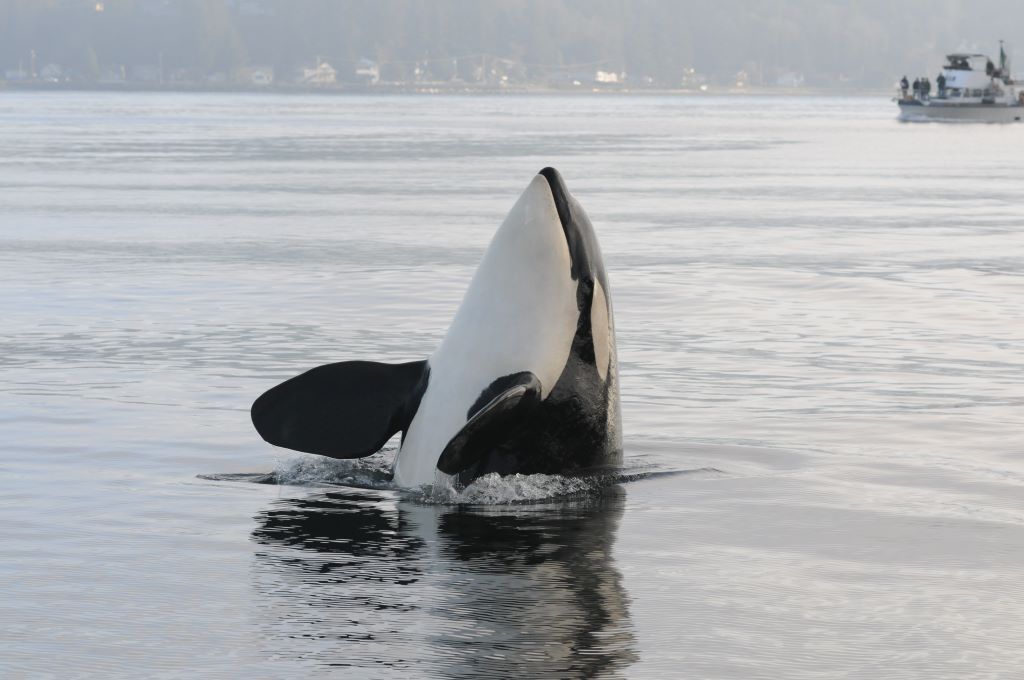
The University of Cumbria are part of new international research team exploring the plight of orcas in Canada and the USA.
The coastal waters of Washington and British Columbia are home to two unique populations of fish-eating orcas.
But human activity over much of the 20th century, including reducing salmon runs and capturing orcas for entertainment purposes, have decimated their numbers.
This century, the northern resident population has steadily grown to more than 300 individuals, but the southern resident population has plateaued at around 75 and remain critically endangered.
Researchers from the University of Washington, the US National Oceanic and Atmospheric Administration, Cascadia Research Collective, Fisheries and Oceans Canada, Wild Orca and the University of Cumbria’s Institute of Science and Environment have revealed that underwater noise produced by humans may help explain the southern residents’ plight.
In a paper published this month in Global Change Biology, the team reports that underwater noise pollution — from both large and small vessels — forces northern and southern resident orcas to expend more time and energy hunting for fish.
The noise also lowers the overall success of their hunting efforts. Noise from ships likely has an outsized impact on southern resident orca pods, which spend more time in parts of the Salish Sea with high ship traffic.
The team found that noise had a disproportionately negative impact on females, who were less likely to pursue prey that had been detected in noisy conditions.
Reducing vessel speeds leads to quieter waters for the orcas. Both sides of the US-Canada border include voluntary speed-reduction programs for vessels: the Echo Program, initiated in 2014 by the Vancouver Fraser Port Authority, and Quiet Sound, launched in 2021 for Washington State waters.
But reducing noise is only one factor in saving southern resident orcas and helping northern residents continue to recover.
“When you factor in the complicated legacy we’ve created for the resident orcas — habitat destruction for salmon, water pollution, the risk of vessel collisions — adding in noise pollution just compounds a situation that is already dire,” said lead author Jennifer Tennessen. “The situation could be turned around, but only with great effort and co-ordination on our part.”