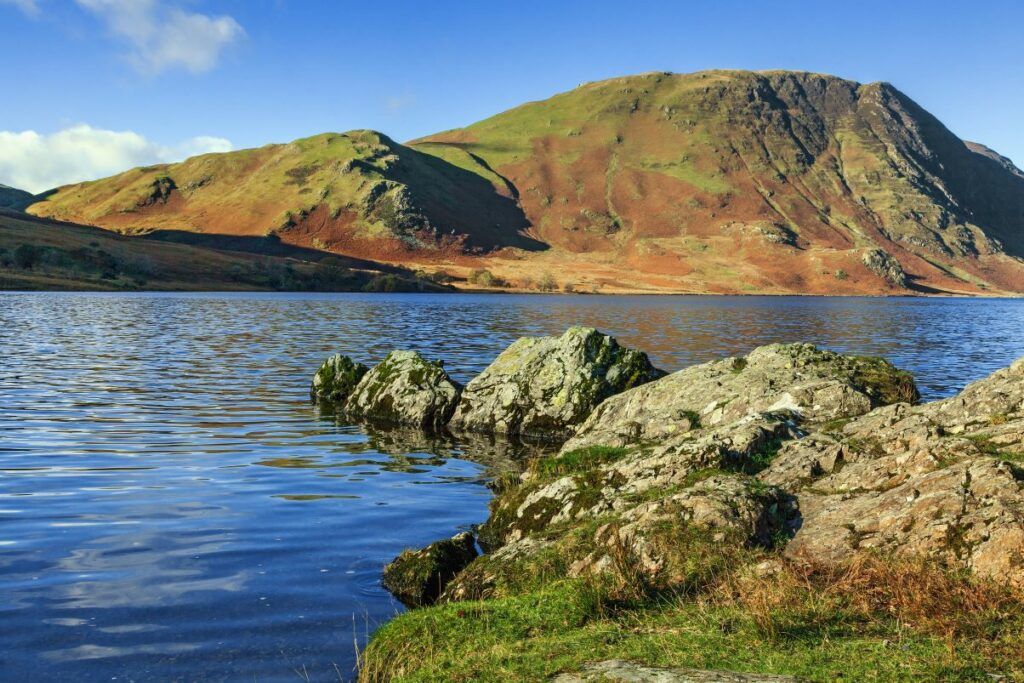
Over 2,900 people have signed a petition to stop Crummock’s water level being lowered.
United Utilities want to remove its 100-year-old weir, which would reduce the water’s overall level by 1.35 metres, or 4.4ft.
Campaign group Friends of Crummock has launched the petition against the plans, which are part of wider proposals by the firm to return three of the Lake District’s waters back to their ‘natural states’ after it stopped using them for public water supply in 2023.
United Utilities has applied to the Lake District National Park Authority for permission to carry out the work and said if the weir was kept, it would have to be replaced and upgraded by 2028.
The water firm said it would involve significant construction that would impact water users, public access and the environment.
It added the weir would need to be monitored every 10 years and could require significant investment in the future.
United Utilities added that someone would have to take responsibility and ownership of the weir and that it believed renaturalising Crummock was the most viable solution to reduce cost and flood risk, while supporting the environment.
The firm said for its current responsibility and future liability of Crummock to be released, it must permanently reduce the volume of the water to comply with the Reservoirs Act 1975.
But Friends of Crummock said it was worried the lowering of the water would devastate Crummock’s natural beauty and impact animal habitats, tourism and recreation.
Its petition was launched four days ago and the group is planning to host a protest at Crummock on Sunday May 11.
The campaign group said it feared if the water level was lowered, it would expose a wide swathe of rocks, debris and mud, replacing the water’s popular gravel beaches.
However, United Utilities said the naturalisation of the water would help restore natural water flow along becks and rivers in the surrounding catchment areas, restore natural salmon habitat and remove barriers to fish migrations. It would also introduce additional tree planting to the area.
While United Utilities said the removal of the weir and lowered water level would help manage flood risks downstream, The Environment Agency raised concerns over flood risks based on the initial models provided to it.
It said in a letter to Lake District National Park Authority that it was currently not satisfied the development would be safe without increasing flood risk elsewhere and objected to the plans.
Open Spaces Society, the UK’s oldest conservation charity, has also objected to the plans and has expressed concern that the lowering of Crummock would detrimentally affect the level of Buttermere.
It also flagged concerns around what a lowered water level would look like at Crummock and said the newly created lake shore margin could vary in width due to uneven ground and slopes beneath the water.
It added that some of the exposed shoreline could consist of dark stones, pebbles and grit derived from adjacent bed rocks that will not show as a bright white margin.
The charity added that while it supported the idea of renaturalisation, it was concerned the removal of the weir would result in an artificial, much reduced lake.
As an alternative, Friends of Crummock is calling for the flow of water to Crummock to be naturalised without removing the entire weir.
This would see Crummock undergo a process known as assisted recovery.
Assisted recovery was also put forward to United Utilities by its environmental engineering consultants, Jacobs.
While the consultants scored both the full removal of the weir and assisted recovery as good options for renaturalising the water, it did mention areas of concern for both options.
Jacobs said that assisted recovery would not meet the requirements of removing Crummock as a reservoir from the Reservoir Act 1975, which meant someone have to be responsible for monitoring the weir.
The consultants added that the full removal of the weir could impact the arctic char and aquatic plants, but a slow reduction of the water level would allow animal life and fauna to get used to the changes.
Jacobs that if assisted recovery was to go ahead, it would see the working parts of it removed as well as the top section of wave wall.
The weir itself would be retained and buried within a new natural landscape, in a bid to return the water and river to its natural function while keeping the water level the same.
The water firm also wants to remove some of the equipment used for collecting water supplies and the supporting infrastructure.
The work would impact access to the water and several areas around the water would close during construction and there would also be a need to make permanent public rights of way diversions.
The National Trust car park at Lanthwaite Wood, popular with wild swimmers, would also be restricted for four to five months.
Nicky Cockburn, of the Friends of Crummock and a keen wild swimmer, said: “This campaign has brought together people who normally might not even talk to each other.
“It affects future generations, it won’t be the same for them if the plans go ahead. It’s environmental vandalism.
“But we’re astounded at the petition and how quickly it has grown, everybody obviously feels the same.”
The plans have received over 95 letters of objection from members of the public.
Those wishing to share their views can also email [email protected] quoting application 7/2025/2052.