Animal killer, Doctor Death, the UK’s worst zoo owner.
These are just some of the names David Gill was called over the 22 years he spent running an infamous Cumbrian zoo.
Born in Barrow, Gill initially drew tabloid attention as a Stetson-wearing multi-millionaire who married a Peruvian beauty queen.
He opened South Lakes Wild Animal Park in 1994.
He later became the subject of a huge media storm after the zoo made national headlines as a place of death, drama and despair.
But in the 10 years since Gill stepped down from running the zoo, he has never been fully interviewed about how and why things went so badly wrong there.
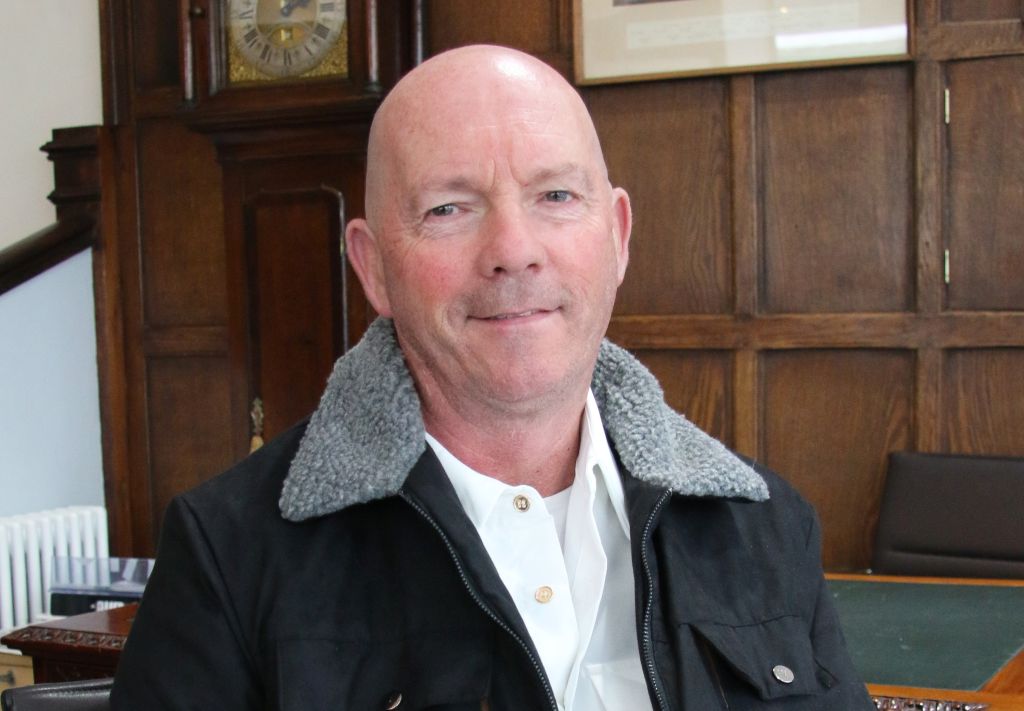
Now 61, Gill has decided to tell his side of the story to Cumbria Crack.
Finding Gill
We first found Gill in a remote Lake District valley, where he lives a new, private life.
He now runs a small American-style ranch and farm where he works under a different name, which he legally changed to protect himself.
Gill’s animal park is a news story of the past but it hasn’t stopped his name being dropped when zoo issues are mentioned in the media.
When we first speak to Gill, he tells us he doesn’t think this is fair and that he wants to clear his name once and for all.
When Gill was running the zoo, under his leadership, reports found:
- 486 animal deaths were recorded in three years
- Over 26 animals escaped over the years including a flock of ibis birds, a white rhino and capuchin monkeys
- Members of the public were bitten and injured by animals
- Animal welfare concerns were repeatedly flagged by inspectors – including animals dying in unusual ways such as from exposure
- Animals were housed unconventionally in electric fenced pens and roaming free with other species
But as we ask him about this, Gill firmly tells us that the reports are either incorrect or completely false and that he stands by his decisions.
He adds that above all else, he was trying to create an innovative zoo.
Gill versus the people
Gill arrives to our interview as a man with something to prove. Clutching a wad of paper and dressed in a Western shirt, jeans and a silver Wyoming belt, he appears a little tense.
When we offer him a coffee, he accepts, but half-jokingly confides in us that he expects someone to spit in it.
He tells us the zoo has caused irreparable damage to his and his family’s lives.
Gill opened the zoo in 1994 in what he says was a mission to bring conservation awareness to the public. But it all began to fall apart just three years later – and in 2013, 23-year-old zookeeper Sarah McClay died.
After her death, Gill claims Barrow Borough Council suddenly began to find faults at the zoo.
It also started a media storm around Gill – who was regularly dubbed the UK’s worst zoo owner by some of the UK’s biggest tabloids.
Gill says: “It started the zoo’s catastrophic demise.”
Eventually, in 2016, things came to a head over the renewal of the zoo’s licence.
Gill claims he was forced to sign the zoo over into the hands of a new owner and claims he was threatened with closure by the council if he didn’t.
He adds that while he didn’t want the zoo, he also didn’t want to hand it over to new owners he had not chosen himself.
He adds: “There were many times I didn’t want the zoo. I had a ranch in Wyoming and I lived there most of the time and used it as my base to go to my conservation projects in Sumatra, Madagascar, West Africa and South America.
“We were travelling a huge amount and when you look back, you can see that well over 50 per cent of my time was spent away and not at the zoo.
“I was basically policy setting and giving it to my management team run and staff to deliver.”
In 2017, Barrow Borough Council published a report that said 486 animals had died within three years.
The report sent the media into a frenzy over its contents, with national media rounding the death toll up to 500.
We push Gill on this and ask about why the death rate was so high for a small zoo.
Some of the deaths including the electrocution of a tortoise and a Nyala dying from exposure, he refutes as being untrue, while others he claims he was unaware of.
He says: “What they accused me of with the 500-animal stuff was horrendous.
“There was no truth in it, and they couldn’t back it up under the law, if they could, I wouldn’t be sat here today.
“There was no evidence of it all whatsoever. If an animal dies it’s not necessarily your fault, and the pictures they had were all out of context as well.
“We had a kangaroo they photographed that was under treatment for a jaw infection and was thin, we had a sign up saying it had a terrible infection but that we were just trying to get it through.
“I was also accused of a jaguar having to have its foot amputated and leopard cubs being found dead, but the first I’d heard of that was in The Sun newspaper.
“I had no idea we even had leopard cubs. I was being blamed for things I wasn’t even aware of.
“They made me out as an animal killer. People treat you worse thinking if you’ve hurt an animal than if you’ve hurt a person.”
In the fallout of the report, Gill says his reality quickly turned into a nightmare.
He says he felt anxiety in public places and had developed PTSD from some of his experiences at the zoo.
Gill adds: “The fallout basically put me and my family into absolute hiding with the abuse and threats and death threats.
“It was horrendous for my wife and kids. I’ve never spoken to anybody about it all because it destroyed my life, my wife had a breakdown, we got a divorce because of it, my children were bullied and two had to come out of school.
“I had to restart my life. We were branded; my children were branded.
“It felt like when you were in a shop people were looking at you and thinking he’s that guy.
“I had to change everything in my life to escape it all, and I did, I did escape it all.
“It’s a bit like Johnny Depp isn’t it? He’s going along as one of the most well-known actors in the world and all of a sudden he’s a bad guy.”
Gill says that almost overnight, people around him disappeared, afraid to be associated with him.
He says: “Everybody ran scared about impacts on careers because of the media.
“Everyone around me just disappeared, they didn’t want to get involved because of the fear of having your name dragged into it all.”
The UK’s worst zoo owner
Exasperated during our interview, Gill digs through his own handwritten timeline of events.
Despite our lengthy conversation about documented deaths and despair at the zoo, he continues to be frustrated.
He says: “For 18 years that council ticked boxes and said everything was fine. So how could they suddenly start saying it was all wrong?”
From day one, Gill says he didn’t want the zoo to be like others, instead, he wanted it to be a place of freedom and innovation.
He says: “If anything, I was well known as a bit of an anti-zoo person to the zoo associations we were in at the time.
“I just hated bears in pits, lions in cages and that kind of thing.
“I was an innovator. I didn’t like zoos and I didn’t like cages, I didn’t like stone walls and I didn’t like where animals look at you like they’re in a prison cell.
“This is why a lot of the city zoo managers didn’t like me, because I was very critical of that stuff, and the fact that they weren’t changing fast enough.”
Eventually, the zoo grew to house 2,500 animals, many of which Gill says were housed unconventionally.
He says: “We became successful because we were giving our animals stacks of freedom.
“I was the first person ever to put gibbons behind an electric fence and I was the second person ever to put bears behind an electric fence.
“To give you an idea, we had an inspector from a big, traditional zoo who totally was against me doing what I did with my bears.
“And I said why? And he said because you should have a great big wall and it should be a traditional enclosure.
“But the bear just looks at a brick wall all day, why can’t the bear have a view across the landscape to stimulate it?”
When we ask if he thinks it was cruel to put animals at risk of shocks from electric fences, Gill says he still feels the benefits outweighed the risks.
He says: “Nobody had ever really done it before on a big scale, so I was known as an innovator.
“It did frighten a lot of the zoo inspectors, because they were used to just passing traditional zoo facilities.
“I was the first person to have kangaroos running freely in the zoo.
“The authorities fought me on it and said no it’s dangerous because they’re wild animals. But I said if you go anywhere in Australia you can go in and feed the kangaroos.
“Luckily I had a very broad-minded zoo inspector, who said to me he’d let me have a go, but that they would monitor it like hell.
“But everything went well, and I had wild spider monkeys, capuchins and gibbons in the trees. I really wanted to change the concept of a zoo.”
A 2017 Barrow Borough Council inspection report said Gill had refused to implement modern zoo practices, following an inspection.
While Gill claims his non-conventional approach to enclosures never resulted in issues, in 2015 multiple members of the public were recorded as having been bitten by monkeys roaming free.
A child was also bitten on the ear by a vulture – all of which were flagged in the report as endangering the public.
We press Gill about this, but he tells us he still felt it was a pointless criticism.
He says: “When you’ve got 300,000 people visiting, things like that happen.
“It’s like trapping your finger in a door, it’s bound to happen, so what, we have to fasten every door in case people got their fingers trapped? It was ridiculous.”
Gill also adamantly tells us the death rate was normal and that every recorded animal death was natural.
He also claims that he wasn’t fully in control of the zoo when the incidents happened.
Gill says: “You say high death rate, but it was not a high death rate. It was just a number that was high but normal.
“If you went to the local hospital and asked them for the mortality rate, you might be shocked by it. But it’s actually normal.”
Gill’s personal life was also publicly chaotic throughout the years he ran the zoo – ranging from attempted murder to scandalous relationships – and was heavily reported on by the media at the time.
In 2014, he made headlines marrying Frieda Rivera-Schreiber, a Peruvian beauty queen who was later exposed for practicing without the correct qualifications as a vet at the zoo.
When the pair married, OK! and Hello magazine attended the wedding.
At the same time as the report coming out, Frieda was exposed for illegally carrying out post-mortems and interacting with the animals without any qualifications.
Gill says he made the decision to employ her in 2014 as a veterinary co-ordinator and not as head vet, which many media outlets claimed was the case at the time.
He says: “She was a wonderful vet, but she wasn’t allowed to practice in the UK because she didn’t have the right qualifications to do that in Britian.
“They are very restrictive and very unfair to be honest. She couldn’t be bothered to go back to university and get that extra qualification, so she was the zoo’s veterinary co-ordinator.”
All the media noise created an enraged public and multiple petitions were launched calling for Gill to step down from the zoo as well as calling for it to close entirely.
Despite all the noise, Gill says he had – and still has – supporters who believe he is ‘innocent’.
He says: “There are people out there that have been shouting my innocence forever.
“Thousands of people, I have a tremendous amount of support. Even after everything, the amount of support was huge.
“But the problem is the general public who never met me never knew what I did or how I did it. They judged me on what they read and they still do.”
Towards the end of our conversation, we ask Gill straight if he accepts full responsibility for the things that went wrong at the zoo.
Leaning forward, he plainly tells us – despite still claiming things did not happen in the way the media reported them – yes.
He says: “I took full responsibility for everything that happened while I was in charge.
“But from the moment the council took my control away, even with the fact I owned shares, I do not take responsibility from that moment on, because I had no say whatsoever.”
Gill ceased his association with the zoo as a manager in 2017 but remained an indirect landlord until around 2021.
To this day, he explains he still technically owns some animals that were living at the zoo under new owners.
Most of these animals have now moved on to new homes.
The zoo changed its name to South Lakes Safari Zoo in 2017 and was taken over the Cumbria Zoo Company.
The zoo, was then bought by Zoo Investment Company in 2020 and run by it as landlords, until its doors closed for the final time in 2024.
- Cumbria Crack wishes to make it clear that Gill’s interview only relates to his time spent at the zoo from 1994 until 2016 and early 2017, when it was run by South Lakes Safari Zoo Limited.
Timeline of the zoo
1994 – The zoo opens
Gill opens South Lakes Wild Animal Park in 1994 after securing a bank loan. Built on converted farmland, he had first announced the idea in 1983 and construction started in 1993.
Attractions in its early years included housing world’s smallest and largest tigers species – Sumatran and Siberian.
It also creates a successful breeding programme for the critically endangered Sumatran tiger.
1997 – Problems start to arise
Issues at the zoo and in Gill’s personal life arise in the media. Gill is criticised for having an affair with a 16-year-old handler, prompting his wife to leave him. The pair later marry but divorce after a short while.
Later this year, the zoo is found guilty of endangering the public after a white rhino escaped. The animal fell down a ravine and had to be shot. Gill was fined £10,000 for failure to keep the animal enclosed. Gill shot the rhino himself. Despite this, visitor numbers remain high at the zoo, and reach 100,000 visitors in a year in 1996.
2000 – The park grows
The zoo continues to grow and brings in giraffes and more African animals. According to the zoo’s former website, it wins two awards for best visitor attraction in the Lake District this year.
2001 – Gill moves away
Gill relocates to Australia, opening a second zoo in Queensland – a venture that dramatically closes in 2004. During this year, a pregnant zookeeper went to tribunal after expressing fears about feeding lions and was awarded £30,000 in compensation. She claims she was advised by Gill to terminate her pregnancy rather than fall short in her job. She adds she was sacked for being pregnant.
2002 – More animals added
Spectacled bears and lions are introduced. The bears are put in an enclosure with an electric fence rather than high walls, a move Gill calls ‘innovative’ but one that council officers condemn as outdated in a 2017 council inspection report. Female rhinos are added alongside lemurs, marmosets and monkeys. A troop of baboons are mixed in with rhinos and giraffes. Eventually, the zoo becomes home to 2,500 animals – many of which roam free and are mixed together in unconventional ways.
2004 – Gill suggests moving the park
Gill suggests moving the zoo away from its Dalston site to one near M6 in south east Cumbria for the first time. This year, his Queensland zoo Mareeba Wildlife Park also closes with allegedly £2 million in debts. Gill sells the zoo for ‘several millions’ and returns to the South Lakes full time. He is fined £6,000 for lemur and cheetah escapes and the unreported death of lemur. On his return, he speaks about plans for a ‘massive expansion’.
2005 – More animals added
No major news is reported this year. More animals are introduced and a new ‘Giraffe Walk’ is built for visitors to get close to the giraffes, rhinos and baboons in their mixed area. More improvements are made to the site and visitor numbers are recorded by the zoo on their website as 30,000 up on 2004.
2006 – The zoo continues to expand
Gill builds a car park to cope with zoo’s expansion and high visitor numbers. Barrow Borough Council initially deny Gill planning permission to do this and then issue him with an enforcement notice after he builds the car park without permission. He is later granted permission in 2007 after an appeal. The Secretary of State heavily criticises the council for their actions. The zoo is criticised again this year for lemur and coyote escapes.
2007 – Gill stands for election
Outside of his life at the zoo – Gill decides to stand for election as a Conservative councillor at Barrow Borough Council. He narrowly misses out. John Millar wins a seat by a single vote, according to reports at the time. Gill claims the council then ‘took a disliking to him’ over his interest in joining the council.
2008 – A stabbing, more animal deaths, and council conflict
Gill’s personal life goes public again in the media after he is stabbed in his home on edge of the zoo by a man who accused Gill of sleeping with his wife. The man was jailed for five years for aggravated burglary. In the same year at the zoo, 31 of 120 lemurs die in a fire that destroys three wooden huts they lived in. The fire service said at the time it was likely due to a faulty electrical heater. The lemurs were locked in over night to protect them from cold weather. Gill was able to save 13, including the belted ruffed and alaotran gentle species, but many of ring tailed, red ruffed, white-fronted, and black species died in the blaze. Gill said it was a devastating incident. He also had more conflict with the council this year and threatened to leave the zoo again. He also quits his role as chair of Barrow and Furness Conservative Association after just three months.
But it didn’t mark the end of his interest in politics – after running unsuccessfully in the May 2007 and 2008 elections, he tries again in May 2015 for the Dalton South ward of Barrow Borough Council.
2009 – More expansion plans submitted
Plans are put forward to increase the park size from 17 acres to about 51 acres.
Gill wants to introduce even more new animal species and create larger enclosures. It is reported widely in the media in 2009 that the zoo made a £2.7 million turnover in 2008. It is also reported that over the 15 years the zoo had operated, it had donated £2 million to wildlife conservation projects abroad.
2010 – A new licence granted
Gill gets six-year licence renewal until 2016 for the zoo.
Gill’s expansion plans put forward in 2009 are initially rejected due to traffic concerns by Barrow Borough Council’s planning committee.
His goal was to ‘treble the park in size’ by launching a £4 million project to add a new car park with 600 spaces, improve visitor facilities, and more enclosures.
The expansion was later approved in 2012.
2011 – Nine Lives
This year Gill publishes a 600-page autobiography, Nine Lives: One Man’s Insatiable Journey Through Love, Life And Near Death. He is 51 when it is published. In it, he explores surviving being stabbed in the neck and claims he survived countless animal attacks, and avoided death in some of earth’s most inhospitable places. He also claims he might have drowned in Peru and Australia, where he claims he became an enemy of the state before fleeing for his life. He also claims he risked his life trying to save a drowning kangaroo overseas and while trying to save the lemurs who were killed in a fire at the South Lakes zoo.
Meanwhile, at the zoo, the decision is made to suspended entry fees, making it its busiest year on record.
2012 – The zoo expands again
Gill’s zoo expansion plans are approved.
2013 – New name
The zoo is renamed to South Lakes Safari Zoo this year. Claims would later be made in a media investigation that staff operated under a ‘cloud of fear’ at the zoo. Gill said he did not want to own the zoo any more during this time. Later that year, a flock of sacred ibis birds also escape and around 13 to 18 are shot. Gill and the zoo was found guilty of three offences relating to allowing the birds to escape. The birds are considered potentially invasive with the potential to damage the local environment if colonised in the wild.
2014 – Gill married Frieda Rivera-Schrieber
Gill marries Frieda Rivera-Schreiber. He asks her to work as a veterinary co-ordinator at the zoo, but Frieda is not legally able to operate on animals in the UK as she is not associated with the Royal College of Veterinary Surgeons. This was exposed by the Daily Mail and resulted in scandal.
Frieda was a Miss Peru finalist and David’s third wife.
Records show between 2014 and 2017 she carried out 150 post-mortems on animals at the zoo.
She broke the law in doing this – and her role at the zoo also brought the operation of the zoo into question. In November this year, Gill and Frieda resigned as directors from the zoo, but this decision was later reversed.
Gill was also forced to apologise for making a homophobic comment this year on his public Facebook page following the legalisation of gay marriage.
Another zoo expansion was also approved this year. The zoo also pleaded guilty at another hearing involving another zookeeper. The keeper fell from a ladder while preparing to feed big cats. The zoo is fined £42,500 and had to pay £150,000 in prosecution costs. Two capuchin monkeys are also spotted escaped from the zoo this year.
2015 – The zoo first plans to close
Alongside his zoo life, Gill also operated a dude ranch in Wyoming, but he closes it in 2015 due to high running costs.
Gill is officially warned after Barrow Borough Council considers closing the park following the escape of the flock of sacred ibis birds.
In December, the zoo announces it will close on January 9 2016.
Park management states this is due to ongoing disagreements with Barrow Borough Council including concerns over the safety of the park’s walkways and other clashes.
2016 – Facing closure
Gill applies to renew the zoo licence again but is rejected, after Barrow Borough Council say he is not a fit and suitable person to run the zoo. But under law, the existing licence has to remain in place until the zoo licence is withdrawn. Gill tells us that he did not want to reapply for a licence and that he was forced to under threat of full closure.
While the zoo had announced its plans to close, these plans were reversed to allow for negotiations. The zoo also said the closure would only have been a temporary one.
Gill then announces his intention to retire from his managerial position at the zoo, handing over responsibility to the Safari Zoo Nature Foundation – a charity owned by Gill. But in October, Barrow Borough Council release the famous report that found 486 animals had died over three years at the zoo. The report doesn’t recieve full national media attention until early 2017.
A separate licence application is then recieved from Cumbria Zoo Company Ltd.
2017 – Gill loses control of the zoo
The zoo faces losing its licence following a Barrow Borough Council report that finds 486 animals had died in three years. As a result, Gill loses control of the zoo.
The report contains a long list of concerns about animal welfare, including 486 animal deaths in three years.
While inspectors said the number was generally not considered high for a zoo of that size – it did say that many of the deaths were unusual or abnormal and that the number of these unusual deaths was high.
Issues with the free-roaming enclosures and the mixing of species were also flagged as contributing a large amount to the death rate. The Captive Animals Protection Society calls it one of the worst zoos it had ever seen this year and claims many deaths were preventable. The RSPCA also launches an investigation.
In 2017, an expose of Frieda’s vet role scandal is released by the Daily Mail. She also comes under fire by angry visitors over her role. Much of Frieda’s controversial role was detailed in Barrow Borough Council’s 486 animal deaths report. The report also said Frieda was leaving the zoo at this point. The report says vet records have been poor at the zoo.
In March, Barrow Borough Council refuses to grant Gill a licence renewal. But the zoo remains in business while Cumbria Zoo Company Ltd’s licence application is assessed.
A petition launches asking the council not to approve Gill for a new licence and 10,000 people sign it.
An application is heard for Cumbria Zoo Company Limited. Inspectors say they are impressed and highly encouraged by the improvements made after Gill had stepped away.
The licence is granted for Cumbria Zoo Company Limited. Inspectors said staff and general zoo atmosphere was better without Gill. But the Captive Animals Society criticise this move – and say it is concerned the new directors were involved with Gill and the running of his zoo.
2018 – The zoo moves into new hands
The zoo went under new ownership. In 2021, Gill was appointed as an agent for Zoo Investment Company to help asset management on site. ZIC said this was Gill’s only involvement with the zoo at the time. But after facing new issues and animal welfare concerns, the zoo closed its doors for the final time in 2024 and its animals were rehomed.