
Wedged between the Lake District fells and Cumbrian coastline, sits the UK’s only low level radioactive waste disposal facility.
The Low Level Waste Repository, near Drigg, may look unassuming from the outside, shrouded by hedgerows and barbed wire fences, but behind the scenes, it’s a busy site that has a long and unique history.
During World War Two, the site was used as an explosives factory and around 400 tonnes of TNT was manufactured there for the war effort each week.
It only started storing low level radioactive waste in 1959 following the Windscale fire in 1957 and is now set to continue doing so until it begins closure in 2127 and finally closes in 2135.
Made up of vaults and legacy trenches containing the waste, the facility is close to starting its final capping process on vault eight, which marks a major milestone in the site’s history.
Cumbria Crack’s reporter Lucy Edwards was lucky enough to tour the site and find out about what actually goes on there.
How is low level radioactive waste disposed of on site?
Waste disposal has changed drastically since the repository first opened in the late 50s.
In 1988, vault eight was created, and it marked a change to a much more highly engineered way of disposing waste.
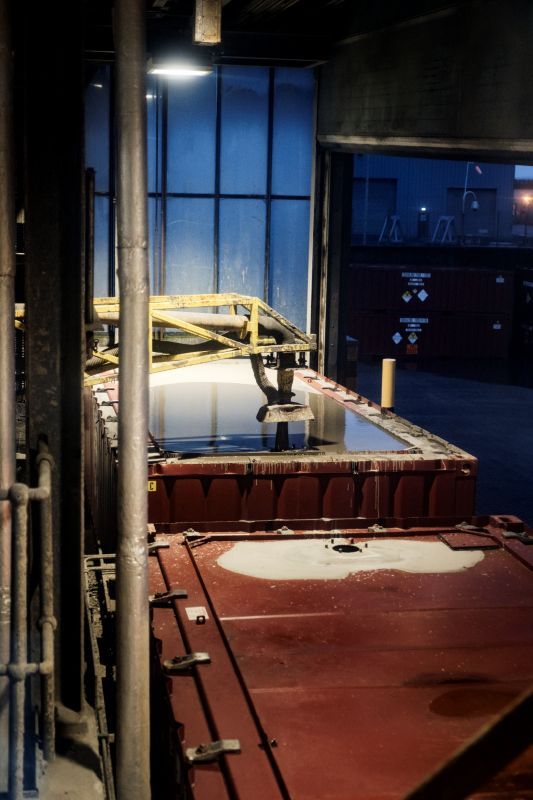
Waste is now containerised in what looks like shipping containers but are better thought of as ‘concrete bathtubs’ made up of internal layers of waste and radiological shielding.
Each container weighs around 35 tonnes and the repository is home to thousands of containers, which store and permanently dispose of the waste.
The containers are stacked atop one another on site and disposed of in vaults, which are essentially large concrete engineered spaces dug out of the ground.
Once the vaults are filled, they will be covered with special protective caps, which are made up of layers of shielding and from the outside, will look like maintained grassy hills.
It’s a process that is designed to dispose of the waste in a safe way not just for humans now, but for generations to come.
Site and waste operations director Mike Pigott said: “You have to have a mindset where you think multiple generations ahead and think, what is the legacy I am leaving them?
“While we may not have directly created that waste ourselves, you have to think of it as a moral obligation and responsibility to protect future generations.
“You almost have to assume in your work that some kind of societal breakdown might have happened where intergenerational communication hasn’t taken place and the site has to be futureproofed for that.”
The facility is currently home to vaults eight and nine each containing thousands of containers and four legacy trenches covering 40 hectares – where waste was disposed of before 1988.
Mike said: “We have enough capacity for the entire NDA mission here and we have planning permission to have more storage here if necessary.”
But in the repository’s early days, waste was disposed of quite differently.
So how was radioactive waste disposed of in the early days?
The repository first started its low level waste disposal 65 years ago in 1959 after the need for the facility arose in the wake of the Windscale fire in 1957.
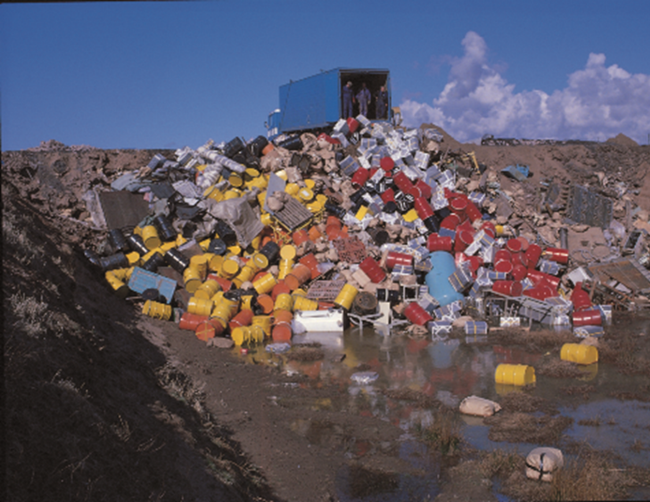
Up until 1995, low level radioactive waste was brought in via trucks and buried on site in trenches, in a similar way to a conventional landfill site.
But unlike a conventional landfill, the legacy trenches are better thought of as ‘bathtubs of clay’ which Mike said effectively stop radiation from penetrating the earth beneath it.
Records from what was being disposed of in the trenches are also extensive and Mike said teams know the numberplate and contents of every truck that entered the site to dispose of waste during its early days.
He added: “For the right reasons, we are uncomfortable with it. But we do have a good understanding what waste was disposed of at that point in time.
“Looking at it now, we would actually divert a lot of what was being disposed of in the legacy trenches.”
Mike said that while the trenches are safe, following advancements in technology and engineering, it’s not a way waste would ever be disposed of again.
He added that digging up and repackaging the waste into modern containers is also not an option, as it would present a radiological risk that would outweigh the benefits of modernising how it is disposed of.
Instead, Mike said capping the trenches is the best way to protect the environment and the trenches themselves from the elements.
Work to cap the trenches has been progressing at pace on site over the past six months.
Teams have been busy progressing work on the site’s southern trench cap interim membrane – which involves placing a new membrane, or protective layer, over the legacy disposal trenches while it awaits a final cap.
Other construction materials are also being placed to progress towards the final cap.
What is the facility actually like behind the fence?
Behind the barbed wire fences and large hedgerows, the site is comparable to an expansive, tidy construction site, mixed in with an industrial estate in layout.
The vaults themselves are vast expanses of concrete, filled in with towers of thousands of waste containers.
Some of the containers are different shapes and sizes – which results in what looks like a highly engineered game of Tetris.
In comparison, the legacy trenches are covered with an interim protective cap, flat and bordered by grass. Only the new capping works on top of them can be seen now.
But the facility also isn’t just a dusty wasteland, it is bordered by patches of unruly woodlands and grassy spaces, in keeping with the Cumbrian countryside surrounding it.
Standing at the edge of vault eight, rows and rows of containers sit in front of a striking backdrop of Lake District fells, with Black Combe looming off in the distance.
Mike said: “It is a sobering experience and it is a real stark contrast. We have had conversations about capturing a picture or some kind of artwork of the site and the fells for posterity.”
What does the capping work involve?
The capping process involves covering the top of the vaults and trenches with multiple layers of radiological shielding that will protect the site and people for years to come.
Made of up to nine layers of materials and filters, the caps once complete will be 10 metres thick and will eventually look like tall grassy hills.
The layers include materials like filters, drainage, special protective membranes and more – all of which protect people from the radioactive material beneath the top soil layer.
Vault eight, which has a capacity of 10,000 containers, is also getting close to a point of closing which teams are hoping will begin in 2028 with southern trench interim membrane work starting in 2027.
Work to cap the legacy trenches has been progressing at pace on site over the past six months.
Mike said: “We’re in a really important stage where we’re now building up to the capping work, which is a major milestone in the repository’s history.
“We have to be able to say for ourselves and the regulator that the final cap is robust enough to protect people and ourselves from hazards as long as it exists.”
Teams have been working on the site’s southern trench cap interim membrane – which involves placing a new membrane, or protective layer, over the legacy disposal trenches while it awaits a final cap.
Other construction materials are also being placed to progress towards the final cap for the legacy trenches.
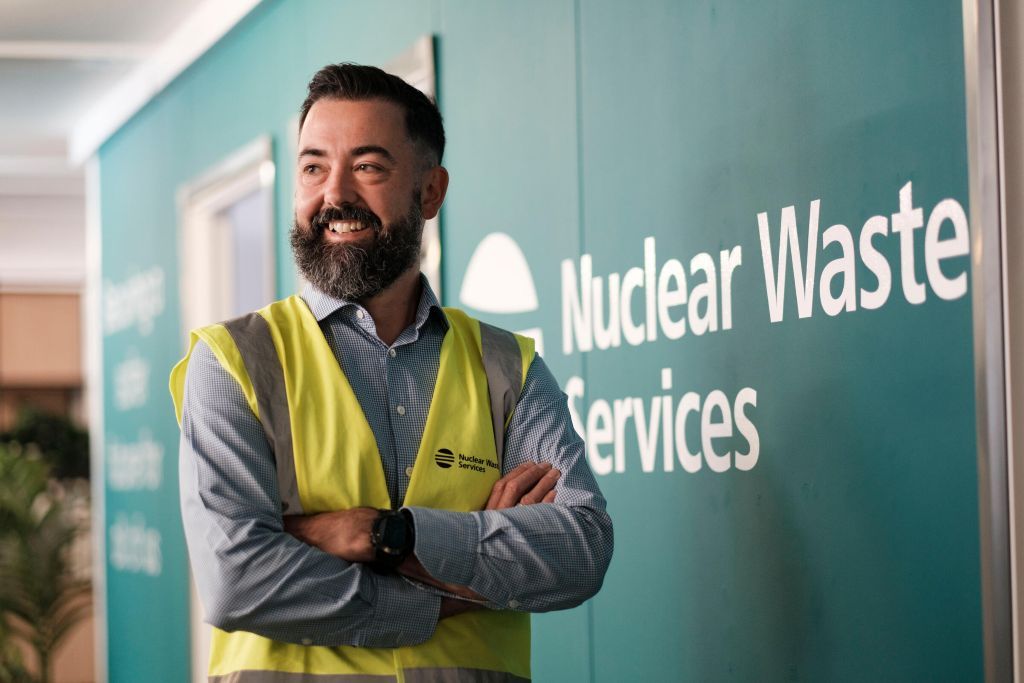
Nuclear Waste Services, which is in charge of the repository, has also completed the design of the final cap.
It has also completed the enabling works and rail transport arrangements for procuring, importing and emplacing thousands of tonnes of capping materials.
Every day, the repository has around 100 to 120 people working on site to maintain and oversee operations.
What is low level radioactive waste?
The waste being disposed of on site comes from a few different industries from across the UK, including:
- Nuclear power
- Reprocessing
- Fuel fabrication
- Defence
- Oil and gas extraction
- Hospitals
- Pharmaceutical production
- Factories
- Universities/schools
Low level waste itself ranges from things like contaminated PPE used on site to tools or objects used that may have come into low level contact with radioactive materials.
Most of the waste disposed of on site comes from Sellafield, but waste also comes in from other nuclear sites across the UK.
Low level waste also takes much less time to decay in comparison to high level waste, which takes thousands of years and requires a facility like a GDF to protect generations very far into the future.
Mike said: “The benefit of radioactivity is that it decreases into something less, so if in thousands and thousands of years the repository were to face some kind of challenge, it would have protected people from that hazard.
“That in some respects is the benefit of a radioactive waste disposal facility versus a conventional one.
“Some of those places deal with like heavy metals and persistent organic pollutants, they last forever, but our hazard degrades through the natural reduction of radioactivity.”
Earlier this year, the Government published plans to change the UK’s approach to managing nuclear waste and how it is disposed of.
Mike said the plans have impacted what kind of levels of waste are suitable for disposal at the site.
How much waste is disposed of at the site every year?
Initially, around 600 containers of waste were being disposed of at the site every year from across the UK.
But in 2007, the UK Government pushed for the nuclear industry to treat nuclear waste in a similar way to conventional waste, with a focus on reducing, reusing and recycling.
In 2009, a total of 95 per cent of waste being sent to the repository was being disposed of on site, with only five per cent being diverted away.
But today, a total of 98 per cent of waste is diverted away from the site and only two per cent is disposed of.
Now only 30 containers of waste are disposed of at the site each year, thanks to teams diverting the waste away for radioactive recycling.
Mike said that while other countries like America have large open spaces to work with, teams in the UK have to do everything they can to work carefully with a finite amount of space.
He added: “It’s a travesty to put some of this stuff underground when you can recycle the majority of it.
“It’s about reusing or minimising waste in the first place, but recycling really protects the site’s physical capacity.”
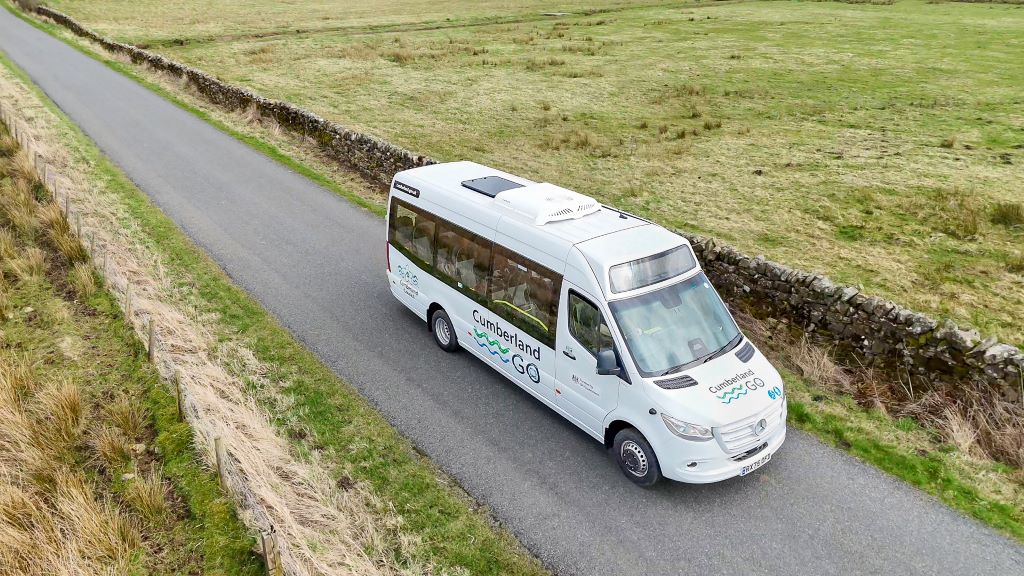
Waste and all materials for capping operations are brought to the repository via rail and each train consists of 12 carriages and weighs in at 750 tonnes.
By using train, the repository takes the equivalent of 6,500 trucks off the road.

How on earth does radioactive recycling work?
A total of 98 per cent of low level radioactive waste previously sent to the repository is now diverted away from the site.
The diverted waste undergoes various recycling processes off site at treatment centres that are able to decontaminate items via processes like acid baths and sandblasting.
One of the treatment centres, Cyclife UK, is based in Workington, and treats low level radioactive metals using techniques like size reduction and shot-blasting.
Mike explained that the recycling process is particularly useful for large objects that could take up a lot of space at the repository.
He added: “It doesn’t all need to go in a big hole in the ground, we can divert waste and avoid doing that. It’s another really important moral and financial decision we have to make.”
Mike said that waste is also diverted based on a waste hierarchy.
The hierarchy focuses on waste prevention first, before moving on to waste minimisation, reuse of materials, recycling and then disposal if required.
Under the hierarchy, it means that very very low level waste should never be sent to the repository, as it should be stopped and redirected earlier in the hierarchy.
The repository is close to the sea and overlooked by fells, does it cause problems?
Mike said that the repository’s unique location does come with its own challenges.
Sat between Lake District fells and the long stretching Cumbrian coastline – weather can be interesting on site, and any serious inclement weather can halt operations, as the capping process requires dry weather to be carried out.
Teams also have to look after and manage degrading assets due to salt exposure from the coastal winds.
Concerns over coastal erosion have also been raised over the years, but Mike said it was something that the site is prepared for and able to manage.
Mike added: “We do have to take it into consideration. The cap we will build over the facility does assume the most pessimistic case, so it does have to be robust enough to cope with things like coastal erosion.
“Realistically, future generations may decide to intervene and put some kind of new protection in place, but because of the nature of our work, we have to assume the worst case scenario to protect people and the site from external risks.”
The repository also sits on an active aquifer – an underground layer or porous rock or sediment like sand or gravel that can store significant amounts of water.
Mike said as a result, the site has a significant environmental monitoring programme in place.
Does the repository have an impact on wildlife?
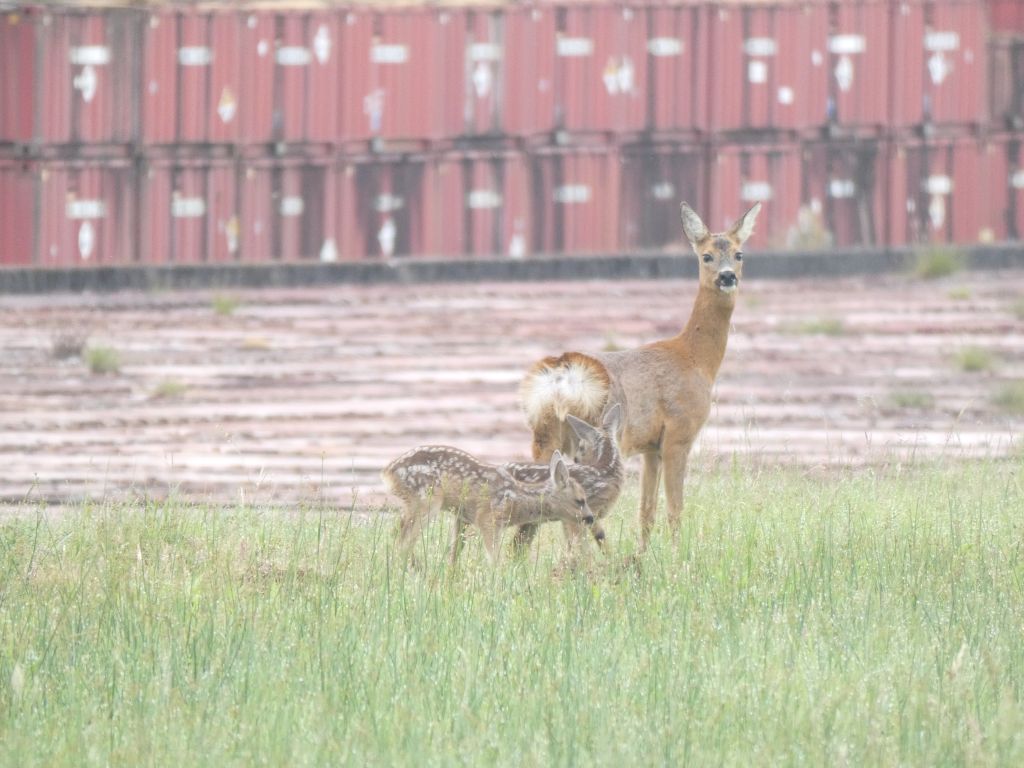
While a low level waste disposal facility might sound like a place totally devoid of life, at the repository, it’s actually quite the opposite.
While parts of the site have been cleared away for roads, trenches and vaults, other large swathes of the site remain as patches of untouched woodlands and grassy areas.
The site is actually so full of life, that Nuclear Waste Services employ ecologist Chris Arthur full-time to make sure operations are in harmony with the environment and wildlife.
Wildlife living on site includes larger creatures like foxes, nesting birds like oystercatchers, birds of prey like buzzards, bats, otters, owls, badgers, weasels, stoats, herons and deer down to smaller animals like newts, adders, butterflies, bees and wasps.
In total, the site has recorded 21 species of butterflies, 60 species of moths, two species of robberfly, one species of hoverfly, 16 species of odonata (dragonflies) as well as 40 species of bee and numerous species of wasps.
Many of the bees recorded on site are also considered nationally rare or scarce, including the black-headed mining bee, which hasn’t been seen in Cumbria since 1950s – at least 75 years ago.
In the past, the site has also recorded protected species like natterjack toads living in its natural spaces.
While wildlife might seem like a low priority for a site where handling low level radioactive waste is the focus, there is a lot of care behind the scenes.
Mike, who said he views himself as pro-nuclear environmentalist, added: “It’s all about responsible stewardship of the site.”
He added that work in the past has had to be adjusted to accommodate animals living around site, including a badger sett, which teams had to work around while carrying out building work.
Nuclear Waste Services is also currently investigating the feasibility of introducing rare small blue butterflies – the UK’s smallest species of butterfly – to the site in partnership with Westmorland and Furness Council.
During out visit, we spot three herons sat on top of a container at vault eight, we’re told the trio are regular visitors.
The facility was built on an explosive factory, is that safe?
While the repository is built on an old World War Two TNT factory – the actual waste itself is not buried where the factory was.
The site produced TNT from around 1939 until 1945 and and stopped production officially on Victory over Japan Day, the official end of World War Two.
But Mike said teams do still have to be careful while working in the areas of the site where the factory originally was.
Mike said: “It’s an odd and perverse heritage, because it does present real challenges and it’s an inherited liability.
“We’ve dug up parts of the site near there recently and there is a genuine, real risk of digging up unexploded ordnance on site.”
Mike added that while there is a real risk – the facility’s history has not yet caused an issue on site, thanks to detailed records left by the people who were in charge of the factory at the time.

Did the repository have issues with the Environment Agency?
Last year, the BBC reported that the repository breached its environmental permit with the EA due to delays in the capping process.
Mike said that the repository has now agreed on flexible deadlines with the EA to account for external issues that may impact work on the site.
He said: “There’s always an appropriate constructive tension about being able to deliver at a pace that satisfies everybody.
“We’ve had some challenges, for example we mobilised some of the early capping and enabling works and then Covid hit us, so there have been things that have impacted our timescales.
“But it’s not a negative or disruptive tension, it’s the role of the nuclear safety and environmental safety regulator to create that tension for us and it’s a good place for us to be.”
Mike said that a new completion timeline with the EA was agreed on September 1 and that it revolves around giving teams greater flexibility in the face of external setbacks.
He said: “If there are any impacts outside of our control, so disruption to rail systems or a named storm, the EA have agreed a level of proportionality and if things happen, they’re happy for us to vary our dates if required.
“Some of the original tension playing out was while we were agreeable on dates, it was, what if something does happen that is outside of our control?
“We wanted assurance that we have no control over things like rail infrastructure and a contingency or mechanism in our dates if appropriate and valid to do so.
“We’ve now agreed on that constructive dialogue and flexibility.”
Mike added that the repository has to be able to demonstrate that it’s progressing at pace, doing so safely and with appropriate levels of quality while managing any external challenges to how work is carried out on site.
He said that transparency has been a key focus in the work the repository has done with the EA in recent months while amending timelines.
What does the future look like for the repository?
The repository is still on track to officially bring operations to a full close by 2130, with closure and delicensing set to continue until 2135.
In 2127, the full repository closure programme will commence, following the closure of the vaults.
In the immediate future, capping operations are expected to start for vault eight and the legacy trenches in 2028.