The remains of 66 Medieval men, women and children have been reburied after they were discovered during the construction of Kendal’s flood defences.
A service was held at the town’s Holy Trinity Parish Church yesterday, Tuesday May 26.
The human remains were reburied in a private interment led by the vicar of Holy Trinity, The Rev Canon Shanthi Thompson, attended by representatives from the local community.
Hundreds of members of the public visited the church in the days before the interment to pay their respects.
The story of the people who lived in Kendal hundreds of years ago has been captured in an ebook by the Environment Agency.
Living on the Edge: Buried at the Edges takes an in-depth look at what archaeologists and scientists found when they examined the 66 individuals, including diet, health, origins and what their lives may have been like in 13th century Kendal.
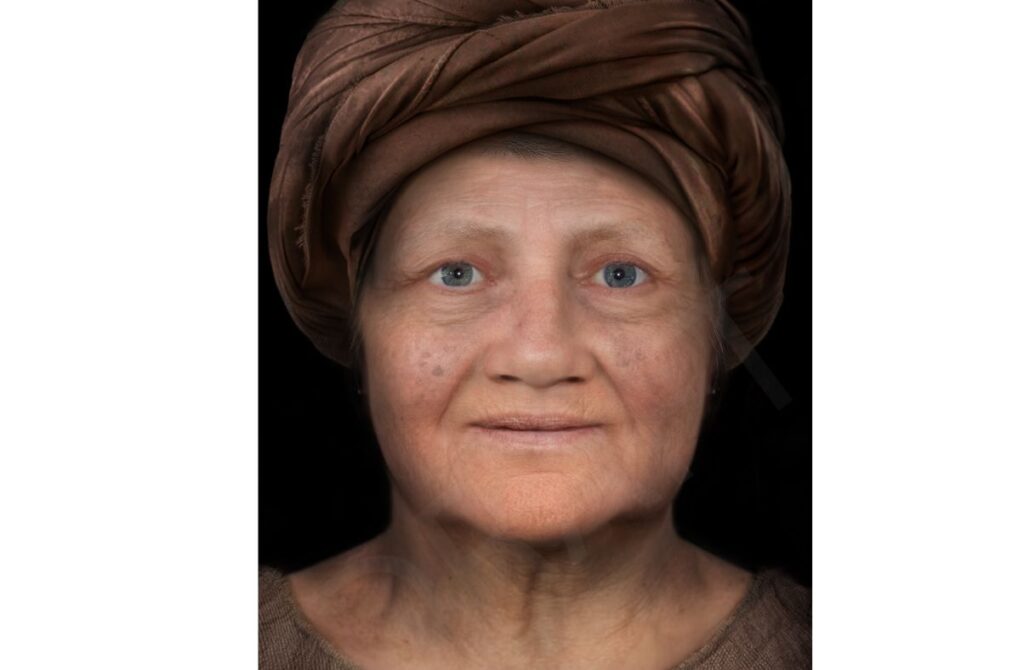
Among the highlights of the new volume is the story of Agnes — The Kendal Woman.
One woman’s skull survived in good enough condition for scientists at Liverpool John Moores University to create a detailed facial reconstruction.
Named Agnes by a public vote, she is thought to have been around 50 years old and to have spent her whole life in and around Kendal in the 1200s.
Analysis of her bones points to a life of hard outdoor manual work, a poor diet and chronic osteoarthritis in her later years.
The ebook also reveals that radiocarbon dating of the remains confirmed the burials date from the 11th to 13th centuries, earlier than previously believed, providing new evidence that a place of worship stood on the site of Holy Trinity Parish Church long before any existing records showed.
Other findings include evidence that some of those buried were not originally from Kendal, with one individual possibly originating from Wales or the Hebrides.
Among the most poignant discoveries was a young mother aged around 19 to 20, buried alongside her unborn child, a compassionate act given the strict religious rules of the time.
Steve Dean, Environment Agency senior historic environment advisor, said: “It has been very gratifying to see people coming to the church and talking about the remains of these 66 people. It has been good to see people engage with their heritage.”
The Rev Canon Peiris added: “It has mean so much to have the remains of these people, who were members of the church, reburied near to where they were found.”
Kendal mayor Richard Sutton, said: “It is good to know that the medieval remains have been reinterred at the parish church have been with the utmost dignity and respect, after being disturbed by essential flood work.
“These findings provide a tangible link to our town’s past. We are committed to honouring this history.
“While improving our town’s flood defences it is crucial we respect the historic fabric of Kendal, including its former inhabitants. Thanks are due to the archaeological team for their careful work in documenting this important discovery.”
Living on the Edge: Buried at the Edges is available here for free
The first volume of the ebook, which covers the wider archaeological discoveries made during the flood scheme work — including evidence of Kendal’s medieval industrial heritage along the River Kent — is also available to download for free.
The Kendal Flood Risk Management Scheme will better protect over 1,920 homes and 2,250 businesses from the impact of flooding. It is delivered by the Environment Agency, designed by Jacobs and WSP, and constructed by VolkerStevin Ltd. Archaeological investigations were carried out by Wardell Armstrong.