A geologist has answered questions from the public about a nuclear waste disposal facility being considered for Copeland.
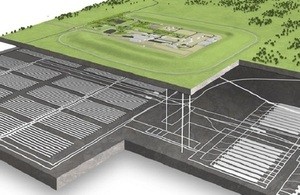
The Copeland GDF (geological disposal facility) Working Group was formed in November to explore the prospect of building a nuclear waste disposal site in the borough.
It followed initial investigations that were carried out by Radioactive Waste Management, the Government body responsible for nuclear disposal.
RWM said that their reports suggested that there was “the potential” for Copeland being suitable for a GDF, which would bring huge employment and economic opportunities to the area if built.
There are also economic incentives for being involved in the process, even if it is not successful. RWM say that a site will only be built if there is a “willing community” and the geology in the borough is suitable to safely store the radioactive waste below ground.
The waste is currently packaged for disposal and stored above ground within the Sellafield complex.
It is anticipated that only one GDF will be built in the UK.
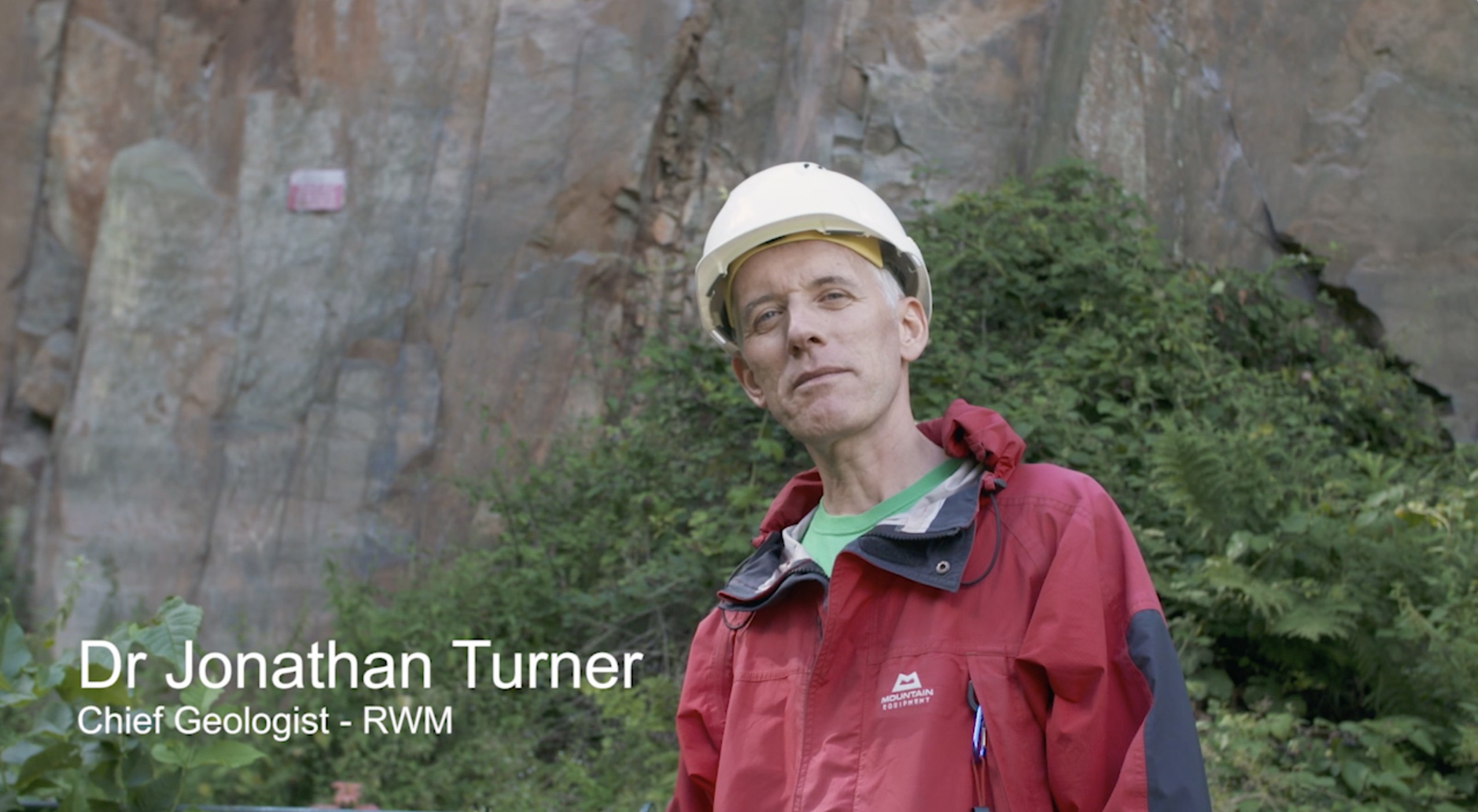
Jonathan Turner, Radioactive Waste Management’s chief geologist. answered questions from the public about the process.
Didn’t NIREX (RWM’s predecessor) or RWM (during the Managing Radioactive Waste Safely process) rule out some/all of Cumbria because of unsuitable geology, so why are you looking here again?
“NIREX did not rule out anywhere in West Cumbria. In the 1990s they did use deep borehole drilling and
geophysics to investigate the subsurface geology in an area around Longlands Farm, a few kilometres
south of Sellafield.
“These investigations aimed to understand whether the area was potentially suitable to construct an underground rock laboratory that was going to be used to explore the feasibility for the deep geological disposal of radioactive waste.
“However, before those investigations reached their conclusion, the project was discontinued following the refusal of a planning application to construct the underground rock laboratory. The MRWS process between 2008-2013 also considered the potential of West Cumbria for a geological disposal facility.
“The British Geological Survey undertook a desk-based study which identified parts of the coastal plain as unsuitable for a GDF based upon criteria developed specifically for the MRWS process. That process ended in January 2013 when one of the three local authorities leading the discussions decided not to proceed further.”
What do you know about the geology of West Cumbria?
“The surface geology of West Cumbria was mapped by the British Geological Survey’s predecessor more than 100 years ago and a lot is known about the rocks exposed in hillsides, river cuttings, cliffs and
quarries.
“However relatively little is known about its deep subsurface geology because, unlike other parts of the UK, West Cumbria has not been intensively explored for geological resources. The sorts of things that are not well understood include how the rocks at the surface connect up with those at depth, and the nature of faults and fracture zones.”

Will earthquakes cause a problem?
“There are no known active fault lines in West Cumbria or indeed anywhere in the UK. Earthquakes are therefore no more likely to occur in West Cumbria than elsewhere.
“However, as part of any site investigations, the UK regulators will require RWM to gather information on rock properties and deep subsurface forces in order to understand whether drilling and construction activities could trigger earthquakes.”
If you build a GDF in West Cumbria, won’t you disturb the water table and therefore contaminate our drinking water supplies?
“No, a geological disposal facility would be constructed at depths of at least 200m so it will not disturb the
water table. Before recommending to Government that RWM can be granted a licence to undertake drilling and construction, the Environment Agency would require proof that these activities will not interfere with drinking water and natural aquifers.”
What types of rock exist deep underground/under the seabed in West Cumbria?
“Quite a variety. West Cumbria and indeed most of the UK’s west coast forms the margin of an ancient rift
valley. This means the rocks beneath the Irish Sea are very different from the older rocks exposed onshore.
“West Cumbria forms a large dome-shaped rock structure. The low-lying coastal fringe onshore in West Cumbria is made of much younger, reddish-brown sedimentary rocks that extend beneath the Irish Sea.
“They comprise deeper layers of sandstone overlain by a mix of fine-grained clays and silts that also contain rock salt. Any RWM site investigations would include a detailed assessment of their potential as suitable host rocks in which to construct a geological disposal facility.”
Are these rock types in West Cumbria suitable to build a GDF in?
“Potentially yes, the deep subsurface geology beneath West Cumbria includes rock types with characteristics that could make good host rocks for a geological disposal facility, but there is not enough information to be sure at this stage.
“RWM would need to carry out detailed site investigations to find out more about them. The rocks deep beneath the seabed adjacent to the coast would be included in this, however, the Lake District National Park area is already excluded from consideration.”
Why can’t you use one of the many old mines in Cumbria instead of building a new expensive facility?
“Disused mines are not good places in which to dispose of radioactive waste. This is because old mines comprise a network of often unsurveyed shafts and tunnels that could act as pathways for migration of harmful radioactive material to the surface.”
Where is the waste now?
“Radioactive waste destined for disposal in a GDF is currently being stored safely and securely in surface facility sites across the UK, with most of the waste stored at Sellafield. These interim stores will need to be replaced every 50-100 years.
“Surface storage is not a permanent disposal solution as it requires constant monitoring, security, maintenance, and protection from natural processes, environmental changes and events, and malicious intervention.
“Information about the UK’s radioactive waste inventory can be found here – 2019 Inventory reports | UK Radioactive Waste Inventory.”

How much radioactive waste will go into a GDF?
Currently planning is on the basis that there could be around 750,000 cubic metres of packaged waste in total. This would be enough to fill around two-thirds of Wembley Stadium.
How much of the radioactive waste is from old, existing, or new facilities?
“About 90 per cent of the volume of waste planned for disposal in a GDF is due to past or existing facilities.
“About 10 per cent of the volume of waste destined for disposal in a GDF will come from currently planned new nuclear power stations. This figure is based on an anticipated 16GWe of new nuclear power station capacity.”
How long will the waste be hazardous?
“Whilst over 90 per cent of the radioactivity will decay naturally in about 1000 years, some of the
radioactive waste will remain hazardous for over 100,000 years.
Is all the waste destined for disposal in the GDF from the UK?
“Yes, we do not import or export waste for disposal.”