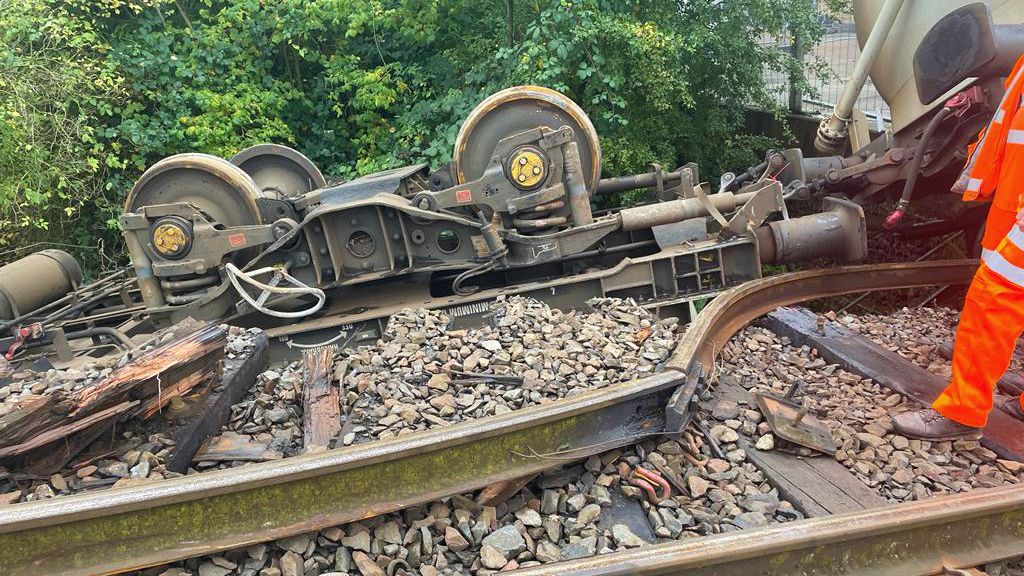
Engineers are continuing a complex operation to recover several freight wagons which derailed in Carlisle.
A train hauling 14 wagons, each filled with 80 tonnes of powdered cement, derailed at the Petteril Bridge Junction on its way from Clitheroe to the city on Wednesday October 19.
Five wagons came off the tracks – and the incident has caused travel misery for rail passengers. Replacement buses have been arranged for people travelling to and from Newcastle and on the Settle to Carlisle line between Carlisle, Appleby and Skipton.
The recovery is likely to take several weeks.
Network Rail has now released trackside footage of the recovery scene.
Of the five wagons which came off the tracks, two have been righted on the rails, and the remaining three will have to be lifted out by crane.
Before that can be done specialist contractors have emptied wagons of all their cement so each wagon’s 20 tonne weight can be lifted safely.
The Environment Agency continuously monitored that work and there have been no spillages into the River Petteril during the recovery process.
Phil James, Network Rail’s North West route director, said: “I’d like to once again thank people for their patience while we continue our difficult work to recover the derailed freight wagons.
“We’re working with multiple agencies to get to a point where the recovery operation can end and our major railway repairs can begin. There is still a lot of work to be done until we get to that point though, so I’d encourage passengers to check National Rail Enquiries if they are planning to make any journeys through the area over the next several weeks.”
Kerry Peters, regional director for Northern, said: “We continue to work closely with Network Rail to minimise disruption for our customers while the recovery operation takes place. Customers should still check before they travel and plan for longer journey times. We will share updates on our website and via social media when they become available.”
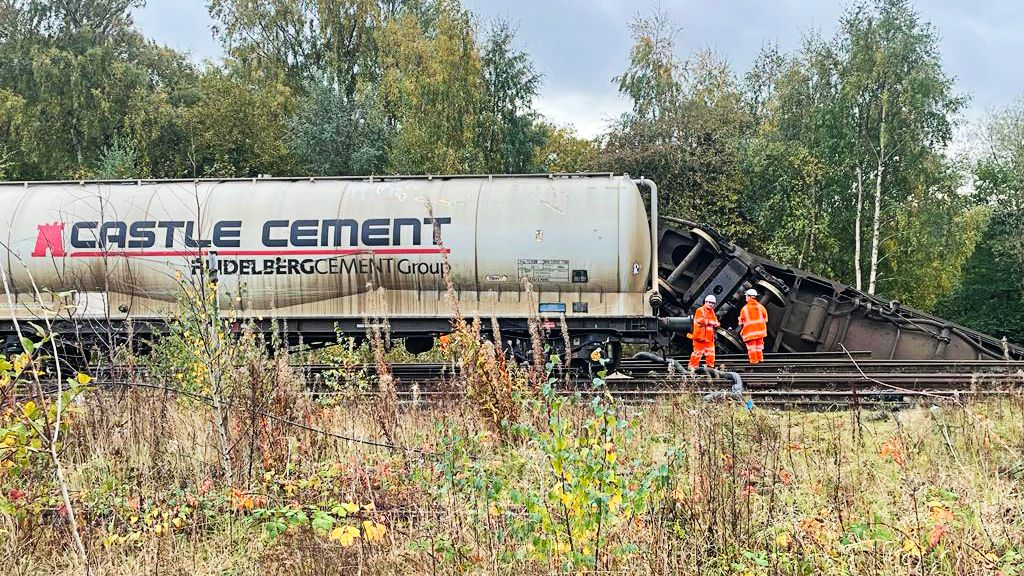
Clearing up the aftermath of the derailment continues to be complicated by several factors, Network Rail said.
This includes working in the difficult terrain where the 100 tonne wagons came to rest.
An initial report published by the Rail Accident Investigation Branch found that a fault with a train wheel was the most likely cause of the derailment.
Network Rail has visited nearby properties and will write to residents in due course with more details of how the recovery and repair work could impact them.