A new exhibition in Cockermouth charts an artist’s journey along Wainwright’s Coast to Coast walk in 45 paintings created there and then in the open air, in all weathers, over four seasons.
Lawrence Quigley spent a year travelling to points all along the walk from St Bees on the West Cumbrian coast, across the Lakes and Dales and on to Robin Hood’s Bay in North Yorkshire.
It was an idea Lawrence first had some years ago, but it was the COVID pandemic and the country’s “more appreciative response to nature” that finally spurred him to set off with his easel, paints and tent in summer 2021.
“I’ve always found the North of England landscape so rich and diverse in not only its physical terrain, but also its colours and ever-changing light throughout the seasons,” says Lawrence.
Painting his landscapes on the spot rather than back in a studio from sketches or photographs added to the challenge.
“I’ve always admired Turner in the way he strode and trekked around most of the British Isles, visually recording and documenting his travels, and working ‘plein air’ in response to the landscape,” says Lawrence.
Setting off in the summer of 2021, Lawrence, who returned to his hometown of Birkenhead in 2020 after teaching art in the south of England, and before that Scarborough Art College, clocked up around a dozen paintings per season.
Nearly a year after finishing the project, his paintings will be exhibited for the first time at Castlegate House Gallery in Cockermouth from February 25 to March 18.
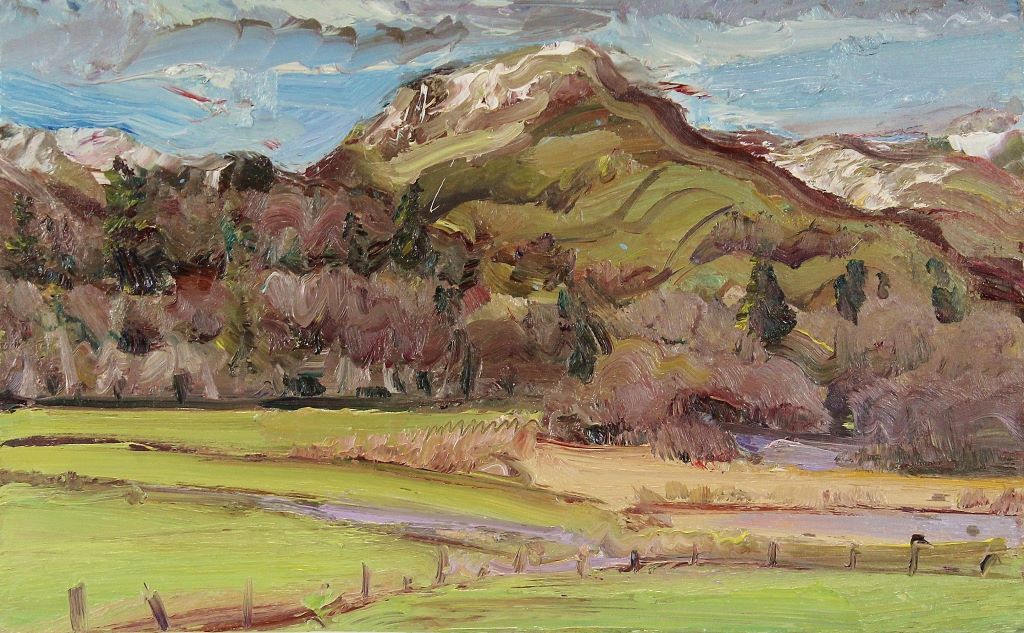
Cumbrian spots captured by Lawrence include St Bees Head, Nethertown Station, Ennerdale, Derwentwater, Windermere, Ullswater, Aira Force, and Helvellyn.
Gallery co-owner Steve Swallow said: “It’s a great idea and has been fascinating to watch this exhibition develop. We met up with Lawrie on some windswept days miles from the nearest town or village, trying to paint as the rain swirled about him. If he had any second thoughts about the enterprise, it didn’t show.
“Ultimately, this was the culmination of a decades-long plan, an artistic itch to scratch, and one we’re very proud to have been able to facilitate and one we’re equally proud to be able to exhibit.”
Describing the start of his project, Lawrence says: “Summer was a good season to start, as I was camping, and the weather not too incongruous. Having said that, in August, a series of wild thunderstorms in Cumbria nearly broke my tent poles – and the rain soaked just about everything in the tent.
“When it got to the end of October, through to early March, I stayed at more comfortable B&B accommodation in the various locations visited.”
Summer brought ‘four seasons in one day’, and longer evenings. “I was able to work quite late – often experiencing some wonderful sunsets and richness of colours – particularly when painting the twilight sky.
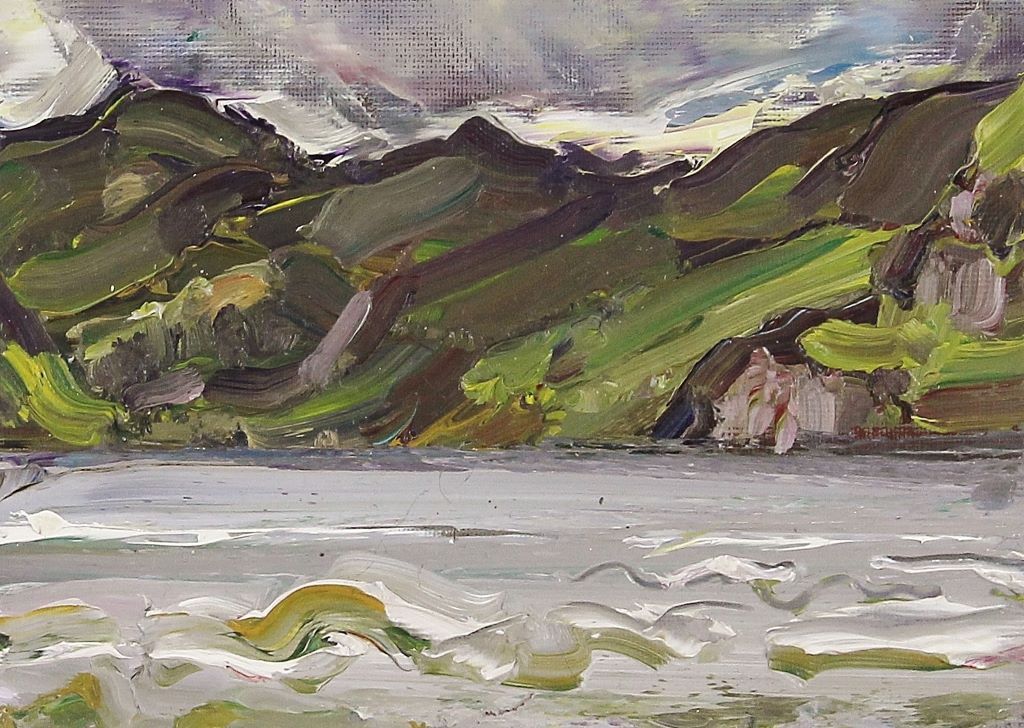
“The majesty of Ennerdale Water, with its mountains rising up from the lake was such stark contrast during the summer months – all the different greens against the vaporous grey/purples of the mist and water, was quite memorable.
“I liked the changing colours of autumn – the golden hues and deep Indian reds against lime greens; also the bright orangey ochres and textures of the cornfield stubble or muddy hillsides, contrasting sharply against the evergreen trees.
“The late September sunshine in Ullswater was a treat – as were some of the views and vistas discovered by climbing the nearby hills and mountains.
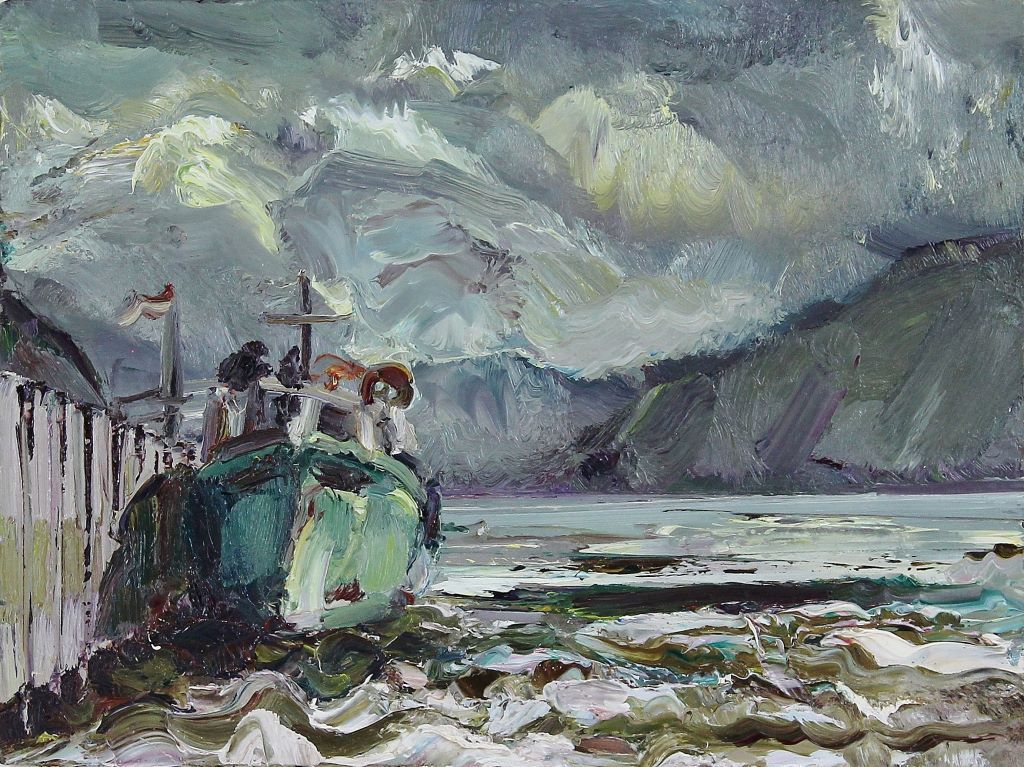
“The absence of summer tourists often created an intense silence, stillness and beauty – letting nature take centre stage and speak to us. The only sounds you could often just hear was the cawing crows high in the trees or the rock face, or the sudden dart of a pheasant spluttering out go the undergrowth or nearby field.”
Winter brought Storm Erica. “I was determined to work and not be beaten by the weather – after all, it is a part of our landscape! So, I managed to find a sheltered spot against the wind on one side of an old ruined shepherd’s hut.
“It excited me how many beautiful greys there are in the winter months, and, only having a certain amount of daylight hours to work in, I tended to work quite quickly and without inhibition.”
Spring brought a changing landscape and an abundance of colours. “Splashes of yellow from the rape fields, and the sparkling colours of the apple and cherry blossom trees – as well the brighter, fresher light – produced a variety of irresistible images. “
Reflecting on the whole experience of painting in the landscape, Lawrence says: “At times, when I was painting plein air at a particular spot on the journey I found myself almost part of its pulse or heartbeat and movement – and often the paintings just ‘happened’ as if I wasn’t there.
“It sounds mad, but I only became aware of it when I had stopped working – and I often found myself on all fours with the painting on the ground, having started either sitting or standing at an easel.
“It made me realise how removed we have all become in relation to our spiritual connection and relationship with nature, and how essential it is to our overall wellbeing, both mental and physical.”
The nature of the project also had a creative impact. “In some ways, I feel that many of the paintings painted throughout all four seasons, are indeed quite abstract – they are not always topographically correct or accurate, but more of a translation of the feeling of being in the landscape; so that the process itself becomes the subject of the work. Not so much a rendition of a particular view, but more of an interpretation of it.”
Lawrence Quigley – Coast to Coast, February 25 to March 18, Castlegate House Gallery, Cockermouth. (Gallery open Wed-Sat, Sun-Tue by appointment). www.castlegate.co.uk