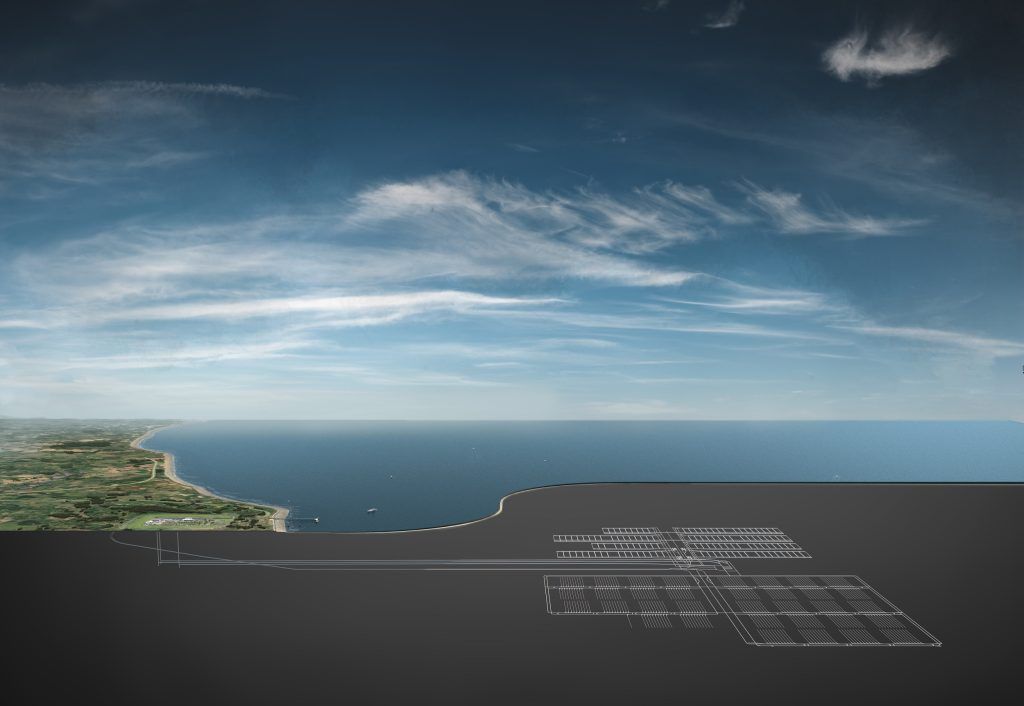
Studies are now underway to assess potentially suitable sites in Cumbria for an underground radioactive waste facility.
Nuclear Waste Services has begun a wide range of studies to evaluate locations that could be appropriate to host facility, known as a Geological Disposal Facility.
The studies will be conducted over a number of years to help ensure a GDF can be constructed, operated, and closed safely and securely.
Each potential location will be assessed against a number of siting factors including, safety and security, community, environment, engineering feasibility, transport, geology and value for money.
Major permissions programme lead at Nuclear Waste Services, Malcolm Orford, said: “This work signifies progress in the GDF siting process. We are now assessing a range of information to help build our confidence about whether the current locations engaged in the process could host a GDF.
“Detailed studies and investigations of site suitability will be conducted over a number of years to help ensure a GDF can be constructed, operated, and closed safely and securely.”
NWS experts and specialists from the supply chain will initially evaluate community partnership areas through non-intrusive activities such as geophysical surveys and desk-based studies of existing data on things like the local geology, transport infrastructure and local power supply.
Four community partnerships have already formed, so studies will focus on these areas in Allerdale, South Copeland and Mid Copeland in Cumbria, as well as in Theddlethorpe in Lincolnshire.
The work will be supported by service providers specialising in data gathering, optioneering and design, assessment, and evaluation.
A site evaluation service contract has also been awarded setting out a five-year framework of a comprehensive range of site evaluation services.
Moving forward, more detailed investigative work will be conducted for communities that progress to the later steps in the process – which includes the drilling of boreholes – to understand more about the geology deep below the surface of where a GDF could be built.
Information gathered from these studies will support the applications to carry out borehole drilling at the locations selected for further work and pending confirmation of a GDF location, the necessary regulatory permissions.
The process of selecting a suitable site could take between 10 to 15 years and the decision to develop a GDF can not be taken until the potential host community has had a say and given consent through a test of public support.
The GDF programme requires both a suitable site and a willing community.