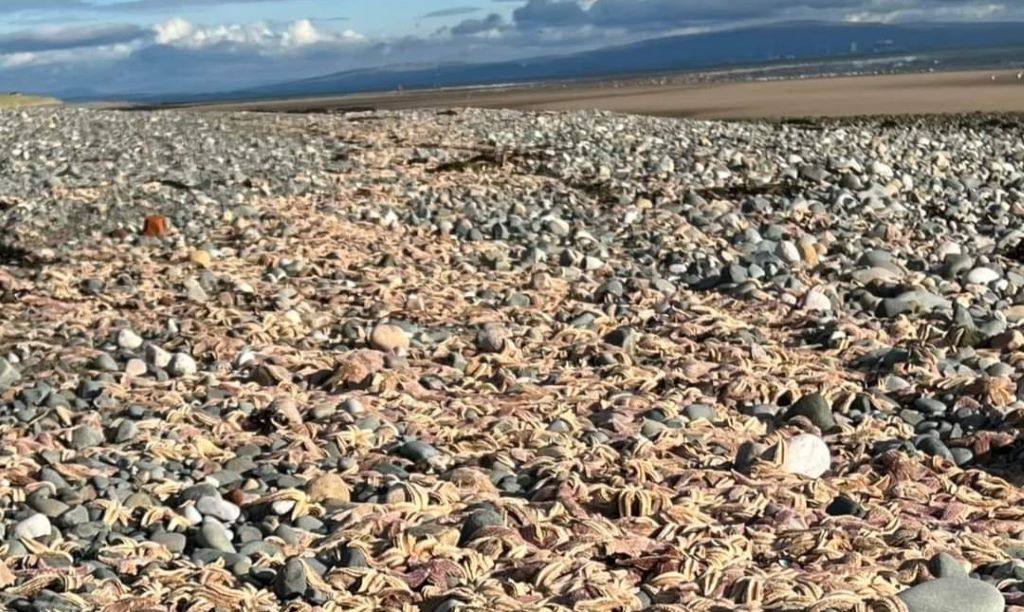
Hundreds of starfish have washed up on a Barrow shore.
The aquatic creatures were spotted by a walker on Monday afternoon at South Walney Nature Reserve on the beach.
While it seems an unusual sight – mass strandings of common starfish do occasionally happen along the coasts of England and Wales.
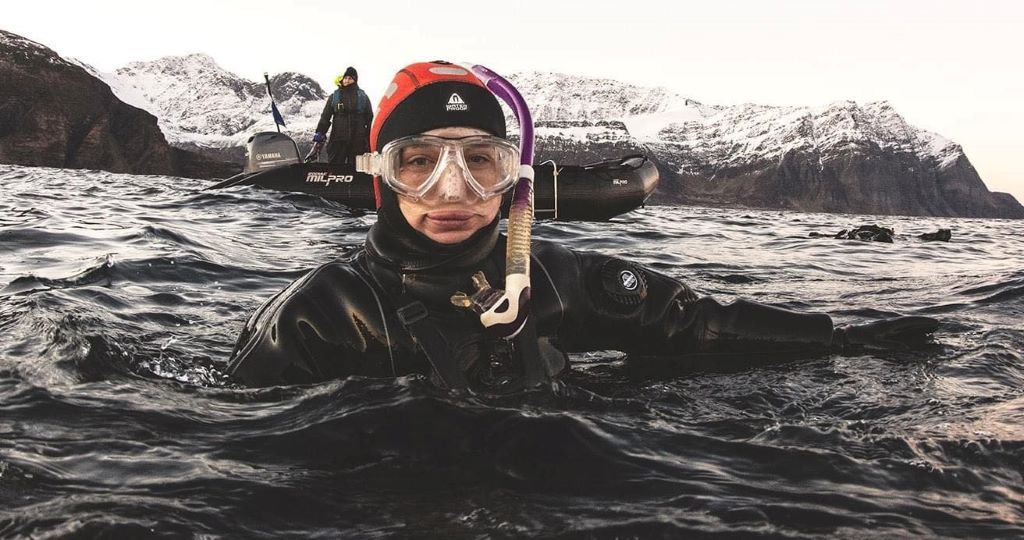
Marine biologist and Kendal College lecturer Sarah Neill, 39, of Grange-over-Sands, said: “Starfish strandings are not unusual, but mass strandings on a large scale don’t happen that often.
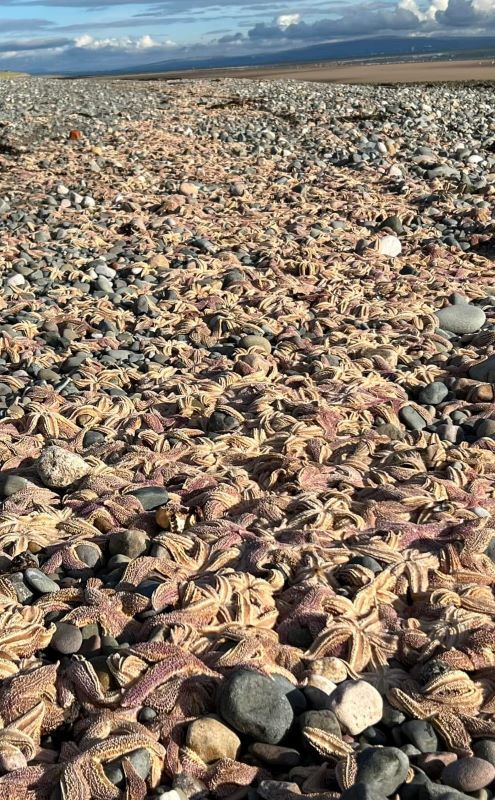
“We do see mass strandings of the animals after storms and this can be due to their starballing behaviour.”
Starballing is a phenomena where a galaxy of starfish move and are carried away by the sea in response to environmental changes.
Sarah added: “Starballing is a behavioural response to environmental changes, such as stronger currents, which trigger the animal to enlarge its body volume and bloat. The also retract their tentacles and detach from the seabed.
“This behaviour is beneficial to allow them to get swept along by the sea to new feeding and breeding grounds. But also puts them at high risk of washing ashore in large numbers in events such as storms.”
“They can’t survive long when out of the water, so unfortunately not many are likely to be alive.”
The UK has recently been hit by Storm Babet and Storm Ciarán – both of which led to some unsettled weather in Cumbria – making them a likely cause of the mass stranding.
Starfish live on seabeds and gather in coastal waters to feed. They are known to reproduce quickly and mass strandings are thought to have little impact on the species.