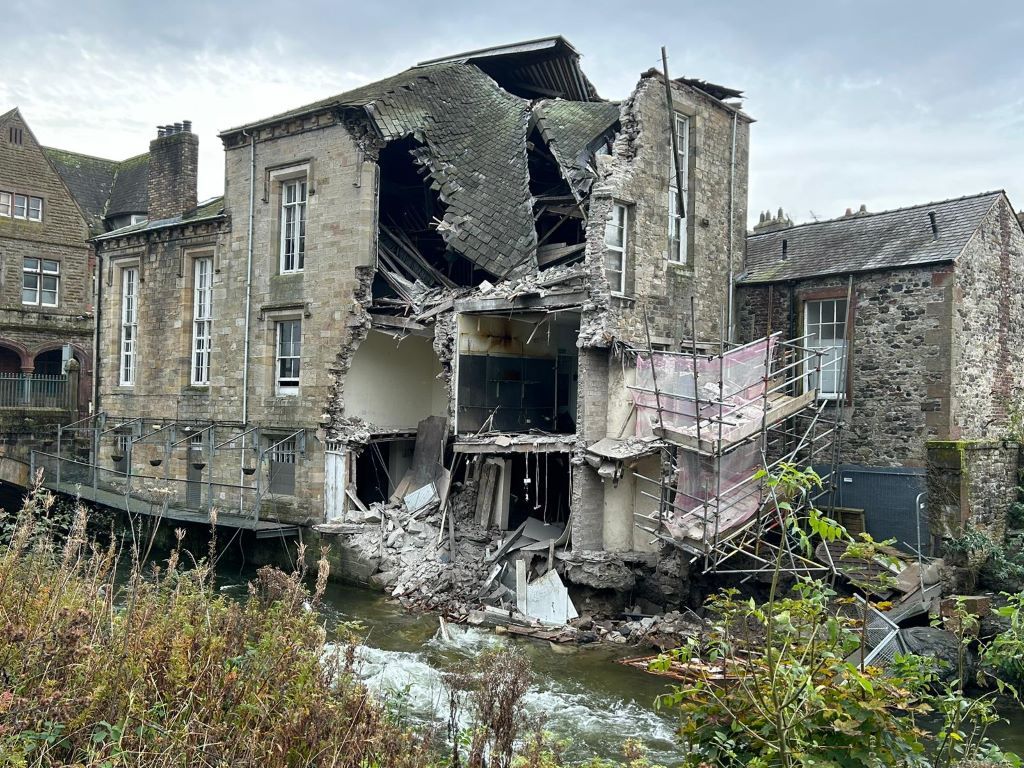
A Cockermouth bridge, closed after a prominent partially building collapsed into the river in October, is set to reopen to traffic later this week.
Once reopened, it will provide two-way traffic and will be managed by traffic lights.
It will provide full access over the bridge which currently is restricted to pedestrians only.
Work will get underway tomorrow, Wednesday December 13, to build a five metre scaffold screening on the side of the bridge to protect it from debris if there was a further collapse to the Old Courthouse building.
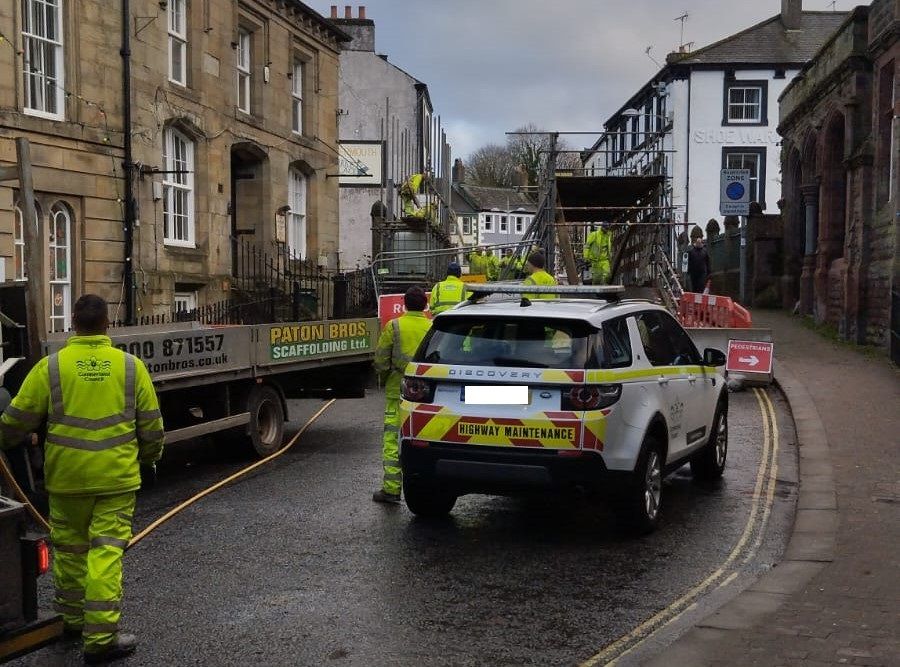
The work has been commissioned by Cumberland Council and will be undertaken by their specialist highways engineers. It is scheduled to take two days and is weather dependent.
A Cumberland Council spokesman said: “We have found a safe way to reopen the bridge and our officers and partners have been working hard behind the scenes to make this happen.
“The safety of bridge users is of paramount importance and the scaffold screening will allow us to reopen the road to vehicles.

“We have undertaken detailed assessments, commissioned external specialist support and looked at various options to safely reopen the bridge. Now that a plan is in place, we will start work as soon as possible and will work hard to get the road reopened.
“We would like to thank residents for their continued support to local businesses. Please continue to shop and buy local.”
The Old Courthouse building partially collapsed on October 7. The building is privately owned, but the council used emergency powers to protect public safety.

A covered walkway was installed soon after the building collapse which continues to provide pedestrian access into the town.
Other than two-way lights on the bridge, all other traffic restrictions will be removed following the completion of the work.
Agencies – including Natural England, Historic England, the Environment Agency and Cumberland Council – are continuing to assess options for the Old Courthouse site.
It is highly complex and a series of issues impact on the options available, the council said:
- The site is in private ownership.
- The site is land locked, access to allow any works to be undertaken is challenging.
- The building is Grade II-listed and any further works is required to be minimal to protect the fabric of the historic building.
- The River Cocker, next to the site discharges into the River Derwent which is a Site of Special Scientific Interest.
- The impact on waste flows and the protection of flood defences needs careful consideration.
- Any work needs to minimise pollution from any debris.