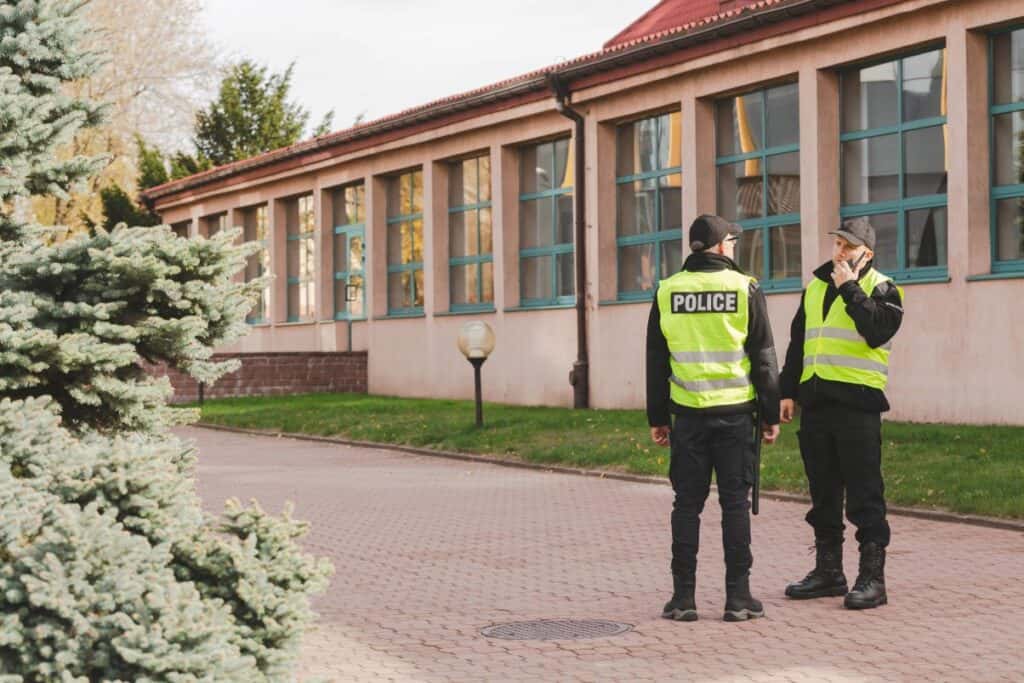
In December, to much fanfare, the Prime Minister and Home Secretary announced that there would be more bobbies on the beat at the heart of [..] mission to tackle crime.
As part of this commitment, the Prime Minister announced 13,000 additional neighbourhood policing officers, PCSOs and special constables in dedicated neighbourhood policing roles, saying they would spend time on visible patrols and, importantly, would not be taken off the beat to plug shortages elsewhere”.
Now, you may think this is another 13,000 cops, to add to the current total of nearly 150,000 officers across the country. But actually, the number of additional officers will be precisely zero.
These 13,000 officers, PCSOs and special constables will be drawn from those officers we already have.
Many will come from ‘back-office functions’, jobs police officers undertake that either don’t or rarely puts them face-to-face with the public.
But there will be some that are drawn from those cops who are already serving our communities, response officers, detectives, etc.
The PCSOs, largely, are already part of the Neighbourhood Policing teams. As, after all, as the name suggests, that’s what the role is Police COMMUNITY Support Officers.
And as for Special Constables, yes, there are very dedicated and committed volunteers who are trained to support regular officers but they are few and far between. Indeed, this cat can’t remember when I last saw one.
So, is this commitment by the Right Honourable Sir Kier Starmer and the Right Honourable Yvette Cooper just the crime of robbing Patricia to pay Paul?
Our local chief constable has pledged to fully implement the Neighbourhood Policing Model and this cat thinks that is a good thing. But for this to be successful it needs two things.
Firstly, it needs the police to manage expectations. You may have a named police officer or PCSO for your area, but you can’t expect them to be available 24 hours a day/seven days a week.
Indeed, the role of neighbour police is to manage the longer-term issues our communities face – recurring anti-social behaviour or rural crime. They are not there to respond to a crime in action.
Secondly, there must be a buy-in from the public. Tackling crime and making our communities safe is not something we can palm off totally to the cops. Just like tackling litter is not just that for the council or the bin men, but for all of – don’t drop litter, pick it up and dispose of it if you can, and be prepared to call out those who blatantly blight our landscape.
This buy-in will include getting involved with your communities. It might be just work with your immediate neighbours (what happened to Neighbourhood Watch?) or going to that community event put on by the local housing authority.
Some might want to get even more involved by standing for election to office although, as democracy has been stolen by the elites, don’t expect to change the world!
But it could be that you become one of those special constables who receive training to really support the regular officers and PCSOs.
It doesn’t have to be a full-time commitment. 200 hours per year, or 16 hours a month – a weekend or a couple of evenings each month, can be a rewarding diversion from the every day.
So, while Government accepts ill earned pats on the back let’s get involved and support Cumbria police and all those other organisations – council, housing associations, independent community groups, schools and sports clubs offering holiday and weekend activities for kids, etc – and make neighbourhood policing a worthwhile community drive.
While we might not have 13,000 uniformed extra pairs of feet on the ground, we might have many more making our communities places to be proud of.
About Cumbria Cat
Born in Cumberland and now back living in Cumberland, having spent most of the past 50 years in some place called Cumbria, this cat has used up all nine lives as well as a few others.
Always happy to curl up on a friendly lap, the preference is for a local lap and not a lap that wants to descend on the county to change it into something it isn’t.
After all, you might think Cumbria/Cumberland/Westmorland is a land forged by nature – the glaciers, the rivers, breaking down the volcanic rocks or the sedimentary layers – but, in reality, the Cumbria we know today was forged by generations of local people, farmers, miners, quarriers, and foresters.
This cat is a local moggy, not a Burmese, Ocicat or Persian, and although I have been around the block a few times, whenever I jump, I end up on my feet back in my home county.
I am passionate about the area, its people, past, present and future, and those who come to admire what we hold dear, be it lakes and mountains, wild sea shores, vibrant communities or the history as rich and diverse as anywhere in the world.