
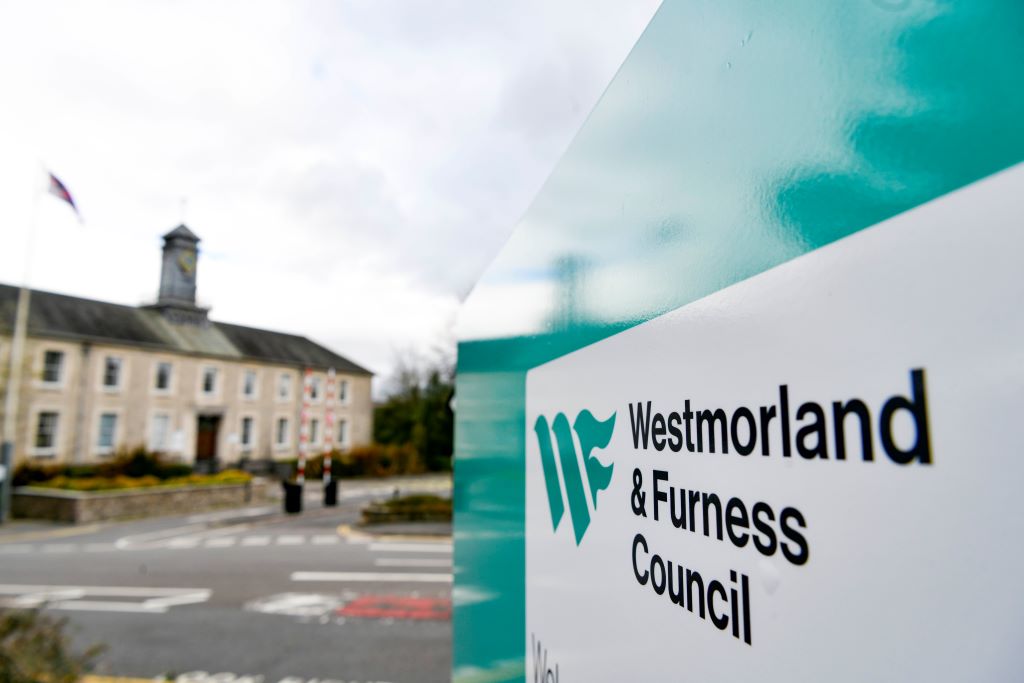
A Cumbrian council will target problem properties with new powers.
Westmorland and Furness Council’s cabinet agreed that a new policy would allow it to carry out enforced sales of properties.
The policy allows the council to sell privately-owned property where there was a failure to comply with a notice where the owner was required to carry out work to the property.
If the council were to carry out work in default on a house, for example, the costs incurred would then be a debt due to be paid by the owner.
But if the debt went unpaid and was registered appropriately, the council may, at that point, by law be able to enforce the sale of the property to recover the debt.
Officers said it was hoped it would act as a proactive deterrent, encouraging property owners to maintain their assets and comply with statutory notices.
Councillor Judith Derbyshire, cabinet member for housing and community safety, said the policy would give the council an additional tool to address the most problematic empty properties, when owners failed to engage and debts accrued and wider harm was caused to communities.
Cllr Derbyshire said it was a ‘last resort power’ to deal with long-term empty properties where the owners refused to engage with the authority.
She added that it was not intended to be used on a large scale and would only be used for the small numbers of the most challenging and persistent cases.
She said there was a property in Ulverston which had been vacant for over 10 years and had been complained about numerous times by neighbours.
Cllr Derbyshire said: “It has repeatedly been targeted by trespassers, antisocial behaviour, with local teenagers gaining entry to the building.”
She said a boundary wall had also collapsed onto a footpath, with trees encroaching onto the highway.
She added: “The council made repeated attempts to contact the owner, tracing their address, although no response was received.”
The council took enforcement action out, requiring the owner to address its state, but they took no action, prompting the council to undertake the required work, costing over £7,000.
It was put as a land charge against the property, but Cllr Derbyshire said the owner still had not paid the council the sum owed.
She added: “This case demonstrates exactly why an enforced sales policy is required.
“Public money has already been spent to protect the community and address risks arising from a private property.”
She said this was the type of case where the council would consider enforced sale action.
Cases which would be prioritised under the legislation would be:
- Long-term vacant properties or those in ‘serious disrepair’, causing a detrimental impact on the surrounding area
- Where the council has undertaken statutory work in default
- Where reasonable efforts to engage with the owner have failed