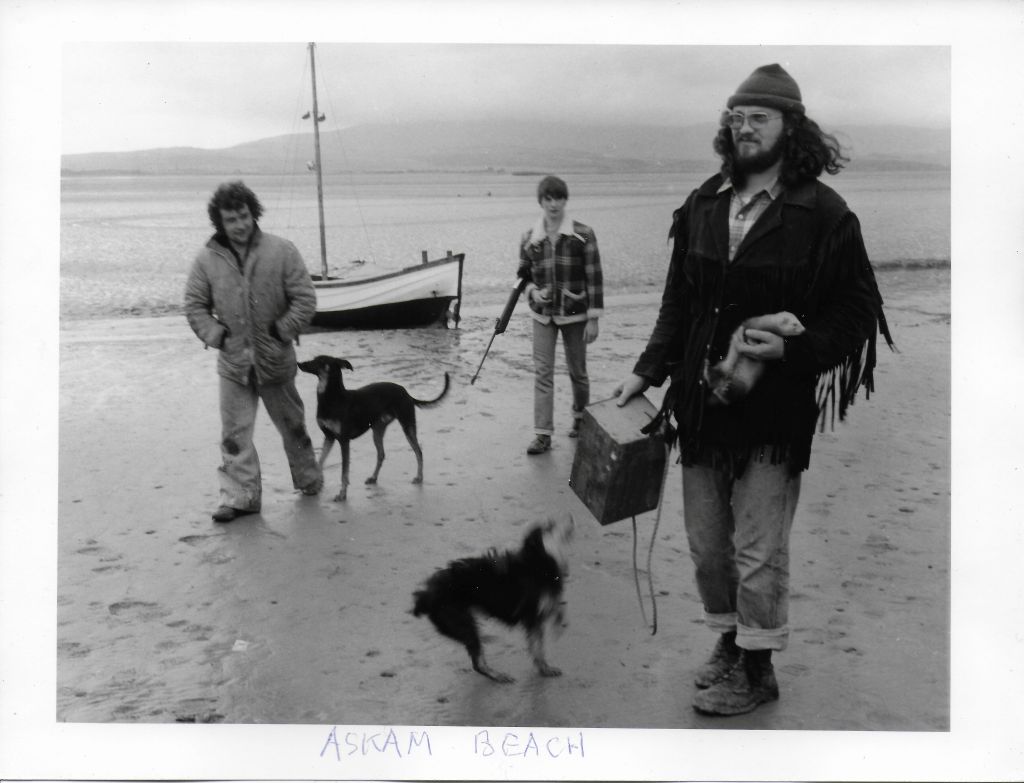
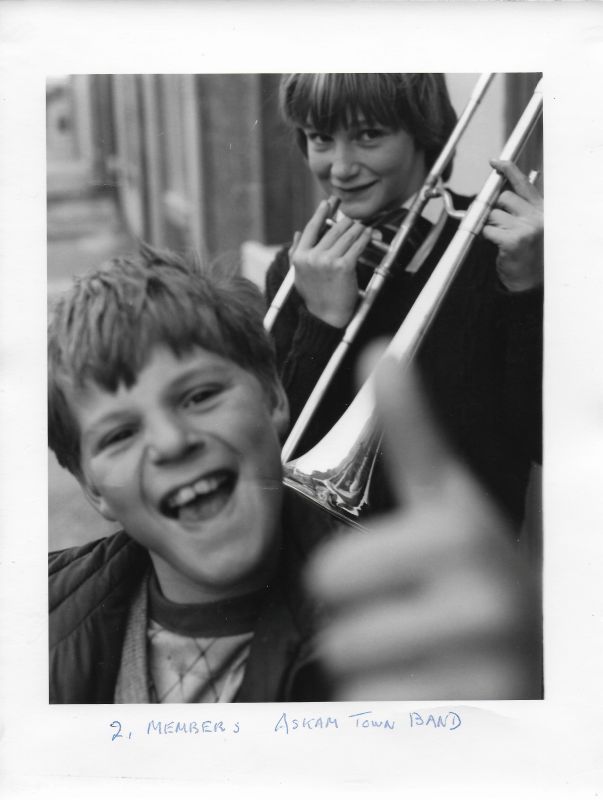
A poignant photographic series showing life in a Cumbrian coastal village during the early 1980s will be shown complete for the first time from next month.
Chris Killip’s series Askam-in-Furness captures the place and people and will be on show at Signal Film and Media’s newly refurbished Cooke’s Studios gallery in Barrow from September 19 to November 1.
It is curated by Phil Northcott and supported by the Chris Killip Photography Trust and the Martin Parr Foundation.
It features 20 photographs from 1982, shown together for the first time.
The exhibition also includes 59 digital scans from negatives and an archive installation of previously unseen images by Chris Killip, taken during his time in Askam-in-Furness.
The images were recently uncovered by Signal Film and Media during a research project with the local Askam community to reconnect with some of the subjects shown in the Askam-in-Furness series.
The exhibition will launch the reopening of the newly redeveloped Signal Film and Media gallery within its newly redeveloped arts centre, Cooke’s Studios.
The project is a £1.4 million capital refurbishment, funded by ACE and the Government Community Ownership Fund.
Martin said: “Chris is without a doubt one of the key players in post-war British photography. He led the way in which he would befriend the communities he photographed, and this created the intimacy and strength of his images.”
His work also features in ONE YEAR! Photographs from the Miners’ Strike 1984–85, a second exhibition at Cooke’s Studios.
Curated by Isaac Blease and from the Martin Parr Foundation Collection, this exhibition marks the 40th anniversary of the year-long industrial action that defined a generation.
It also features work by Brenda Prince, John Sturrock, Jenny Matthews, Roger Tiley, John Harris, Chris Killip, Imogen Young, Phil Winnard and Howard Sooley, alongside rare posters, badges, records and publications.
The exhibited works span the full year of the strike and cover a variety of approaches, from photo-journalism to photo-montage, as well as more vernacular uses of photographs such as the albums compiled by Philip Winnard, a striking miner.