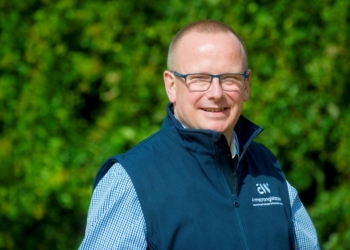

Management at the Royal Lancaster Infirmary are holding daily meetings with NHS colleagues around Morecambe Bay and beyond to cope with increasing pressure at the hospital.
The University Hospitals of Morecambe Bay NHS Foundation Trust say the site is at Operational Pressures Escalation Level (OPEL) 4, the highest alert within an NHS hospital.
The alert is triggered when a hospital is unable to deliver comprehensive care and patient safety is at risk of being compromised.
The trust said: “Due to continued pressures at the Royal Lancaster Infirmary, we remain at OPEL 4 – the highest level of internal escalation.
“This allows us to continue to take additional steps to maintain safe services for our patients and help us cope with the significant and growing demand we are facing.
“We continue to see high demand in our hospitals. The level of acuity is high and we are experiencing a reduced number of discharges to help with patient flow.
“The safety of our patients and colleagues is vital; and the decision to remain at OPEL 4 acknowledges that we are at a point where there is an increased risk of harm.”
Action taken by clinicians includes cancelling all non-essential meetings to allow staff to treat patients while community-based NHS staff aim to reduce hospital admissions. Earlier this year the hospital faced similar pressures.
The news comes on the day the latest information session arranged by NHS Lancashire and South Cumbria Integrated Care Board and University Hospitals of Morecambe Bay NHS Foundation Trust to discuss the future of level 3 intensive care at Furness General Hospital in Barrow will be held.
The event this evening at the Nan Tait Centre on Abbey Road in Barrow is the latest in a series of gatherings prompted by concern that a temporary suspension of level 3 care could be made permanent.
The Lancashire Cumbria Integrated Care Board told Cumbria Crack three more engagement sessions will take place in Barrow in November.
The drop-in sessions will be announced imminently.
Meanwhile the ICB said the decision by the trust to adopt OPEL 4 does not change the current arrangements involving patients from Barrow who would still be stabilised at Furness General Hospital and then transferred to receive specialist care.
As for whether a more detailed debate about level 3 care at Furness General Hospital, the board told Cumbria Crack: “We expect the public engagement currently being run will be an important part of the rigorous and regulated legal process we will need to follow prior to confirming and launching a formal consultation.
“We are committed to following the appropriate steps in the process which are needed prior to making a decision to launch a public consultation.
“Whilst we have appraised the options, we now need to develop a robust Case for Change and Pre-Consultation Business Case, which will need approval from the ICB Board and NHS England as part of the national service change process.
“This will include a further appraisal of clinically viable options that meet the public consultation criteria and could then be consulted upon.
“We are prioritising this work, and we have looked at a realistic timeline for completing these steps, and we believe we may have a Pre-Consultation Business Case developed by the end of December 2025.
“This will then require approval and to be taken through our governance processes.
“Whilst we consider the steps we need to take, we expect that the earliest we will be in a position to be able to confirm our intention to launch a public consultation will be in spring 2026.
“However, this would be subject to the steps described above and approval from the ICB board and NHS England and is, therefore, subject to change.”
The outgoing chief executive of the University Hospitals of Morecambe Bay NHS Trust Aaron Cummins begins his new role as chief executive of the ICB on Monday.