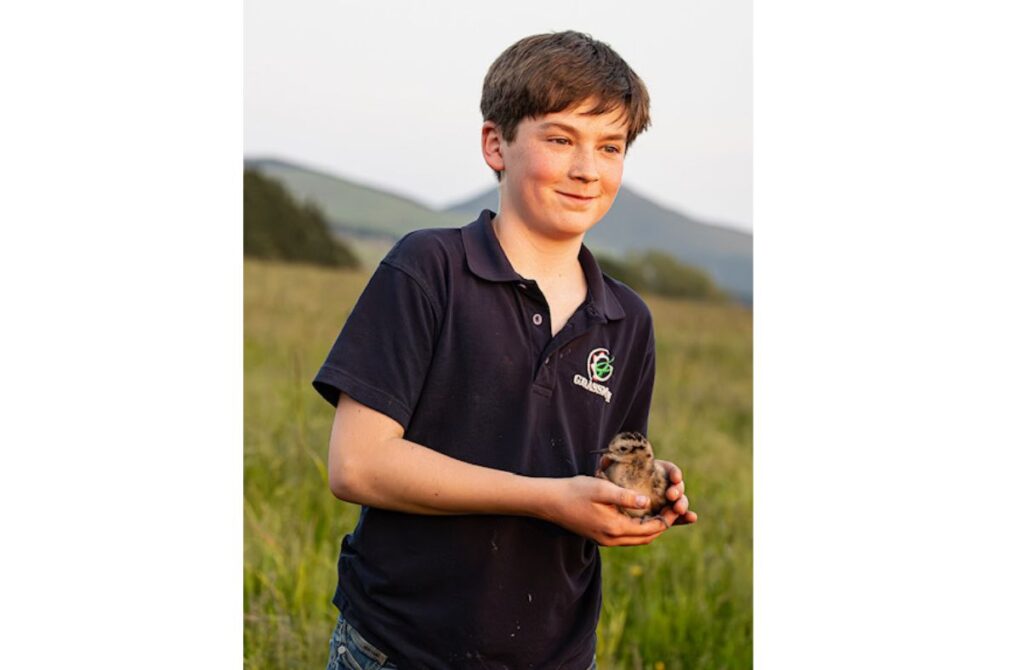
Quick actions of a West Cumbrian farmer and his grandsons saved two curlews and their chicks.
Sammy Greening noticed two agitated curlews fly up in alarm while his grandad Phil, of Kilndale Farm, Mockerkin, was cutting silage.
Phil made an SOS call to Melbreak Curlew Recovery and waited until help arrived.
Thalia Sparke, member of Melbreak Curlew Recovery and licensed British Trust for Ornithology bird ringer, was soon on the scene.
She, with Phil and his other grandson Lucas under her expert supervision, proceeded to look for curlew chicks, which remain very still and quiet in the long grass and are extremely difficult to locate.
They were joined by other volunteers and, directed by Thalia, three chicks were found.
Thalia, under guidance from Natural England, gently moved them to safety without breaking the Wildlife and Countryside Act, with the chicks calling to their parents above.
The following morning, Thalia returned to look for the chicks and their parents. All was well – and a very patient and concerned farmer was able to resume silage cutting.
The adult curlews had relocated the rescued chicks to a nearby fallow field and Thalia expertly ringed one of the chicks.
Thalia said: “Ringing birds, especially those facing extinction, provides essential data to monitor population changes, survival rates, migration patterns and the effect of factors such as habitat loss, which can inform conservation strategies.
“This was a fantastic result and we learned more about curlew behaviour. It was amazing how far the adult curlews had moved the chicks overnight. I was delighted by the diligence and quick response from both Phil and our volunteers – and Lucas was utterly mesmerised and enthralled by the experience.
“It’s so important to interest and involve youngsters in nature recovery.”
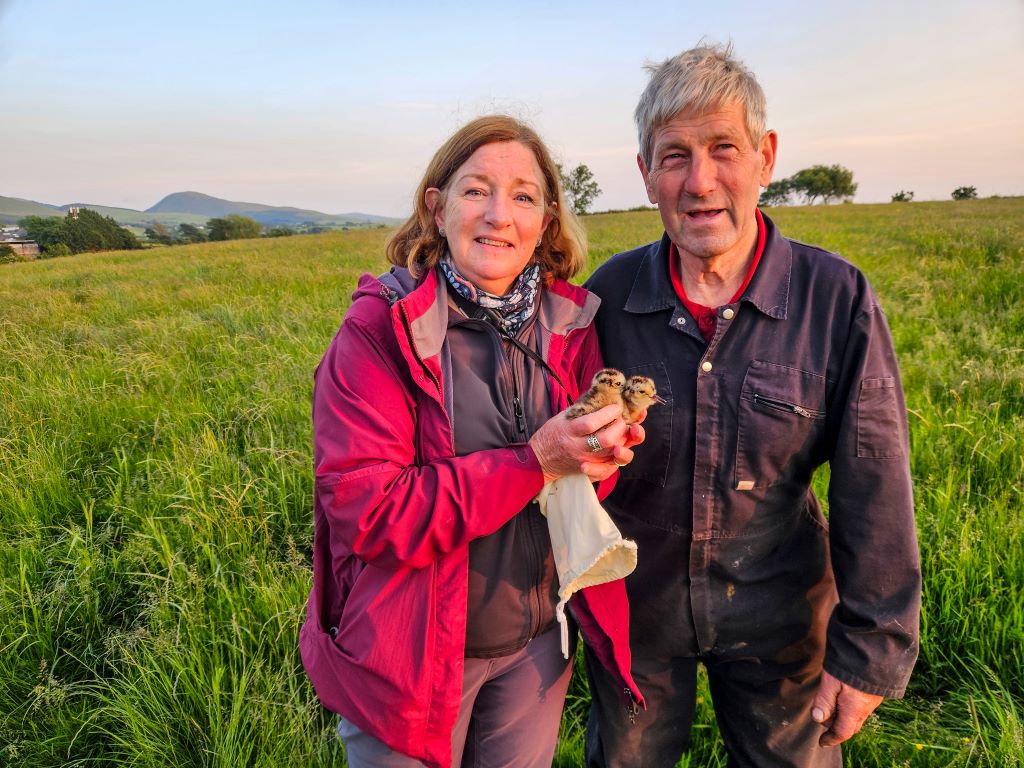
Phil said: “A nature-rich and diverse environment is a healthy one and benefits us all.
“My grandsons love nature and wildlife and they are the next farming generation. If I can help with nature recovery and save and support an endangered species like the curlew on my land, I am very happy to be involved.”
David Gardiner, chair of Melbreak Curlew Recovery added: “Farmers understand the relevance of a nature-rich and biodiverse landscape and are willing partners in habitat and species recovery.
“Many farmers are aware of hearing the evocative call of the curlew less frequently, if at all, and more are engaging with the project, which is great news as we expand our important work.
“Curlews return to the same nesting sites, so next spring, with Phil’s support and cooperation, we will be able to find and protect nests in this area much earlier.”
Based in the Cocker Valley, Melbreak Curlew Recovery Project aims to raise awareness of the plight of the curlew, boost the population locally, and demonstrate that by working with farmers and other curlew recovery groups across the UK, local communities can make a positive difference to halt the decline of the curlew.
The bird is listed at the highest level of conservation concern and is vulnerable to extinction.
The project, now moving into its third successful year, is funded by FiPL (Farming in Protected Landscapes), through LDNPA and is part of The Melbreak Wildlife Group, an initiative of The Melbreak Communities.
For further information, contact [email protected]