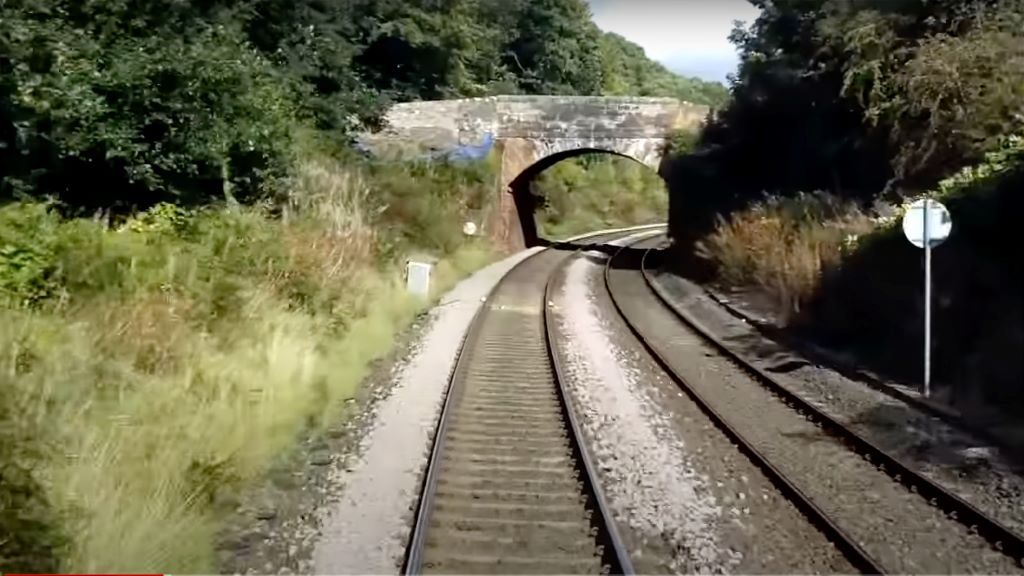
Cumbrian railway bridges have been granted listed status following a campaign.
Cowran Bridge, Skellion Bridge and Cowran Cutting were a part of the biggest civil engineering project on the Newcastle to Carlisle line.
It formed the largest railway cutting in the country when it opened in 1836.
Originally planned as a tunnel through the Cowran Hills, the cutting involved moving a million cubic yards of material by hand to create a gateway to Carlisle.
In 2023, one of Cowran Bridge’s walls collapsed onto the line and Network Rail intended demolishing the remaining walls, replacing them with aluminium picket fencing.
A campaign was launched to save the structures and this week, were granted them Grade II-listed status.
Network Rail, which owns the rail infrastructure, said the structures were standard and “same as many others we have around the railway with no particular interest, or historical/architectural added value”.
However, Historic England said the Newcastle to Carlisle Railway was one of the pioneering lines of the first phase of railway development, and had clear historic special interest in a national context. It was also the first cross-country line to be constructed in England, which enhanced its significance.
They were designed by Francis Giles and Historic England said: “The bridges demonstrate a high level of craftsmanship in their construction, detailing and surface
dressing.
“These two bridges and associated cutting revettment walls are an important survival from the pioneering first phase of railway construction that display architectural, engineering and historic interest. As such, they fully merit listing at Grade II.”