
Rural counties in the UK have a bright future, according to a new report.
The Future of Rural Communities was commissioned by broadband provider Fibrus and written by Tom Cheesewright, an applied futurologist.
It uses scenario planning and the latest data predictions to look ahead to 2050.
It examines working practices, investment in energy and climate changes.
The report said that it expected the trend towards working from home, supported by advanced digital infrastructure, faster and more reliable full fibre broadband, and AI, to boost rural areas, as hard-pressed professionals and creatives quit congested cities for a better quality of life.
The report adds: “Rural areas don’t see the rapid rush of incomers they did in lockdown, but instead a persistent flow from the late 2020s onwards.
“Combined with revised planning rules, this sees developers taking up opportunities to sympathetically expand and redevelop rural areas with more housing aimed at a wide variety of tenants and owners, from young to old.
“Amenities return and expand as a result, with restored bus links, doctor’s surgeries and reopening shops and pubs. Major infrastructure works are the main delay, with expansions in energy networks and water systems required, as well as schools and surgeries to support the increased population.”
It predicts that rural population growth will outpace urban growth.
The report’s second scenario focuses on high-tech harvest.
It says: “The UK’s rural areas become the suppliers of not just our food but our fuel, providing the country with energy, and leveraging robotic technology to increase productivity.
“But in 25 years, useful human-scale androids are available for just £20,000 and their strength, dexterity and robustness, combined with ease of instruction and training, mean they can be put to a variety of uses: picking, sorting, shovelling, lifting.
“Specialist robots, such as laser weeders, improve yields while reducing chemical use and costs.
“The UK extends its position as a leader in agri-tech, driving a wave of new rural start-ups and growth businesses.”
It also forecasts that tourism will become a much larger part of the UK economy.
The report says extreme temperatures, driven by climate change, could prompt visitors to shun holiday hotspots such Greece and Spain in favour of cooler destinations.
It says: “Tourism rises to 3.6% of economic output, with a rising proportion of both international and domestic travellers choosing to stay outside London.”
Author Tom Cheesewright said: “Many would be surprised at the extent to which the UK’s rural communities are already engines of growth.
“Even more would be surprised at their potential by 2050. With this report, we hope to inform and inspire, increasing the chance of these positive futures becoming reality.”
The report concludes that, with targeted investment, particularly in digital connectivity and infrastructure, rural communities can help to address the nation’s biggest challenges, from demographic change to climate resilience.
Gill Haigh, managing director of Cumbria Tourism, said: “Climate change is likely to increasingly impact the choices people make for holiday destinations.
“You already hear many people talking about being ‘too hot’ on their summer holidays and we need to be ready to respond to that trend by growing awareness and enhancing the value of Cumbria’s tourism.”
“The report rightly highlights how we need to expand tourism facilities, including being open to the positive impact technology can make to the tourism experience and having good digital connectivity for all our rural communities is essential if we are to be able to do this.”
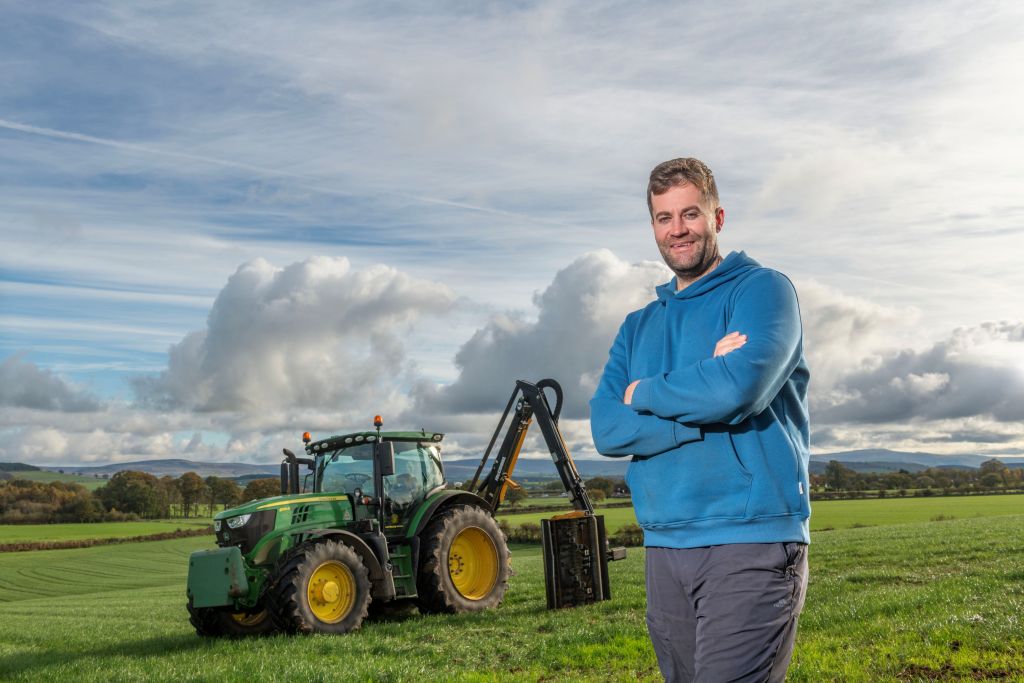
Matthew Walton, a Fibrus customer who works as a self-employed agricultural contractor, said the sector was readily embracing technology.
Matthew, 35, of Southwaite near Carlisle, said: “Technology has made things more efficient. The tractor I use is fully sat-nav and steers itself down the field.
“There are automatic feeding systems for cows and automated slurry scraping systems. Everyone’s going down the automated route. You either go with it or get left behind.”
Contrary to commonly held misconceptions, rural communities are not shrinking but thriving with higher employment rates than urban areas and nearly a quarter of all UK businesses already headquartered in rural locations.
In Westmorland and Furness, for example, only 1.8 per cent of the workforce are claiming out-of-work benefits. The national average is 4.0 per cent.
Fibrus, established in 2020, said it was a vocal advocate of rural community growth.
The company is delivering Hyperfast GB in Cumbria, part of a national £5bn Government programme to bring full-fibre broadband to hard-to-reach communities not served by commercial providers.
Recently, Fibrus has been lobbying Ofcom to review the cost to network providers for expanding networks in rural areas, which would help bring much needed infrastructure to areas that remain without.
Dominic Kearns, CEO and co-founder of Fibrus, said: “At Fibrus we set out to transform connectivity in rural areas, bringing them out of the digital dark ages and into a future of high-speed, reliable broadband.
“This report reinforces our commitment to those communities, highlighting their immense potential and the vital role they play in the UK’s growth.”
“Too often, the UK’s urban areas and capital cities dominate when it comes to policy, pounds and progress, yet we have seen first-hand the level of entrepreneurship and agricultural best practice that is powering the nation from a grassroots level through improved digital access.
“We will not stop championing rural communities and driving progress until every home and business is truly connected.”