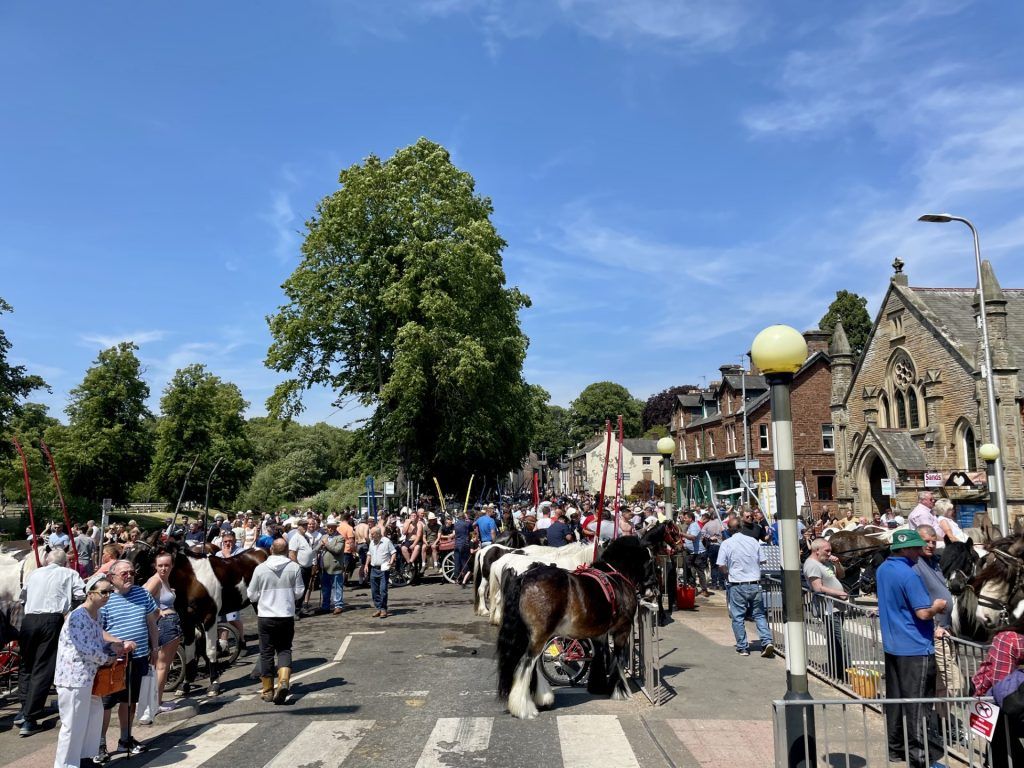
Live facial recognition will be used by police at this year’s Appleby Horse Fair.
A consultation held last year on the possibility of employing the technology during the event — set to take place in early June — drew a largely favourable response, including from Gypsy leader Billy Welch, who has not hesitated to criticise some police tactics in previous years.
However, others are more critical of its use, saying it is an invasion of privacy, can result in the wrong people being detained by police and is often ineffective.
The technology works by scanning the faces of people captured on CCTV and comparing them against a watchlist of those who the police believe are likely to cause trouble.
It has been employed widely in southern England since 2024 and also during a Carlisle United match at Brunton Park last month.
Detective Superintendent Dan St Quintin, Gold Commander for the horse fair, said: “We have large crowds and large numbers of people in quite confined spaces — similar to a football match in some respects.
“The live facial recognition technology will help us to identify the minority who are either intent on causing trouble or here to commit crime.
“Once we have spotted the potential troublemakers, we will have our officers on the ground able to approach the individual, take them to one side and speak with them.
“Every year we are seeking to make the event as safe as we possibly can for all communities who engage with the fair and I am confident live facial recognition will be an effective tool in 2026 and beyond.”
However, privacy campaigners have sought — so far unsuccessfully — to limit the use of live facial recognition by the police.
In one case heard by the High Court, it emerged that a man had been detained by police for 30 minutes after he was wrongly identified by the technology.
He was questioned by police in London after being matched by the technology with his brother, who, at the time, was on bail for a suspected violent offence.
Another argument against its use is that on occasions thousands of faces have been scanned with no matches detected, raising questions about its effectiveness and proportionality.
When it was used at last month’s Carlisle United match, the faces of more than 6,000 people were scanned, resulting in three accurate matches.
None led to arrests and there were no false alerts.