[A]sh dieback is a fungal disease which has radically changed some European forests but five years after it was confirmed in the UK, how much is known about ash dieback?
A conference to be held at the National School of Forestry at the Ambleside campus of the University of Cumbria next month (Nov 1) will clarify what we can do about ash dieback.
The disease causes leaf loss, crown dieback and bark lesions in affected trees. Once a tree is infected the disease is usually fatal, either directly, or indirectly by weakening the tree to the point where it succumbs more readily to attacks by other pests or fungi. The rate of decline will vary hugely between individual trees, and may take decades.
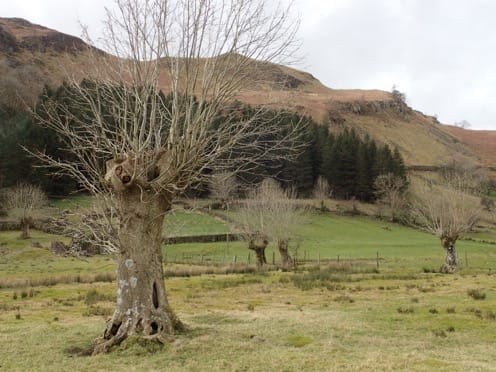
“British ash trees have a natural genetic diversity, different to those on the continent, and this may afford them some protection in the long term,” Clare de Villanueva, Cumbria Woodlands Project Officer, says. “We don’t really know what is going to happen exactly, but in the meantime, we need to leave as many ash as possible, to maintain diversity and allow tolerant trees to survive and reproduce. We also need to know what trees we can use to fill the gaps in our woodland and landscapes, according to economics, ecology and of course landscape. Ash pollards are a distinctive feature of the Cumbrian landscape, along field boundaries and in pasture, and because they live to such a great age, they collect an incredible variety of creepy-crawlies and lichens. This is another issue we will be discussing on the day.”
In the light of Dutch elm disease which wiped out most of Britain’s native elms the conference will discuss alternative methods to removing whole swathes of forest. We have invited scientists that study the genetic factors of tolerance to report on the progress of breeding ash trees for the future.
Ash can grow in a variety of soils and climatic conditions. It is one of our most useful and versatile native tree species, providing valuable habitat for a wide range of dependent species as well as strong, durable, flexible and attractive timber with a wide range of practical and decorative uses.
Local spread of the fungus, up to some tens of miles, may be by wind, animals and leisure users. Over longer distances the risk of disease spread is most likely to be through the movement of diseased ash plants, as well as along trunk roads. Movement of logs or unsawn wood from infected trees might also be a pathway for the disease, although this is considered to be a low risk.
The conference has drawn together experts including Vikki Bengtsson from the Swedish Ancient Trees Forum, forest pathologist Iben Margrete Thomsen of the University of Copenhagen and plant health officer Barnaby Wylder of the Forestry Commission.
“Ancient ash pollards and upland ash woods are a strong visual component of the cultural landscape of the Lake District National Park, recently awarded World Heritage status. This conference on the future of ash in the Lake District and the wider northern uplands brings together international and UK experts on ash dieback,” Dr Andrew Weatherall, senior lecturer in the National School of Forestry said. “This conference will inform our students, alumni and other forestry professionals about the latest research in to how to mitigate the impacts of this disease and what other tree species to plant.”