
Pothole repairs are set to become faster and cheaper in Cumbria, thanks to the latest equipment on the market.
Cumbria County Council says the kit could revolutionise its approach to potholes – accelerating the process by halving the time it takes to repair one.
The authority has been trialling three new pieces of equipment that will each make repairing potholes cheaper and efficient and will make a decision on which it will buy in the summer.
Cumbria County Council’s highways team watched the equipment in action this morning on a road next to the A66 near Cocklakes Farm Shop, between Troutbeck and Penruddock.
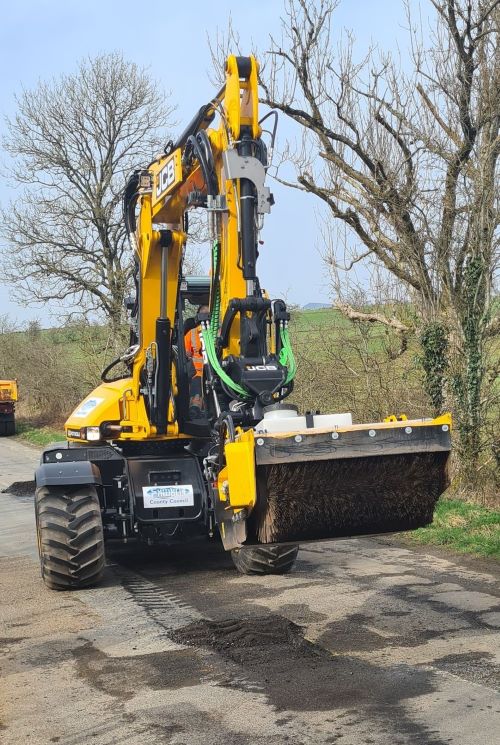
The first to be demonstrated was the JCB Pothole Pro, which would cost Cumbria £600 a week to run but halving the price per pothole from between £50 and £60 currently to £30 using the new machine.
It can also fix potholes four times faster than traditional methods.
“It is the only machine that is able to cut, crop and clean in a single machine.
“It will save a huge amount of time. Where defects would take maybe an hour to fix, this can do it in just eight minutes,” said Ben Rawding from JCB’s product team.
“If you multiply that out it is a huge saving. Yesterday we fixed about 56 potholes in a single day, that is a huge benefit.”
About 50 councils are currently trialling the JCB machine across the UK, with Cumbria County Council expected to announce a decision on what equipment it will buy in the summer.
Ben detailed exactly how the machine works below:
The second piece of equipment trialled today was the nu-phalt™ Thermal Pro. See it in action below:
The portable thermal heater is positioned over the area of the pothole and heats the surface to 180 degrees.
The heat turns the surface into a workable material without damaging the road. Operators scarify an area just in from the edge of the repair area before the enriched emulsion is added to the repair area.
This is evenly mixed through the recycled material to deliver a consistent and even exposure.
The new material is fed to and from the onboard ‘hot box’ and heated to 100 degrees before being added to create a level repair.
All edges are compacted to create an interlock with the surrounding surface.
The last piece of equipment was the Jetpatcher road repair machine, which is capable of between 100 and 150 repairs per day.