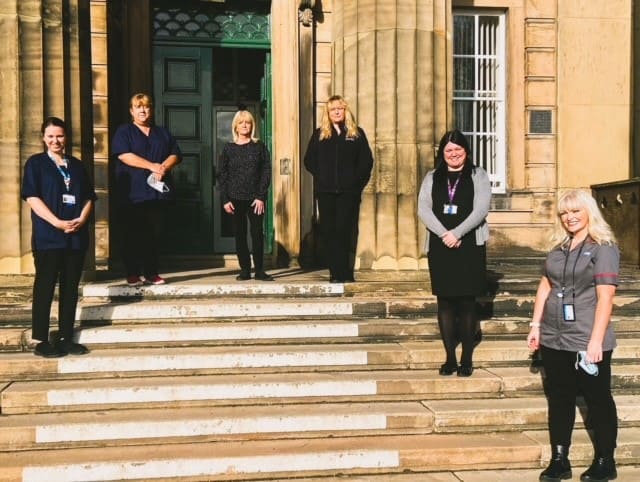
A specialist service supporting Cumbrian people experiencing delirium has won a prestigious national award.
The Reach Out Delirium Team is part of Cumbria, Northumberland, Tyne and Wear NHS Foundation Trust.
It was developed to identify and support patients with delirium in North Cumbrian hospitals, and prevent the condition wherever possible.
The team won Older-age adult team of the year at the Royal College of Psychiatrists Awards, held annually to recognise excellence within psychiatry.
Stuart Beatson, group medical director for North Cumbria at CNTW, said: “This prestigious award recognises the innovation and dedication displayed by the Delirium Team, and the significant improvement in patient care which has been achieved.
“They have gone above and beyond to prevent delirium and support patients, families and also staff within the hospitals. I’m extremely proud to see them recognised for that.”
Clare Bennett, the team’s clinical manager, added: “I am so pleased that the team has won this award. I’m immensely proud of their hard work, attitude and commitment to delivering fantastic services to people experiencing delirium, especially throughout the pandemic.”
Delirium is an upsetting temporary state of mental confusion that affects about two in every 10 people admitted to hospital.
It starts suddenly, usually triggered by a physical condition such as an infection.
Someone suffering from delirium might not know where they are, what time it is, or what’s happening to them. Current research indicates that around three quarters of people remember their delirium, and all the distressing things that they experienced during it.
The ‘Reach Out’ Delirium Team was launched to help identify patients with delirium early on, so they can be successfully treated as quickly as possible and recover at home, as well as preventing delirium in the first place wherever possible.
Working seven days a week, the team proactively seek out and assess patients admitted to hospital who are at risk of delirium. They screen about 2,000 patients every month.
The team then ‘reach out’ to the patient, their carers, and staff to offer support as needed. Patients with suspected or confirmed delirium are seen twice a day by the team. They also help to co-ordinate discharge and follow-up support for the person once they are out of hospital.
Delirium often leads to people staying in hospital longer than they might otherwise have needed to, leading to worse health outcomes, and reducing the number of beds available.
This service’s impact on preventing delirium and reducing patients’ length of stay in hospital has seen it save the local healthcare system over one million pounds each year. But most importantly, the service has increased the quality of care for people with delirium and their loved ones.
Since the team’s introduction in 2017 there has been a 20 per cent reduction in delirium across north Cumbrian hospitals.
The average length of stay in hospital for patients at risk of delirium has also decreased, and patient outcomes and quality of care have improved.
Throughout the pandemic, the team have also ensured that patients have maintained contact with loved ones – particularly important for people living with dementia, who struggled with isolation, low mood and distress during lockdowns.
Dr Adrian James, President of the Royal College of Psychiatrists, said: “I would like to express a huge congratulations to every team and individual shortlisted in this year’s awards. It’s been incredibly inspiring to hear about the great contributions to psychiatry being made by hard-working teams and individuals across the country.”