
Climate change action in the South Lakes is starting to make a difference.
South Lakeland District Council has more than halved its greenhouse gas emissions since 2010, from 5,259 tonnes to 2,476 tonnes and has seen a further decrease of 15 per cent from 2020 to 2021, taking emissions down to 2,097 tonnes.
It comes after the council declared a climate emergency in 2019. It has since been using a climate change action plan to progress its goal of a carbon neutral council by 2030 and a carbon neutral district by 2038.
The reduction in greenhouse gasses has been made possible through work to reduce emissions, capital projects and work in the community, the authority said.
The council said it had focused on several key areas impacting climate change to make changes, including buildings, transport, the economy, biodiversity, and community.
Work to reduce emissions in the district’s buildings has led to the biggest reduction in emissions overall.
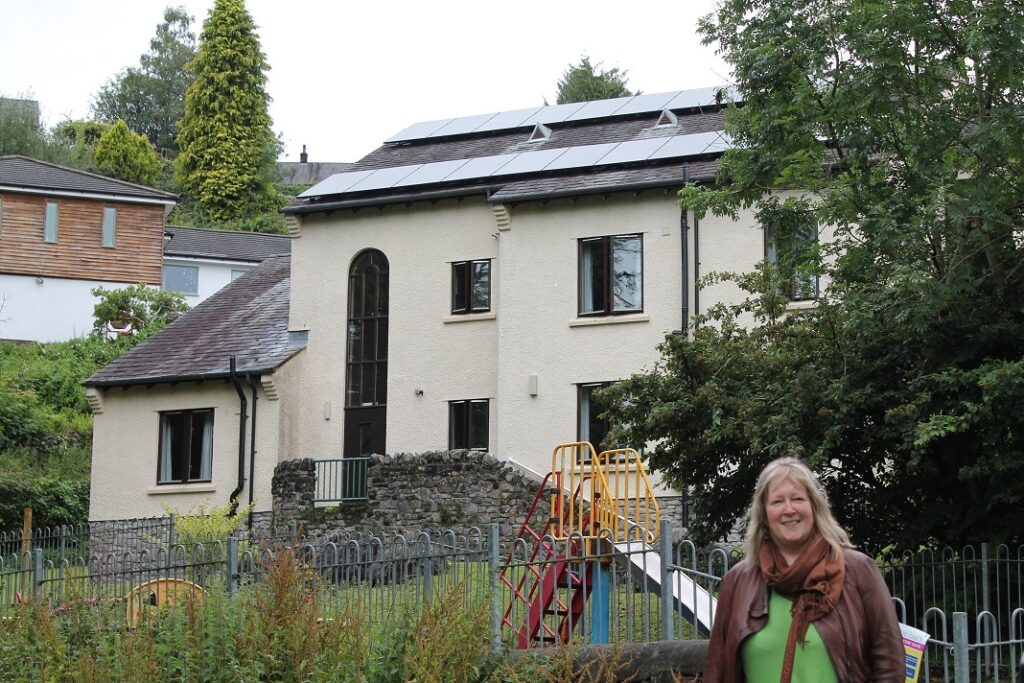
The changes made include the installation of insulation, LED lighting and draught proofing to council buildings to make them more energy efficient and the addition of solar panels on three of its buildings, including South Lakeland House, Mintworks and Town View Fields Hostel.
For transport, the council aimed to address the Cumbria Carbon baseline report, which found that South Lakeland had the largest transport emissions of any Cumbrian district, totalling over 250 KT Co2e.
As a result, a successful bid was made Scaling on Street Charging Infrastructure electrical vehicle charging infrastructure scheme and now it is currently installing 24 22kW chargers into its car parks including South Lakeland House and Library Road in Kendal, Red Bank Road in Grasmere and Buxton Place in Ulverston.
These charge points will go live later this year and will be available for public use.
To help protect and enhance biodiversity, the work of nine groups has been facilitated at its various parks including the planting of bulbs, wildflower meadows, trees and bog areas.
The council are also active members of the Cumbria Local Nature Recovery Strategy pilot, which aims to restore and link up habitats so that species can thrive, and agree the best places to help nature recover, plant trees and woodland, restore peatland, mitigate flood and fire risk, and create green spaces for people to enjoy.
In 2018, it further commissioned Cumbria Woodlands to compile woodland management plans for its main wooded sites in the Grange, Kendal and Windermere areas to enable works to improve the structure of the woodlands.
An additional £20,000 has been put into a climate community fund to address climate change and community behaviour change and consumption habits to promote domestic energy efficiency.
The fund was oversubscribed with projects such as Friends of Noble’s Rest, Light Up Lives and Gill Banks Community Group all receiving a share of the fund.
Councillor Dyan Jones, portfolio holder for climate action and biodiversity, said: “Since South Lakeland District Council declared a climate emergency in 2019, our commitment to the importance of mitigation and adaptation continues.
“An important element of how we reduce our impact on the environment, support our economy and proactively come together is at the heart of our climate action plan – an action plan that was created following public meetings across the district.
“Challenge and opportunity is core to delivering and supporting others to do more together. To think globally, act locally. I am delighted to see action with others turning possibility into reality.
Ongoing work
Buildings
- South Lakeland House has been redeveloped, which has reduced emissions through using modern building fabrics and has a green roof.
- A decarbonisation plan for the council’s corporate estate has been developed.
- The Cumbria Action for Sustainability (CAfS) Cold to Cosy project is being supported, which delivers energy efficiency measures and advice to residents.
- Funding has been given to CAfS to deliver the Solar Made Easy and Big Solar Co-op projects aimed at increasing renewable energy generation on domestic and commercial buildings.
- The council are a member of the Cumbrian consortium for the LAD2 project to deliver a series of energy-efficiency measures to residents vulnerable to fuel poverty.
Transport
- Work has begun to decarbonise the council’s operational fleet by 2030, through the purchase of its first electric vehicle this year.
- Active Travel is being supported in the district through its Active Travel group and Cumbria County Council’s Local Cycling and Walking Improvement Plan for Kendal and Ulverston is also being supported.
- The council is also a member of a Cumbria-wide electric vehicle infrastructure group, which aims to turbo-boost Cumbria’s electric vehicle charging infrastructure.
Green economy
- Focused on support for businesses to become low carbon, training for businesses and business owners and supporting organisations in reducing their carbon intensity from their energy.
- Launched a partnership with consultancy Green Small Business. This gives local businesses the chance to get subsidised environmental advice and 12 months of Green Small Business certification. SLDC is aiming for 20 new businesses to sign up in 2022/23.
- Subsidised the Purposeful Business Start-up Programme: Future Fixers. The programme gives people the skills and knowledge to run a green, ethical enterprise. The council’s backing means the usual £495 fee is cut to £60 for South Lakeland residents. Thirty-eight businesses have graduated from Future Fixers’ Purposeful Business Start-up Programme.
- Through a funding agreement with CAfS offered advice to more than 22 communities in energy-efficiency projects, delivered a range of workshops, advice and training to businesses, started a Carbon Footprint Calculator for businesses and held a green business support day in Ambleside.
- The 2022/23 funding agreement with CAfS is focused on green business support with one-to-one support on offer for small or medium-sized businesses.
Biodiversity
- Launched a Biodiversity Community Toolkit to enable and encourage more community biodiversity action and give best practice advice on how work on council land can be the most beneficial to the natural environment and wildlife.
Community
- Funded and managed the Greening Campaign, a toolkit designed to take parish or town councils through steps to help households reduce their carbon footprint. Most have now finished and have received their estimated carbon saving for the community. Carrying out phase 1 of the campaign has led to another local green group being set up in one area (Duddon), and PEAT in Grange are building upon the campaign with their own projects.