Forget the stunning Lakeland scenery for a moment, and the ever-changing coastal views. Think about the industrial traditions of our land.
A tradition of flint axes around Coniston in 3,500BC. Roman quarrying in, well, Roman times. Slate for our roofs from the 17th century. Peat for fuel from Kirkbride – my brother worked there for a time, little knowing the ecological damage the peat extraction caused.
Lead mining at Force Crag – another of big brother’s workplaces best forgotten as he once tried to blow himself up! Iron ore from Eskdale and Furness. Coal from Annie Pit, Aspatria and Alston.
From these spawned industry and work for locals and for those attracted by the bright lights of West Cumbria, the Barrow peninsula and Carlisle. The ironworks of Workington and Barrow, spewing forth the slag and the metal with the ever present smell of sulphur. The chemical works of Ulverston and Whitehaven or the shipbuilding of Barrow, few of which are still here today.
Why even the industries that came alongside, to feed and entertain – how many remain? Certainly not the brewery at Cockermouth where, as a young lad with a paper round (12/6d a week, start at 6am prompt) I wondered what magic potion fortified the working man in the pub on Cockermouth Main Street, before the jumped on the 6.20 36 bus to Workington Steelworks – my dad explained that licencing hours simply didn’t apply!
But slowly, the heavy industry that sustained the area, save for the submarine builders of Barrow, have gone just as they have in Corby and Lanarkshire.
But next week, perhaps, we may see one of these traditions rekindled if the Michael Gove rules in favour of allowing West Cumbria Mining can develop the Woodhouse Colliery on the site of the chemical works at Marchon.
The arguments for and against have raged through the planning process and the subsequent public enquiry and now the final decision rests with the Minister for Levelling Up.
The Cat isn’t going to revisit the arguments, after all, there have been so many statistics banded about, I am not even sure of some of the figures. How much will be home consumption in the blast furnaces of South Wales and how much will go for export. Would it really close in 2049 as suggested by the original planning?
How would any coal be shifted – wagon after wagon of coal trains on the Cumbria Coast Line or via the deep water dock of Workington? Is the original cost still £160 million or do we have to account for inflation and delays adding to the inevitable questions about viability?
How many jobs? The company behind the plans, West Cumbria Mining talks of 500 direct jobs with 80 per cent coming from the local area. Presumably these will be well paid, not like the just-above-minimum-wage jobs in hospitality? And how many secondary jobs will there be to support the wider impacts – certainly it is unlikely we will see a plethora of pubs to water the thirsts of the miners even if the licensing laws have been liberalised!
But while we have to be conscious of environmental impacts and the need to get decarbonise the planet and wean us off long distance air travel and the carbon fuelled cars, we also have to live in the here and now.
In a time when energy costs are eyewatering and with no end in sight to the Russian aggression in Ukraine, perhaps we have to put aside our green credentials and hope Minister Gove gives us a short term fillip to set alongside the longer term aspirations for the nuclear pound to sustain the region.
The rain may be heavier and more frequent, the wind may blow harder than ever and the mild winters may yet save us from the spiralling cost of oil, but there may be sunshine for the workers of West Cumbria if the mine is given the go ahead.
About Cumbria Cat
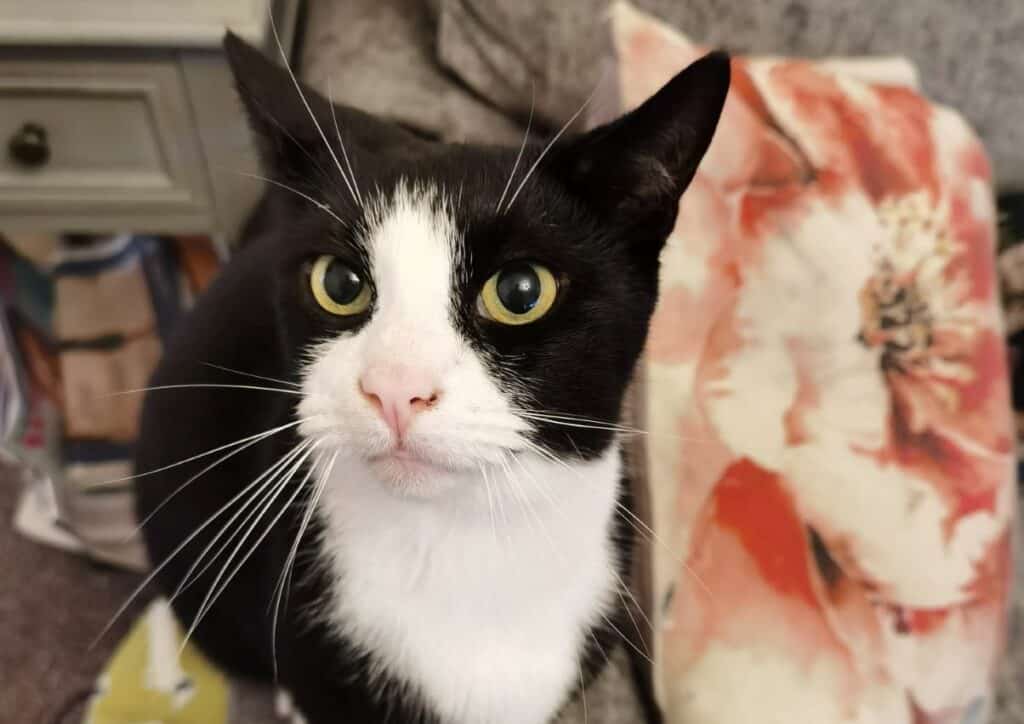
Born in Cumberland and, from 2023, will be back living in Cumberland, having spent most of the past 50 years in some place called Cumbria, this cat has used up all nine lives as well as a few others.
Always happy to curl up on a friendly lap, the preference is for a local lap and not a lap that wants to descend on the county to change it into something it isn’t. After all, you might think Cumbria/Cumberland/Westmorland is a land forged by nature – the glaciers, the rivers, breaking down the volcanic rocks or the sedimentary layers – but, in reality, the Cumbria we know today was forged by generations of local people, farmers, miners, quarriers, and foresters.
This cat is a local moggy, not a Burmese, Ocicat or Persian, and although I have been around the block a few times, whenever I jump, I end up on my feet back in my home county. I am passionate about the area, its people, past, present and future, and those who come to admire what we hold dear, be it lakes and mountains, wild sea shores, vibrant communities or the history as rich and diverse as anywhere in the world.