
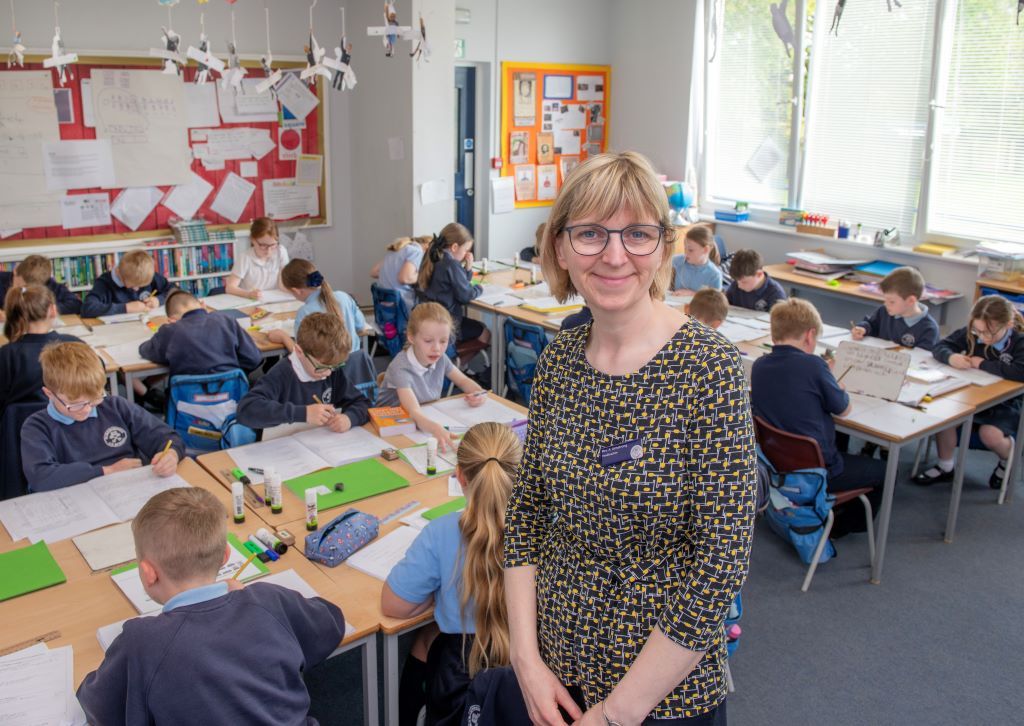
A Cumbrian school has been recognised as a national ambassador of innovative teaching techniques.
Kirkbampton Primary School, near Carlisle, was awarded vital funds to trial a two-year Embedding Formative Assessment programme which aims to empower, engage and enthuse students.
The programme was funded by the Western Excellence in Learning and Leadership project, which is on a mission to improve educational outcomes for all young people in West Cumbria, including the disadvantaged, and is funded by Sellafield Ltd through its Social Impact Multiplied (SiX) programme and the Nuclear Decommissioning Authority.
The school qualified for the funding because it was in the former Allerdale council area.
Based on more than 20 years of research by Professor Dylan Wiliam, the programme pioneers a range of simple but hugely effective techniques encouraging students to take more responsibility for their learning.
The underlying ethos is that feedback is about improving the learner, not the work.
Examples include the hands down method which encourages less confident pupils to speak up and get more involved. For example, pupil names are written on lollipop sticks and picked at random – and if they are nervous or unsure they can ‘phone a friend.’
Pupils are also encouraged to come up with their own questions and answers, take quizzes and write summaries while red, orange and green paper cups are used as ‘traffic lights’ to show how much is understood.
Teachers are urged to show examples of good work – explaining that this isn’t necessarily the longest piece or the one with the neatest handwriting.
Teachers are also encouraged to think about the impact their comments have on pupils. For example, have another go was seen as encouraging by staff – but not by pupils who felt that if they failed once, a second attempt was futile.
Conference marking was introduced at Kirkbampton with pupils encouraged to talk about a piece of work in one-to-one or small groups.
Whole Class Feedback is now a regular fixture at the school alongside peer marking while recorded audio clips and photos are shared at governor meetings.
Research involving 140 schools by the Education Endowment Foundation has revealed that the programme is of particular benefit to disadvantaged pupils in the lowest third for prior attainment, helping to boost confidence and raise aspirations.
“To put it simply, a happy, interested, encouraged and engaged pupil will learn more efficiently and achieve more,” said headteacher Andrea Armstrong.
“This programme has given us valuable insights into how pupils learn, helping us to better identify areas for improvement and adapt our teaching strategies to meet individual needs, ultimately enhancing pupil achievement and engagement.”
Class teacher Andrew Reed spearheaded the programme in school and has now been asked to mentor other schools and help train teachers nationwide.