Plans to store nuclear waste in an underground facility have been on the agenda for a while.
Work to find a suitable site for a geological disposal facility has been ongoing for some time and the facility itself, when built, would be ready to receive the first waste in the 2050s.
This year, studies and surveys have been started to identify a site.
An update by Nuclear Waste Services, which is managing the search, was released recently which details its progress up to March this year.
Corhyn Parr, chief executive officer, said: “This vital programme enables us to take responsibility for dealing with radioactive waste now and not to leave it for future generations.
“It is one of the largest environmental protection programmes in the UK and ensures we remove the costs and burden of having to keep the waste safe and secure in storage facilities for many thousands of years.”
Why does the UK need a GDF?
Currently, the UK’s most hazardous radioactive waste is treated and packaged in solid form and held at over 20 surface storage facilities across the country.
While these facilities are safe for the short to medium term, they require ongoing management and need to be rebuilt around every 100 to 150 years to ensure they continue to be safe and secure.
Investing in a GDF now offers a permanent solution and removes the need for ongoing human intervention for future generations, Nuclear Waste Services said.
What exactly is a GDF?
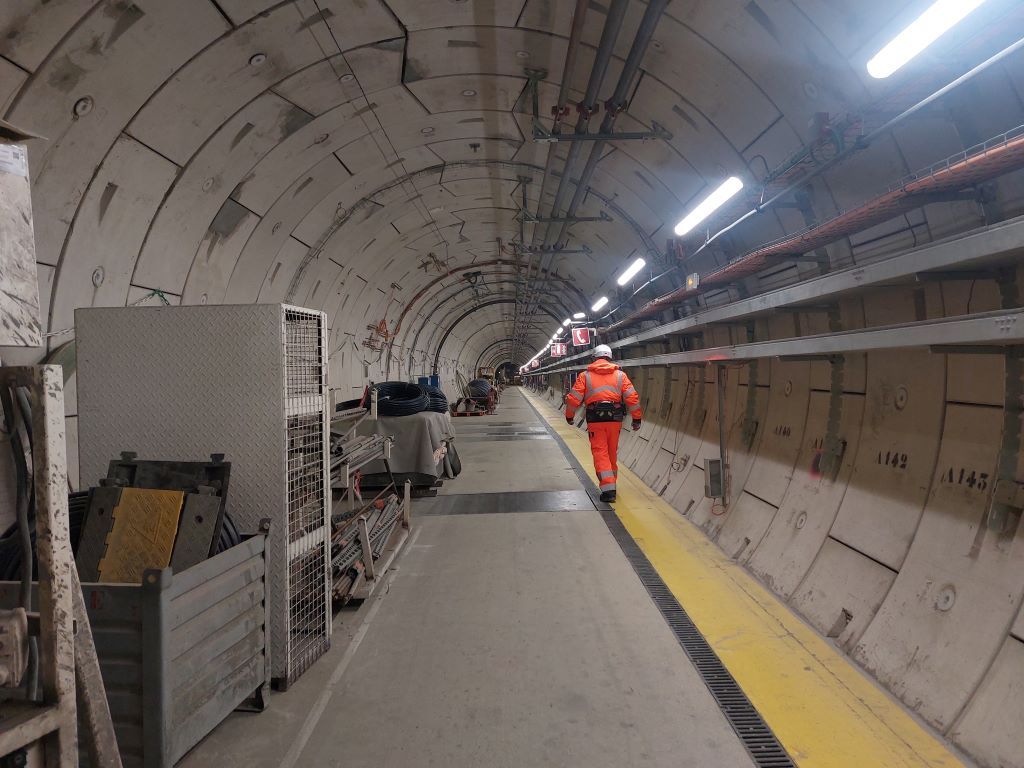
A GDF involves isolating the waste deep underground in suitable geological formations and placing it in highly engineered vaults and tunnels which keep the waste safe and secure over the many thousands of years it will take for the radioactivity to naturally decay.
A GDF will be constructed between 200 and 1,000 metres below ground, or below the seabed. At this depth the waste will be protected from natural events and processes such as earthquakes and long-term environmental changes such as future ice ages or sea level rises.
How much does a GDF cost?
Nuclear Waste Services said the cost of design and early construction to get a GDF ready to receive waste in the 2050s is estimated to be in the region of £12 billion – figures in 2017/18 monetary values.
The total whole life cost of the programme spanning 175 years and including the design, construction, operation, and closure of a GDF, is estimated to be in the region of £20bn to £53bn. Costs will be spread over the lifetime of the programme.
The cost of storage of waste destined for a GDF has been estimated at around £70 million a year by the 2040s. These costs could increase as stores require replacement and if wastes need to be repackaged.
Where will a GDF be built?
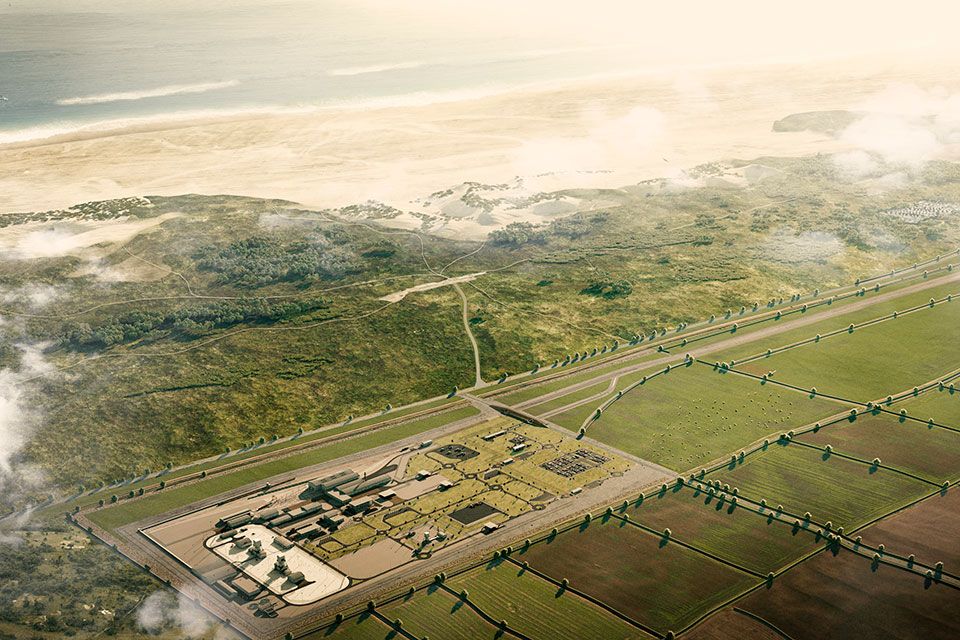
A GDF site is made up of a surface location, the right geological environment deep underground and the ability to connect the two with accessways.
No waste would be disposed of at the GDF surface facility, Nuclear Waste Services said.
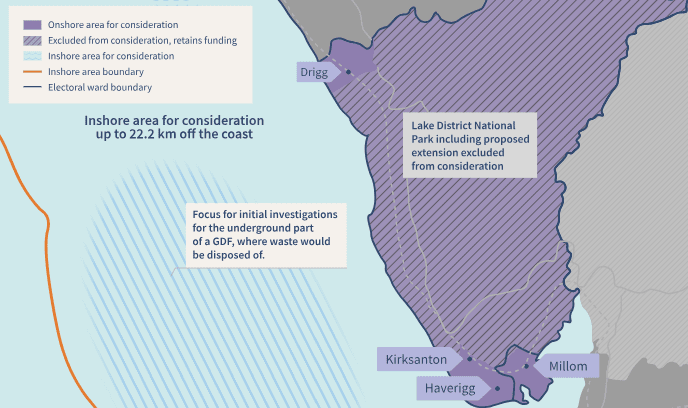
Sites in Mid Copeland, South Copeland and Lincolnshire are under consideration – Allerdale was withdrawn last year because analysis showed there was not likely to be enough suitable rock for a GDF.

The Lake District National Park is excluded from consideration, as are sites of existing and future coal mines.
At this stage, Nuclear Waste Services is focusing its initial investigations for the underground part of the GDF – where waste would be disposed of – off-shore and the areas for consideration are up to 22.2km off the coast.
When will a GDF be built?
Construction will only start on a GDF when a suitable site is identified by Nuclear Waste Services, a potential host community has confirmed its willingness to host the facility through a Test of Public Support, and all the necessary consents and permits have been obtained. These steps could take around 10 to 15 years.
The current planning assumption is that a GDF will be available for intermediate level waste in the 2050s and high level waste and spent fuel from 2075.
A GDF will be constructed in sections over the lifetime of its operation. Continually constructing, operating and filling a GDF then closing it, will run into the next century.
What is happening now?
Nuclear Waste Services said it was at the early stages of the process of identifying a potential site.
It added: “We will evaluate each potential site to establish its suitability based on six siting factors: safety and security, community, environment, engineering feasibility, transport, and value for money.
“Early feasibility studies are progressing well, and we are acquiring a significant amount of data which has to be assessed and analysed.
“Some of this work may take years to complete due to the complex nature of the siting process. NWS will share updates with the community as part of our ongoing engagement.”
What do siting factors mean for the GDF’s location?
The six siting factors are:
- Safety and security If NWS cannot demonstrate that a site will be safe and secure during its construction and operation, the GDF will not be built. The geology must be suitable to support a safety case after it has been closed, and the facility must satisfy the UK’s strict safety and security standards.
- Community Through engagement, research and assessment, NWS will seek to ensure that the social and economic impact of a GDF will benefit the community.
- Environment The delivery of a GDF will represent one of the largest environmental protection projects in the UK. To successfully deliver a GDF, NWS will need to assess the impact on the natural and historic environment, protected habitats and species.
- Engineering feasibility The geology of an area will significantly influence whether and how a GDF can be designed, constructed and operated safely during its operation and closure. NWS will assess if the design, construction and operation of a GDF at a specific location is feasible.
- Transport To build and operate a GDF, NWS will need to be able to transport radioactive waste and construction materials safely and securely.
- Value for money A GDF will be built where it represents good value for money for the taxpayer over the long term.
What’s next in the GDF process?
Key targets for the GDF programme in 2024-2025 are:
- Progressing site evaluation studies for all Community Partnerships – Nuclear Waste Services is working towards a decision on the first community to progress to deep borehole investigation (and to receive increased community investment of up to £2.5million a year) and are aiming to seek the Secretary of State’s approval to our decision by December 2025.
- Engaging with communities – It said it will support and facilitate development of community visions for each community and the accompanying outline proposals and opportunities for Significant Additional Investment.
- Delivery partner procurement – It will start procurement for a supply chain partner that will help it co-ordinate all detailed site characterisation activity, which provides the underpinning data for the GDF design and safety case.
- Deep borehole Development Consent Order preparations – It will start the DCO pre-application engagement and consultation process for drilling deep boreholes.
Is any other country considering a GDF?
There are three other countries moving forward with plans to create GDFs.
Finland and Switzerland are also progressing plans.
Nuclear Waste Services said it had also given advice and assurance on international GDF programmes through membership of the Technical Advisory Committee of the Nuclear Waste Management Organisation of Japan (NUMO) and expert peer review of the management of radioactive waste and spent fuel, decommissioning and remediation in Belgium under the auspices of the International Atomic Energy Agency.
What now?
On January 24 2025, the UK Government said it had decided to retain separated plutonium at the Sellafield site.
The NDA says the next phase will be to seek approval for a major programme on plutonium disposition, ‘requiring a nuclear material processing plant and interim storage capability to be built at Sellafield, bringing major investment to the area and supporting thousands of skilled jobs for decades’ – a GDF.