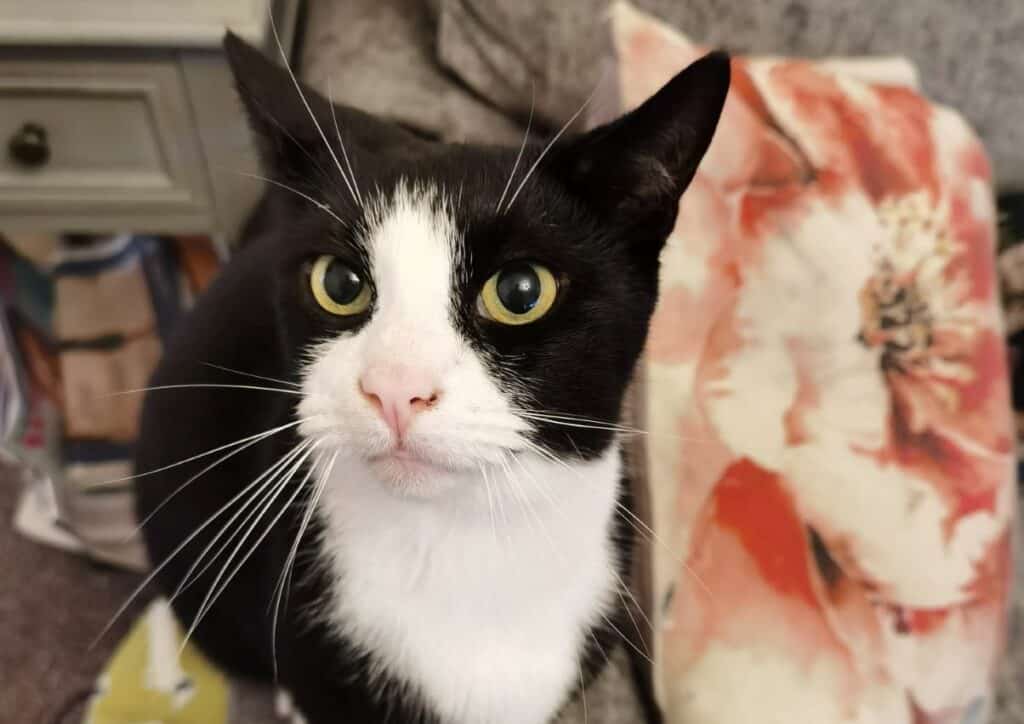
On November 30 last year, Cumbrian Cat, on finding out that both Cumberland and Westmorland and Furness councils had expressed a wish to have a joint mayor for Cumbria, asked why we, the public were being overlooked if not actually ignored.
Today comes the news that the cabinets of both councils have agreed that we should have a unitary mayor and the Deputy Prime Minister has said that an election for said position would be held in May 2026.
Now, there are arguments that a mayor will be able to drive through investment to the county faster and more efficiently – but how did we come to having an announcement made today when the electorate have not been consulted?
Democracy is a complex system where laws, policies, leadership and the mechanics of state are directly or indirectly decided by ‘the people’.
While few democracies have direct involvement by ‘the people’, with Switzerland and some states of the US, California for instance, hold referendum on key issues, in recent years, only the referendum in the UK over the membership of the European Union and, in Scotland, on independence.
Yet, here we are, destined to hand significant power over us on the say so of only the cabinet members of the councils – that is 10 councillors from Westmorland and Furness, all of which are Liberal Democrats, and 9 from Cumberland Council executive who are all, surprise, surprise, Labour councillors.
So, on the say of 19 people from their unrepresentative respective cabinet/executive, from May 2026 we will have an all powerful mayor.
In the space of barely five years, we will have gone from having a district council, to a Cumberland/Westmorland and Furness split county council, to a Cumbria mayor, with power getting further and further away from the very people who are supposed to be able to exercise their democratic right as to who represents us.
Of course, this isn’t a shock to the people of the United Kingdom.
We have a Prime Minister whose name did not appear on any ballot paper in Cumbria, who became the most powerful man in the country by dint of having 33.7% of eligible voters putting their cross against a Labour candidate in their local constituency. That’s a third of eligible voters who carried the day.
Of course, you might argue that anyone who was able to vote and who didn’t, have only themselves to blame, and that is fair comment, But that is 40% of the voters who either decided not to vote or couldn’t be bothered for whatever reason.
How many times have you heard down the pub, at work or in the supermarket, people saying it doesn’t matter who you vote for or even if you vote, you will end up with a Government made up of a motley crew of those who went to posh universities to do social science degrees because they were capable of doing anything more taxing!
Just look at our current crop:
- Markus Campbell-Savours – Birkbeck, University of London
- Josh MacAlister – University of Edinburgh
- Julie Minns – went to university but doesn’t say where
- Tim Farron – Newcastle University
- Only Michelle Scrogham, the MP for Barrow and Furness, didn’t go to university
The only other ‘major’ election, last year, saw our police, fire and crime commissioner elected with 38,000 votes from 83,000 votes cast from a potential of 415,000 eligible electors. That’s just over 9%. Hardly a landslide!
So we face 2026 knowing that the great and good from five political parties – Conservative, Green, Labour, Liberal Democrats and Reform – will battle it out to be top dog where a turnout of 33% will be a major success, to lord it over us into the 2030s.
And you call this democracy?
About Cumbria Cat

Born in Cumberland and, now, back living in Cumberland, having spent most of the past 50 years in some place called Cumbria, this cat has used up all nine lives as well as a few others.
Always happy to curl up on a friendly lap, the preference is for a local lap and not a lap that wants to descend on the county to change it into something it isn’t. After all, you might think Cumbria/Cumberland/Westmorland is a land forged by nature – the glaciers, the rivers, breaking down the volcanic rocks or the sedimentary layers – but, in reality, the Cumbria we know today was forged by generations of local people, farmers, miners, quarriers, and foresters.
This cat is a local moggy, not a Burmese, Ocicat or Persian, and although I have been around the block a few times, whenever I jump, I end up on my feet back in my home county. I am passionate about the area, its people, past, present and future, and those who come to admire what we hold dear, be it lakes and mountains, wild sea shores, vibrant communities or the history as rich and diverse as anywhere in the world.