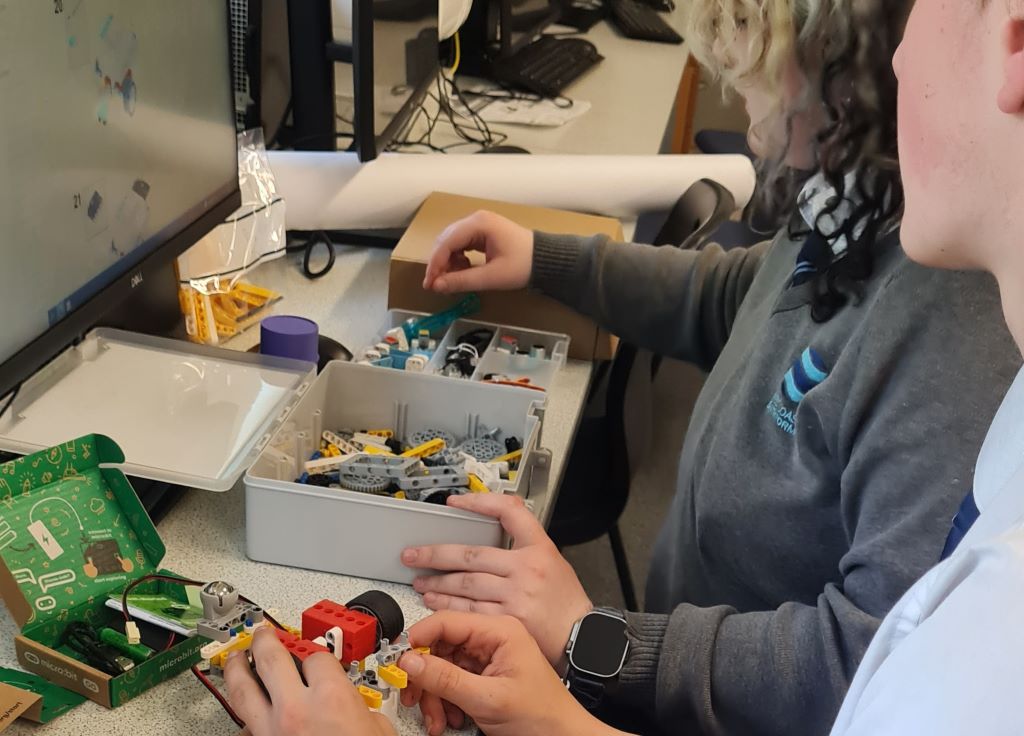
Students from three Cumbrian schools are putting their skills to the test in a challenge to build robots for the nuclear industry.
The Robotics Sprint schools challenge – a collaboration between the Cumbrian-based Robotics and Artificial Intelligence Collaboration (RAICo) and Industrial Solutions Hub (iSH) – will see youngsters aged 16 to 18 take part.
Teams from West Coast Sixth Form Centre in Workington and Lillyhall’s Energy Coast UTC, and Lakes College will work over five weeks to design, build, and programme small robots capable of tackling a mock version of a real-world nuclear challenge – moving high hazard waste safely into a storage area.
Each school will be supported by volunteering industry professionals: West Coast Sixth Form Centre by a team from The Robotics and Artificial Intelligence Collaboration (RAICo) and Energy Coast UTC and Lakes College by members of the Institution of Mechanical Engineers (IMechE), including a team from Sellafield.
The students, who are studying A-levels and T-levels in fields like cyber security and digital, will take part in weekly sprint sessions. During these two-hour workshops, they will receive hands-on coaching in robotics, programming, and engineering from experts working in the nuclear sector.
The challenge is now in its second year and has expanded from two to three schools for 2025.
It aims to give the students hands-on experience of applying their course skills to real-world challenges. It is a chance for students to work closely with people in robotics, AI, and nuclear engineering, who not only help with technical skills development, but can also discuss their work, motivations, and career paths.
Sophie Finlinson, project manager at RAICo, said: “Nuclear is a major employer in Cumbria. AI and robotics represent a huge opportunity here, not just for nuclear decommissioning but in the emerging fusion industry.
“These schools programmes give young people insights into what careers they might pursue and start to develop the skills they will need to do them. In doing so, they also create a future skills pipeline for these critical local industries.”
Hannah Pears, skills lead at iSH, added: “A huge part of this project is showing students that careers in AI and robotics are attainable.
“They get to see what a real robotics challenge looks like, and learn work-based skills. But just as importantly, they see that there are people just around the corner working in these exciting, innovative fields, and can talk to them about their own career paths.”
The students’ creations will be showcased at a celebration event on June 5, hosted by IMechE at RAICo1, the Robotics and AI Collaboration facility in Whitehaven.