In September 1942, tenant farmers on the Lowther Estate, near Penrith, were informed at a meeting that their land was required for military use.
Three weeks later, a column of tanks appeared in the vicinity of Askham village.
Opposite Highfield Farm, the front tank turned sharply, tore through a thorn hedge and led the column across the meadow to a concrete avenue which had been laid in secret and in preparation.
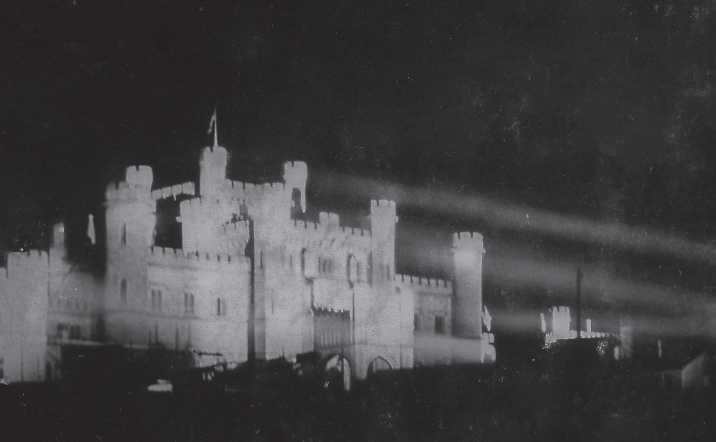
Over 50 tanks – Matilda and Churchill – and dozens of troops came to be based at Lowther Castle.
They were taking part in an experiment to develop a weapon known as the Canal Defence Light. Huge pieces of lighting equipment were mounted on the tank turrets.
Beams with 13,000,000 candlepower arced from the top of the tanks.
The intense light was picked up by parabolic elliptical mirrors and with a number of tanks in formation, wells of light and cloaks of darkness could be used to blind and stun the enemy.
Prime Minister Winston Churchill visited Lowther Castle to inspect the work and the weapon became one of the great hopes of the war.
However, in spite of months of development and training, plus £20 million in investment, the Canal Defence Light was never properly deployed – probably owing to the extreme secrecy which surrounded the entire operation.
From tomorrow until May 8, communities, families, local and national institutions will be commemorating the day 80 years ago when the war in Europe came to an end.
Lowther Castle itself will shape its tribute by recalling the soldiers and families of tank regiments, whose contribution to the war and all wars came and comes with such dedication – making a donation of 10% of its gate money across those three days to the Royal Tank Regiment Benevolent Fund.