A bid to create a memorial to the unsung heroes of the RAF has taken a step forward.
A campaign for the memorial to the photographic reconnaissance units of World War Two has been successful – and has now reached the planning stage.
Since 2021, the Spitfire AA810 Project has campaigned to establish such a memorial to the 1746 PRU pilots and navigators, with a major breakthrough in the campaign coming last week with the Government’s announcement on Tuesday.
The planned location for the memorial would be outside the Treasury, near the entrance of the Imperial War Museum’s Churchill War Rooms. The location has received approval in principle from the Royal Parks and Department for Culture, Media and Sport to proceed to the next stage, which includes ground surveys, design, and planning.
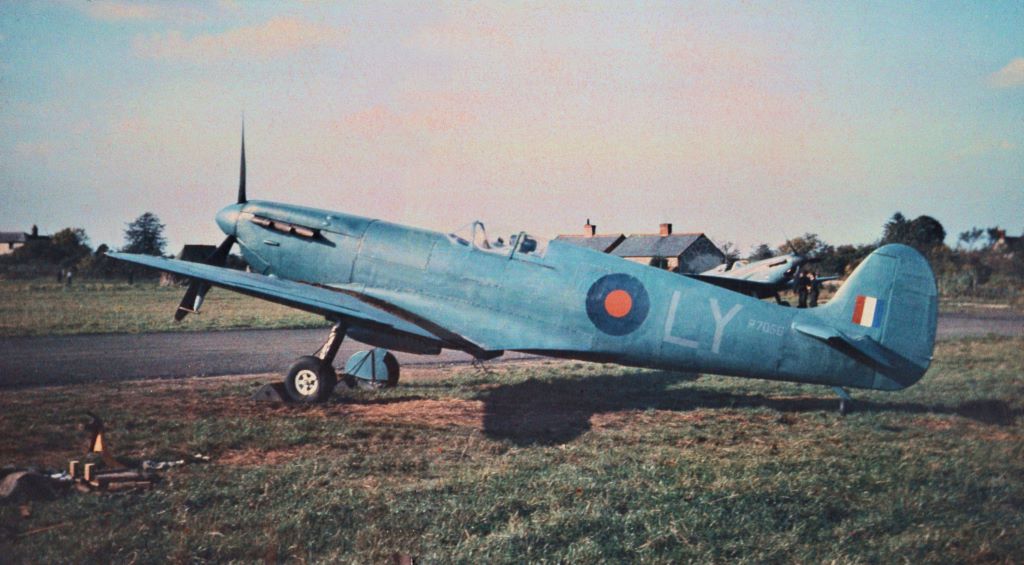
The RAF used the units during the war to gather crucial intelligence through aerial photography.
The units used modified aircraft, often stripped of armament and armour, to capture detailed imagery of enemy installations, troop movements, and infrastructure.
Due to the clandestine nature of their operations, the units’ death rate was nearly 50%.
The monument currently stands to commemorate 2,370 individuals.
While research continues into their nationalities, four men from Carlisle — Rae Armstrong, Ivan Cooke, William Johnston, and Charles Ross – are known to be among them.
People are urged to get in touch with the campaign if they know anything more about them.
Rae Armstrong
Flight Lieutenant Rae Daly Armstrong DFC was born and lived in Carlisle, but little is currently known of his life other than he served in 16 Photographic Reconnaissance Squadron and he was awarded the Distinguished Flying Cross (DFC) for his work in early 1945.
He survived the war but little else is known of his life.
Charles Ross
Flight Sergeant Charles B Ross was from Carlisle. Little is known of his prewar life, other than he served in 681 Photographic Reconnaissance Squadron in the Far East.
It is not known if he survived the war.
Ivan Cooke
Flying Officer Ivan Ernest Cooke was born at Howden in 1909 to John and Elizabeth Cooke. He was educated at Wallsend Secondary School, and Leeds Training College before becoming assistant schoolmaster at Stephenson Memorial School in Willington Quay. In 1934 he met and married Phyllis Fox and the couple moved to Carlisle where he took up a similar school appointment.
At the outbreak of war, he joined the Home Guard in Carlisle but in 1941 decided to join the RAF and train as a navigator.
He was posted to 69 Photographic Reconnaissance Squadron based on Malta, where he carried out operations over Italy and North Africa.
On September 2 1943 whilst flying from RAF Luqa, his Baltimore aircraft collided with a Spitfire operating from the same airfield. Both aircraft crashed to the ground outside of the airfield perimeter, and everyone on both aircraft were killed.
Ivan Cooke is buried in the Capuccini Cemetery, Malta.
William Johnston
Flying Officer William Lewis Johnston was born in Carlisle in 1922, the son of Thomas and Margaret Johnston.
He met Agnes and they married, living in Carlisle. Joining the RAF, Johnston trained as a pilot and after converting to fly Spitfires he was posted to 16 Photographic Reconnaissance Squadron.
On December 30 1944 he was returning to what is now Brussels airport from a photographic sortie over Germany when his aircraft was seen to crash on approach to land and burst into flames.
22-year-old William Johnston was killed. He is buried in Brussels Town Cemetery.
Over 200 MPs from eight parties uniting to back the call for a PRU memorial. Among the strongest supporters was Julie Minns, Carlisle MP.
She said: “I am delighted to see my support for the campaign to commemorate those who served in the Photographic Reconnaissance Unit has helped to bring this memorial one step closer.
“These brave men and women had one of the lowest survival rates of the war –around two-and-a-half months.
“Four Carlisle men served under these exceptionally challenging conditions: Rae Armstrong, Ivan Cooke, William Johnston, and Charles Ross. I remain committed to supporting the Spitfire AA810 Project in establishing this memorial and look forward to paying my respects to these local men and their colleagues from all Photographic Reconnaissance Units when it is completed.”