Crab Fair has been a beloved tradition in Egremont for 757 years.
It is believed to have been held continuously since Medieval times, with the first ever fair recorded in 1267 – a time of peasants, kings, wealthy land owners and later down the line, the black plague.
The fair is only ever thought to have been cancelled during the War years, throughout Covid and when the Queen died.
While Crab Fair has changed over the centuries it has run, many of the fair’s weird and wonderful traditional events have remained.
It still hosts the parade of the apple cart, the climbing of the greasy pole, the singing of traditional hunting songs, a pipe smoking competition, the World Gurning Championship and more – all of which have long and winding histories at the fair.
So in the run up to this year’s event, the 757th fair to ever take place, we thought we’d dig into its history.
The fair has over seven centuries of stories, tales and history – If we’ve missed something or you have a story of your own to add, contact us via email at [email protected]
Why is it called Crab Fair?
It is believed the fair got its name from the Lord of Egremont, who started a tradition of giving away crab apples to celebrate harvest time back in Medieval times.
Harvest time would end in September and serfs – also known as peasants – to the Manor of Egremont gathered wild fruits, vegetables, corn and animals and went to pay their dues to the Lord of the Manor.
With the large gathering of serfs came an opportunity to celebrate the completion of the harvest and so the fair was born.
It gave the serfs a chance to forget their poverty and tribulations by taking part in what was described as a series of crude but arousing and sporting games.
The first ever mention of the fair came in 1267 when King Henry III granted a Royal Charter to Lord of the Barony of Egremont, Thomas de Multon, who was born in 1247 and died in 1294.
The Charter granted a weekly market on Wednesdays and an annual fair – what we all know now as Crab Fair – to be held on the 7, 8 and 9 of September.
A modern translation of the original Charter is as follows:
“One market every week, upon Wednesday, with one fair every year by three days enduring the eve, the day of, and the morrow after the Nativity of St. Mary the Virgin, and to be quite free from suit of the County Courts and the Hundred Courts, and from all fines and americiaments there, and the tolls within the seignory of Copeland of ancient custom.”
The original Charter is held in the British Museum in London.
The granting of a Royal Charter freed the Barony from local fines and taxes, which was a way the King could raise money.
It also gave the town some degree of self-government and attracted people from the neighbouring countryside.
What was the first ever Crab Fair like?
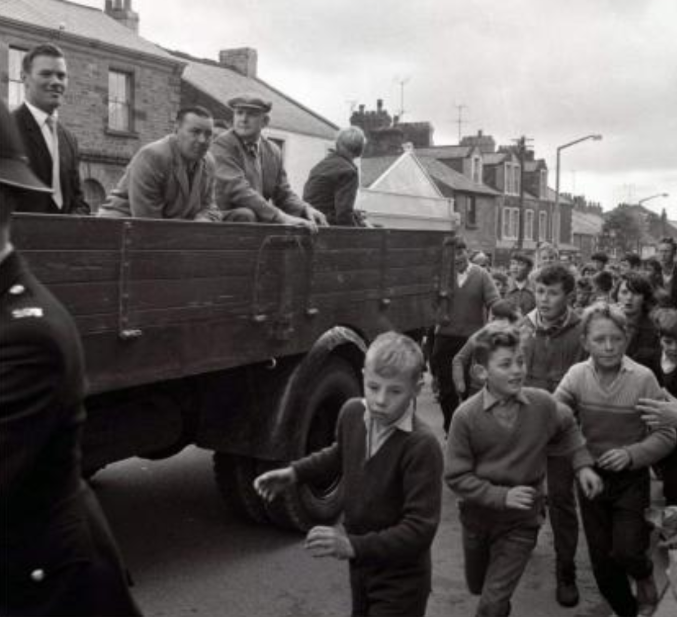
The first ever Crab Fair would have looked very different to the fair it is known as today.
Little is known about the actual events taking place at the fair in its very early years until it started to be properly documented in the 19th century.
But initially, it is known a religious festival was held on the three fair days mentioned in the 1267 Charter.
The feast of the Nativity of St. Mary the blessed virgin, held on September 8, was observed as Lady day in harvest and the 7, 8 and 9 of September marked ‘the eve, the day of, and the morrow after’ the Nativity.
It is also known that events like cock fighting and bull baiting – brutal, but popular Lakeland sports – were common at local fairs across the county, especially in Medieval times, making them likely to have been carried out at Crab Fair also.
But these events stopped in 1835, when they were prohibited by law.
In the 19th century, a typical Crab Fair would begin at dawn and it would typically take place over three days, during which businesses were allowed to sell ale without a license.
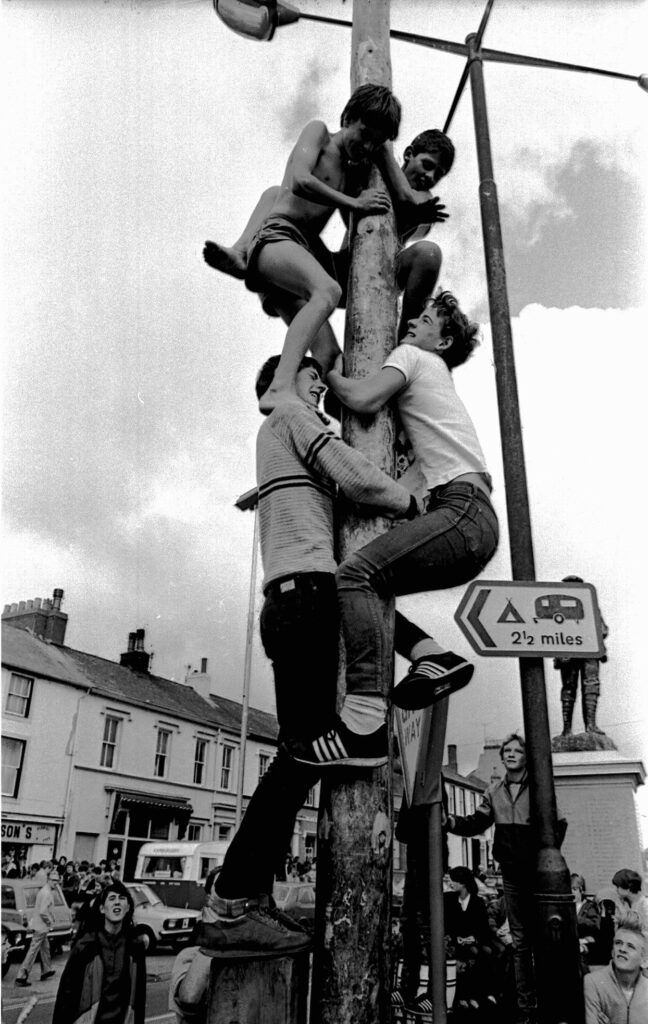
The first event that started the fair was the erection of the 30ft greasy pole at the fish tone by the Market Cross – a tradition that is still upheld today.
The objective was to climb to the top of the lard greased pole and retrieve the prize. Originally the prize was a hat – most likely a top hat.
The winner, normally an agile young person, paraded around the town wearing his prize.
In 1852 the prize became a side of mutton which, if not won by the end of the day, was cut up and divided amongst the poor.
The tradition continues to this day, and in addition to a main prize, ribbons are now attached to the pole which can be grabbed lower levels and exchanged for other prizes in the town.
After the greasy pole winners were crowned, the next event of the day was the cattle market.
Cattle would stand in the Market Place, attended to by drovers, leaving only the main road open to the public. Sheep were also penned on the street.
The pens would be placed in front of pubs frequented by the people tending the sheep.
Any damage done to the sides of the street was repaired by the Borough Sergeant. Tolls were of course extracted by the officers of the Borough Court on behalf of the Lord of the Borough.
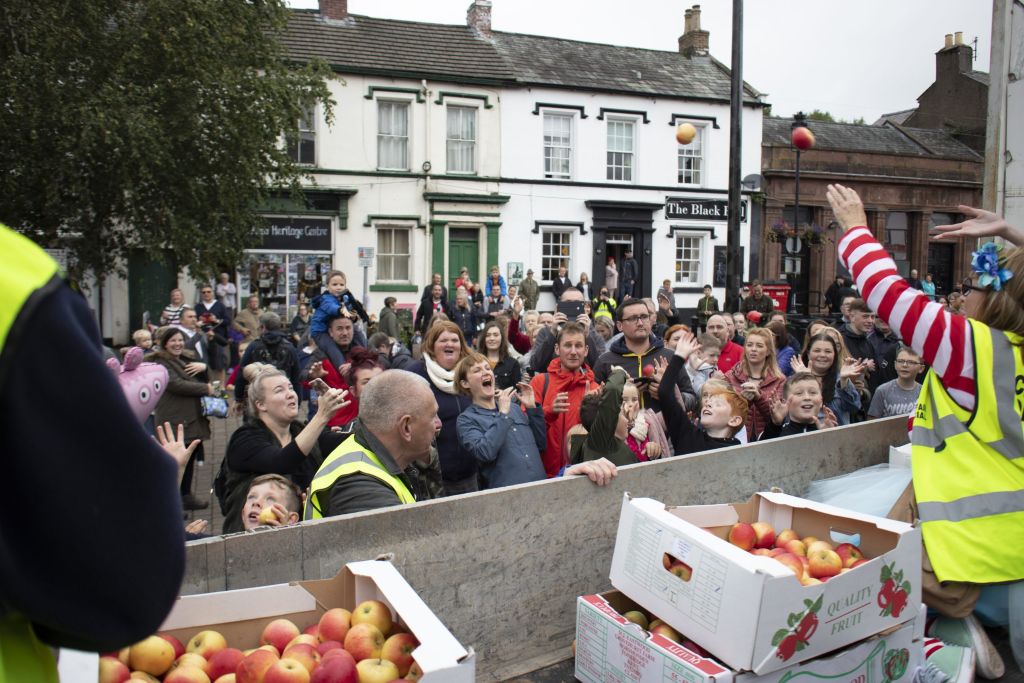
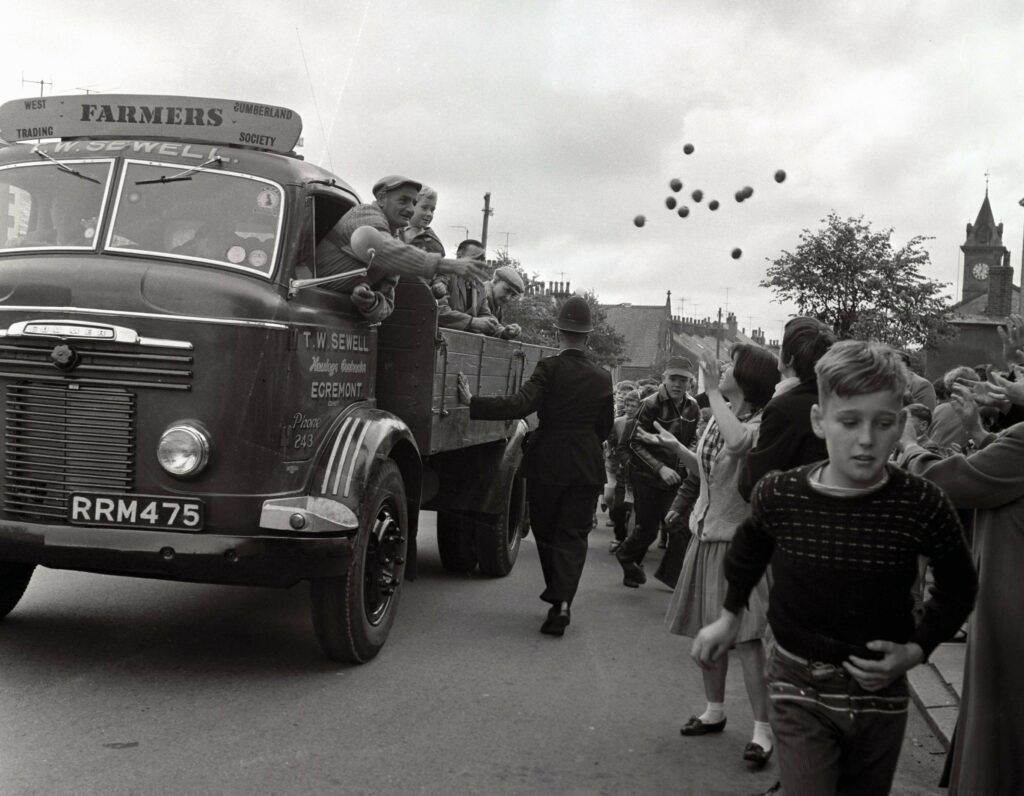
Around noon, the scattering of the apples, now known as then parade of the apple cart, would take place and in earlier years, cakes were also scattered.
While crab apples used to be scattered for fairgoers, they were considered too sour for the modern taste, and sweeter varieties are now used.
In the afternoon, after the apple throwing, sporting activities would go ahead, some ancient and some traditional.
Other old events that went ahead at the fair in the 19th century included a funfair, quoiting and snap pitching, the cuddy, bicycle racing and eating biskeys and treacle.
While they were popular in their heyday, these events no longer go ahead.
Quoiting is an old and nearly forgotten sport that involved heavy iron rings (quoits) being thrown at a hob (a kind of large metal pin) in a bed of sand or clay.
In the middle of each public house back yard in the town was a peg called a hob. This was used for the quoiting events which were similar to modern day quoits.
Snap pitching, also known as brass pitchin’, also used the hob.
Each pitcher had his own pair of solid brassies which looked like upturned saucers and were thrown at the hob from a distance of seven yards.
The nearest pitcher each time was awarded a point and the prizes for these events were substantial and included things like a longwall clock and a silver tea urn.
Heavy bets were also wagered on most of these competitions.
The cuddy was an old horse racing event, a very popular pastime in the 19th century. But it was eventually taken over with the introduction of cars and the popularity of cycling – races of which have been recorded at the fair.
One of the more unusual events was the biskeys and treacle eating competition.
Biskeys were teacakes soaked in treacle and the winner had to be the first to whistle a tune after quickly eating the biskey and treacle.
On one occasion, when the excitement was at its height, an exuberant spectator grabbed the large bowl of treacle and turned it upside down over the head of one of the officials.
Gurning known as ‘grinning for ‘bacca’ at the time, would also go ahead in a format different to the one we know now.
It wasn’t until the twentieth century that the World Gurning Championships were properly formed.
But the structure of the main fair day back then is very similar to the one we have now on Saturday, which begins with the greasy pole climbing and ends with the gurning.
Several other events would also have gone ahead at the fair in the 19th century, including the pipe smoking competition, street racing, dialect singing and more, many of which still go ahead today.
In the 1884 Crab Fair programme, it also states that the fair was recognised as a charitable institution.
Things like tea and bread were distributed among the poor and war widows of the town. It was also common for donations of hats, ties and toys to be given by local tradesman to be used as prizes for various events.
Which old events still take place today?
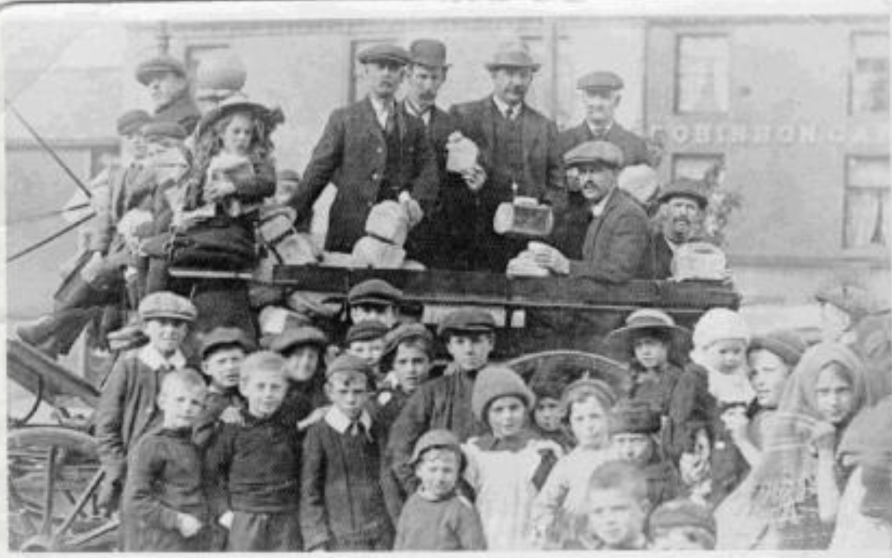
The fair still proudly hosts several old traditional events that have taken place for hundreds of years.
These include the following:
- The parade of the apple cart – where apples are thrown from the back of a cart to passers by
- The greasy pole – where nimble climbers get a prize for scaling it
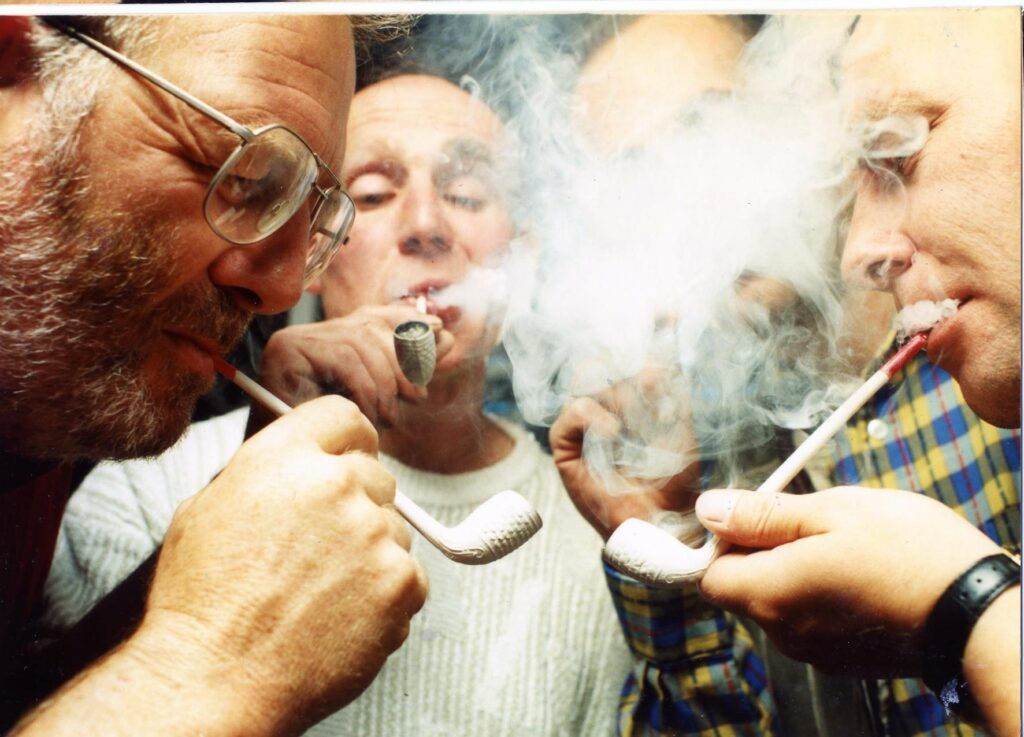
- The pipe smoking competition – where each competitor is given a clay pipe filled with black twist tobacco and a lighted candle or taper, the person who smokes their tobacco in the quickest time wins
- The singing of traditional hunting songs and horn blowing – which takes place before the gurning and involves singing hunting, comic or sentimental songs in West Cumbrian dialect
- The World Gurning Championships – the extremely popular gurning which sees people go head to head to win the title of the ugliest face with their head through a braffin
- Street racing – where races are held on the Main Street between the Kings Arms and the Blue Bell Inn, in the past prizes included money and bread loaves
- Cumberland and Westmorland Wrestling – considered an unusual type of wrestling, it involves each wrestler locking their hands behind their opponent’s back with the objective being to lift your opponent and throw them to the ground so they land face up
- The funfair – which typically arrives a few days ahead of the fair and has been attending for over 100 years
- Horse and pony events and racing – some horse events still take place today, including the riding of the boundary
Dozens of other events at the fair, while not hundreds of years old, have also become traditional to host over time.
These include things like vintage bikes and cars attending, sports events on the Crab Fair sports field on the outskirts of the town, horticulture competitions, horse events, dog racing, dog shows, ferret shows and more.
Newer events that are slowly becoming part of the annual traditions include Crab Fest, introduced in 2017, which brings local musicians to a stage in the Crab Fair sports field and Dancing in the Street, which takes place on the Friday evening of the fair and brings both local and national performers to the town for an evening of entertainment.
Dancing in the Street was first introduced in 2004 and has grown every year since. This year’s event will once again be hosted by Egremont’s Stella the Fella. It is also sponsored by Egremont’s three pubs – the Kings Arms, Wheatsheaf and the Blue Bell.
The crowning of a Crab Fair Queen each year has also slowly become an annual tradition at the fair and has been going ahead for over 10 years.
How did the World Gurning Championship first start?
Arguably the fair’s most popular event – the World Gurning Championship has been part of the fair for hundreds of years.
While the first ever date of the gurning championship remains unknown, it was first written about as an ‘ancient tradition’ in 1852.
To gurn means to snarl like a dog, look savage and distort the face and the championship sees people go head to head to pull the ugliest facial expression they can through a horse collar, known as a braffin.
But the actual origin of gurning is obscure.
It is believed to have originated from the mockery of the village idiot, it is claimed that townsfolk would throw a horse’s collar over the individual and make them pull funny faces in exchange for pints of ale.
It’s not known if there is any truth in this little tale – but there are other similar stories that are also shared by local people.
Others include a drunken farmer arriving home to find a discontented wife, who he shouted ‘stop gurning, woman!’ and threw a horse collar over her head.
But it is known that the use of tobacco became common in the 17th century, and was either chewed or powdered and inhaled as snuff.
It is probable that grinning for ‘bacca originated from these times – when it was later written about as an ancient tradition in 1852.
At the end of the championships, singing and dancing would continue into the early hours of the next morning, bringing the fair to a close for another year.
This same pattern of events is still followed today.
But it was only in the twentieth century that gurning through a braffin began and later came to be known as the World Gurning Championship.
Initially, the championship was a combined men’s and women’s competition, but in 1978, a separate women’s category was properly introduced.
The first junior gurning contest took place a year later in 1979.

How long has the funfair been a part of Crab Fair?
While it may seem like a modern tradition, the funfair is believed to have been part of the fair over 100 years.
Originally, it was Taylor’s FunFairs and Broughtons who brought the funfair to the town.
But it later changed hands when Taylor’s Funfairs lost the rights to the fair 80 years ago and Broughtons sold out to Robertsons Travelling Fair from Glasgow, who attended for around 50 years.
The Robertsons Travelling Fair then sold out to George Henry Kedona of Kedona’s Travelling Fair, but due to ill health, Mr Kedona sold the rights to the fair back to David Taylor, of Taylor’s Funfairs
Relatives of the families who originally came to the fair with Taylor’s Funfairs and Broughtons to this day still attend the Crab Fair.
Chairman Callum Scott said: “David Taylor is in his 70s and now runs the fair and I think he was born at the fair in Egremont and he spent most of his childhood growing up here at the fair.
“Obviously the fair in them days the fair came for about six weeks and all the fair kids went to Bookwell and Wyndham and David is now back in Egremont and he said it’s nice to be back where he started.
“But people have met on the fair, got engaged and raised families there.”
What other events take place at the fair or before it?
The modern day event relies solely on sponsorship and fundraising – and it’s the fair’s voluntary committee who work hard to make it all happen.
Other events that help fundraise for the main fair take place over the weekend and week prior to the main fair.
They include the Crab Fair Queen disco for Under 16s, which takes place the Friday before the fair, and sees a youngster selected and crowned as the fair Queen.
A horse and pony leaping show also goes ahead alongside clay pigeon shooting, prize bingo, a multi terrain race and duck race.
What does the Crab Fair Queen do?
The Crab Fair Queen is a youngster under the age of 16 who is chosen specially at a special fundraising disco the week prior to the fair. A reserve Queen is also selected.
The youngster then gets to dress up and ride on the apple cart as well as spending the day helping with prize giving around the fair.
It’s a tradition that has remained in place for over 10 years and one that is adored by younger generations keen to bag the title.
So has the date of Crab Fair always been the same?
The date of Crab Fair has changed slightly over the years, but the fair has always been held in September.
In 1752 the date changed to September 14 after a new calendar – the Gregorian calendar we still use today – was introduced in the UK.
It aimed to correct an error of eleven days in the old calendar, so Parliament enacted that September 3 should be reckoned as September 14.
The three days of the fair then later became September 18, 19 and 20.
As time progressed the fair was reduced to a one day event held on the September 19.
It is believed this was necessary due to the industrialisation of Egremont, which meant that the townspeople had less leisure time.
In 1800 the town was thriving. Tanneries, corn mills, sailcloth mills, flint mills and flax mills had all been built alongside the river Ehen, from which they obtained their motive power.
So in 1889 the date of the fair was changed again to September 18.
According to local reports at the time, the change was due to the organisers wanting to hold the fair on the same day as the local cattle market.
Cattle and the sale of other animals at the fair were also described as immensely profitable both to the town and to the neighbouring farmers who would rent out their land for grazing.
Today, the main fair day is always held on a Saturday to accommodate the five day working week.
It has now become tradition to hold the fair on the third Saturday of September.
The fair has over seven centuries of stories, tales and history – If we’ve missed something or you have a story of your own to add, contact us via email at [email protected]