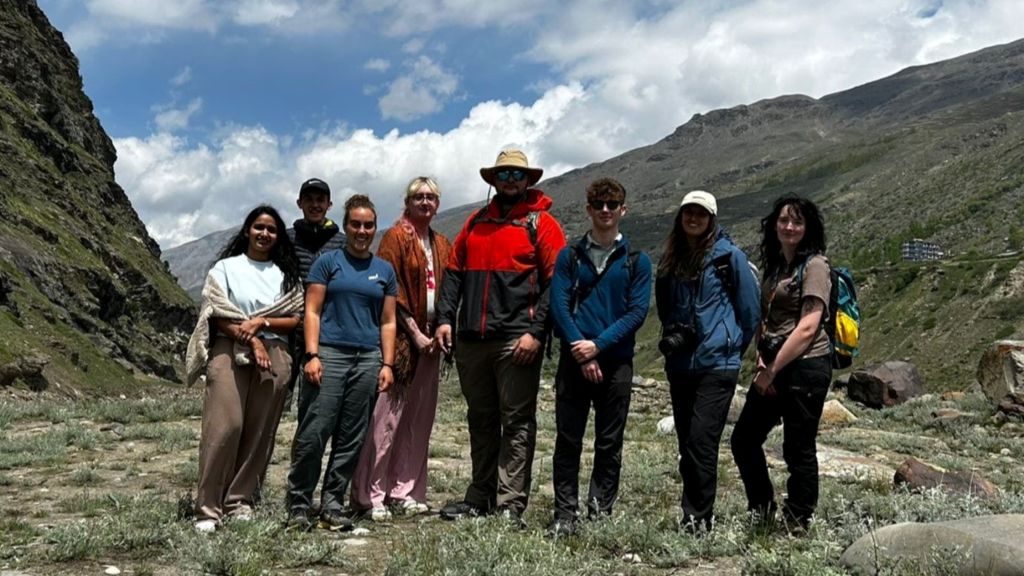
A group of Cumbrian students joined a research project to help reduce disaster risks in the Indian Himalayan region.
Seven students from the University of Cumbria contributed to the international project, which aims to build resilience and reduce disaster risks for vulnerable mountain communities in the area.
It is focused in particular on strengthening community resilience to flood hazards and disasters.
The group spent some of their summer in the region working alongside co-researchers from the GB Pant National Institute of Himalayan Environment.
They supported the bilateral research project led by Dr Richard Johnson, associate professor of geography within the University of Cumbria Institute of Science and Environment.
The long-term research project has led to the creation of a new tool – HiFlo-DAT, the Himalayan Flood Database, to support the region which is prone to floods.
It is an area which stretches across more than 530,000 sq km and home to around 77 million people.
The open access food database tool, initially focussing on the Kullu District, compiles historical flood records to identify patterns, causes and impacts that are often missing in official databases.
Funded by the Department for Education’s Turing Scheme for overseas student exchange, Ethan Baxter, Tom Rainford, Hannah Wright, Reuben Hibbert, Megan Richards, Katie MacDonald and Alice Wears embarked on the trip.
They were joined by Dr Johnson and colleague Professor Ian Convery, who is a professor of environment and society at the University of Cumbria.
The students and academics also worked with University of Delhi researchers, and visited the GBP-NIHE Headquarters in Almora, Uttarakhand.
Award-winning student and alumni University of Cumbria film-makers Megan Richards and Reuben Hibbert captured their research activity and experiences, producing two separate short films.
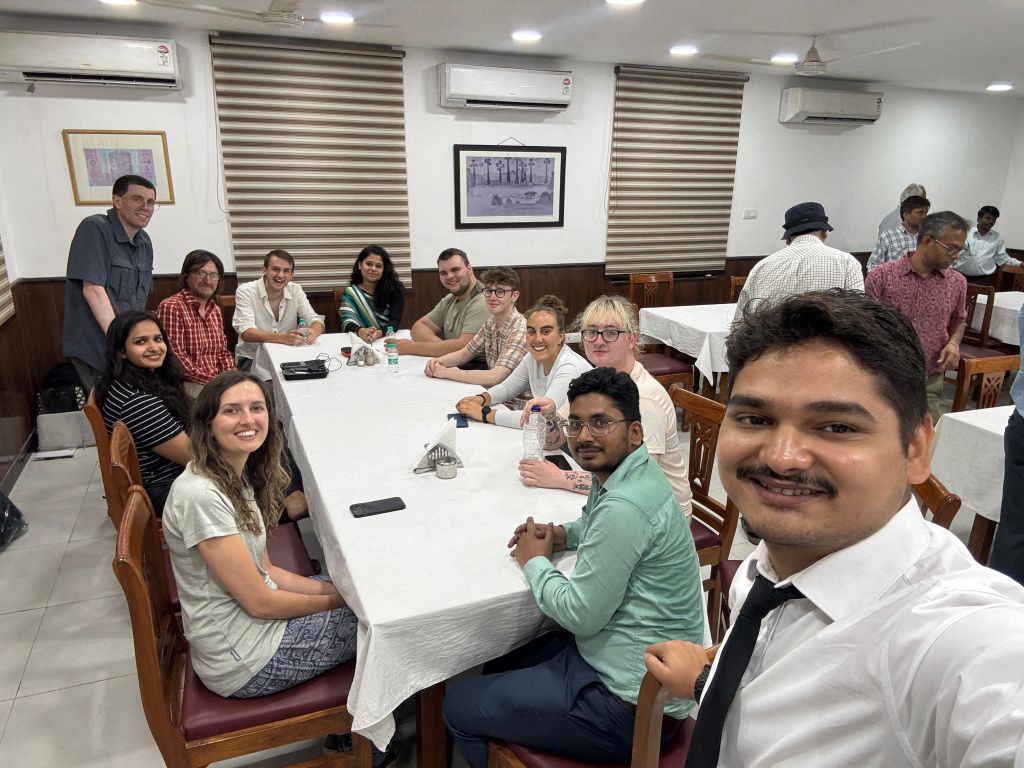
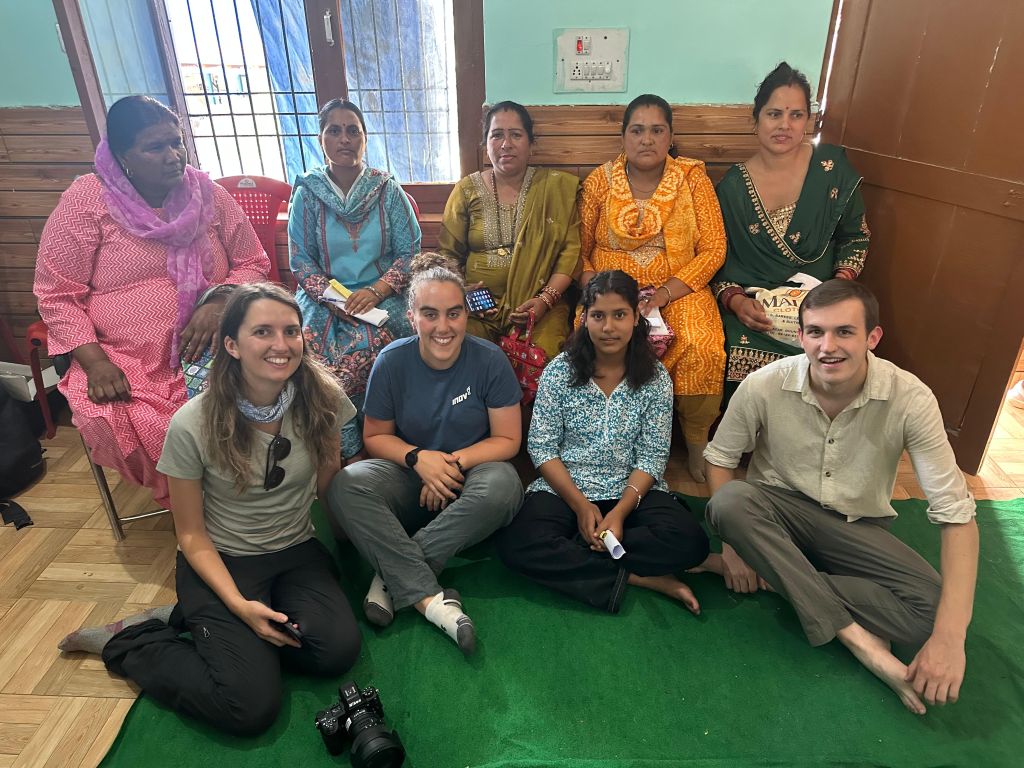
Their international placement varied from working on a research presentation for an international conference to spending hours reading and translating daily village logbooks with translators.
Their aim was to record important data that is hoped to help better manage and predict future flood and disaster threats.
It is also hoped to better reduce risks by improving responses to the changing environments and climates within the mountainous region.
Hannah Wright, who is studying geography at the University of Cumbria, said: “Travelling with six fellow students from the University of Cumbria to India for this research trip was incredible.
“The placement was filled with the stunning scenery of the Himalayas, diverse cuisine and opportunities to make new cross-cultural friendships, and in a few instances unpredictable travel.
“On one occasion we travelled in India for over 17 hours – I don’t think I’ll ever complain about traffic in the UK again.
“The trip brilliantly encapsulated the phrase ‘people make the place’ and it was a privilege to have the rare opportunity to be part of an active research project. Whilst on the trip, I saw the importance of local knowledge in every stage of research.
“Whilst visiting the Kullu District, it became apparent to me that it shares much in common with the English Lake District – both attract large numbers of tourists, supporting economic growth, however in some aspects tourism has started to negatively impact upon them.”
Ethan Baxter is continuing his involvement in the project over the next academic year through his final-year dissertation as he approaches the end of his geography programme, of which he’s expected to graduate from in summer 2026.
He said: “Being part of a wider research team was a real highlight, developing my research awareness. It brought home to me the real-world importance and value of applying these skillsets within these communities.”
Zoology student Katie MacDonald was also among those to take part. She added: “It has really broadened my skill set and given me a strong idea of what I want to do for my dissertation.
“It has taught me about the interdisciplinary nature of environment-society challenges and has been, overall, an unforgettable experience. I absolutely loved the opportunity to do some birdwatching in India, seeing an incredible array of species across the areas we visited.”
Local translators also shared with the university that they had learned new things about their region through their work with Cumbrian students and academics.
Project lead Dr Richard Johnson said: “The UK Turing Scheme, alongside other funding sources, have provided an invaluable opportunity for UK students to experience global challenges firsthand – as research co-producers, making a tangible contribution to our partnered research-policy portfolio in the Indian Himalayan.
“The 2025 summer monsoon (July-September) season brought the latest iteration of disaster losses, with very significant flood and landslide impacts in the Kullu District.”