
Controversial plans to create a heritage tourism attraction at a Lake District quarry can go ahead, the High Court has ruled.
Burlington Stone was granted permission by the Lake District National Park Authority to develop Elterwater Quarry into the attraction in May last year.
Burlington Stone worked with Zip World on the attraction, which it said could see up to 50,000 people a year visit.
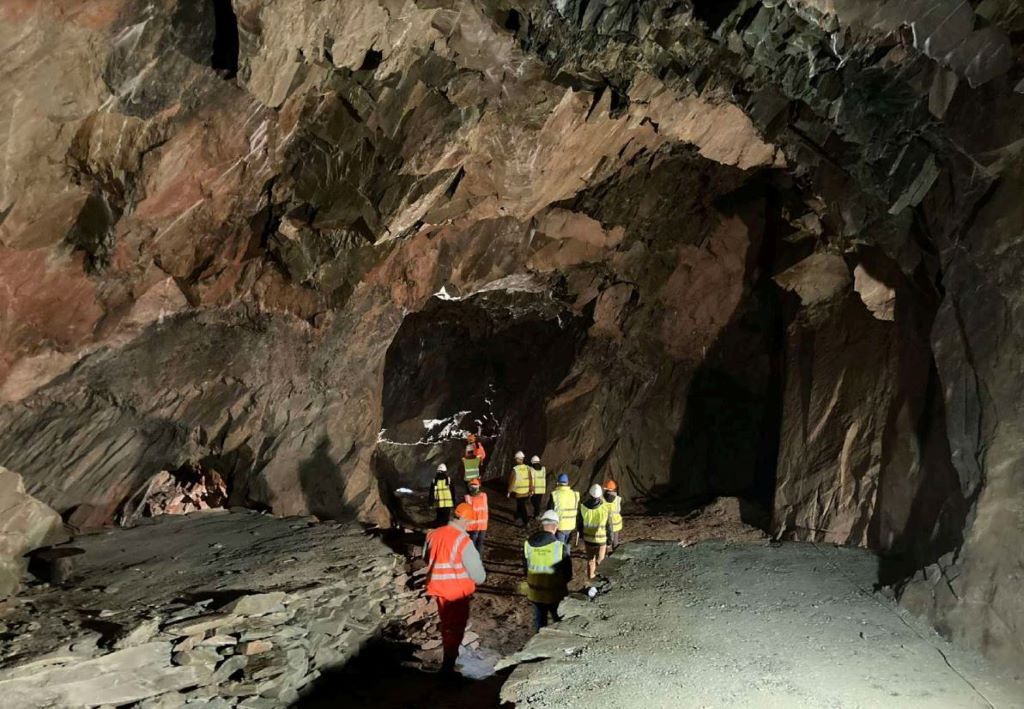
It wants to use part of the quarry at Great Langdale for heritage tourism – including zip wires in its caverns, a visitor centre and natural history trail.
Landscape charity Friends of the Lake District launched a legal bid to stop the plans. It said it was concerned about the increase in traffic and the process of the authority’s approval. It said the authority should prioritise conservation over development.
This is known as the Sandford Principle. The Sandford Principle is a guideline for managing protected landscapes in the UK. It says if there was an irreconcilable conflict between a national park’s purposes – conserving natural beauty versus public enjoyment – the conservation purpose must be given greater weight.
A judicial review was held in April this year.
After it concluded, Friends of the Lake District CEO Michael Hill said: “If the ruling does go against us, it will take us a step closer to a Lake District of noise, chaos and degraded landscapes.”
However, this week, the High Court of Justice Planning Court upheld the Lake District National Park Authority’s decision.
The 42-page ruling by the Honourable Mr Justice Mould agreed that authority acted lawfully, accurately and fairly assessing the application during its development control committee meeting and dismissed all grounds of Friends of the Lake District’s claim.
He agreed with the authority’s interpretation and application of the Sandford Principle.
Steve Ratcliffe, director of sustainable development at the Lake District National Park Authority, said: “Whilst we are pleased with the result and respect the right of any person or organisation to challenge the decisions made by the authority through judicial review proceedings, we are disappointed that the application came before the High Court without any engagement with pre-action protocols or notification, resulting in significant costs for both the authority and Friends of the Lake District.”
Mr Hill said: “The decision to seek a judicial review into the approval of the attraction at Elterwater was not one that we took lightly.
“But the damage to the tranquillity of the area that would be caused by this development and a desire to draw a line in the sand against forms of tourism that devalue the special qualities and cultural heritage of the Lake District meant that this was a fight we could not shy away from.
“We initiated the judicial review because the prospect of facing one often leads public authorities to reflect on their approach and can influence future decision-making.
“We are now even more determined to bring about an alternative vision for tourism in the Lake District – one where visitors both benefit from and give back to the landscape so that what is special about it remains so.”