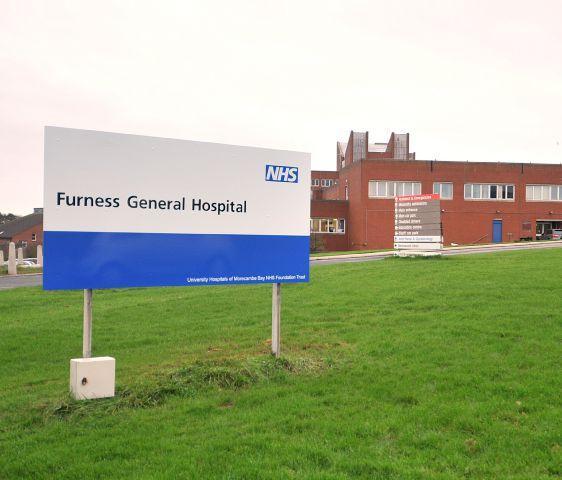
A hospital trust has pledged to learn lessons after the death of a 79-year-old man.
John Hatfield was admitted to Furness General Hospital in Barrow after an unwitnessed fall at home on September 18 2024.
He sustained a fractured socket of the hip bone and remained non-weight bearing for six weeks, due to an inability to comply with a physiotherapy plan, resulting in significant physical and cognitive deconditioning.
On November 18 2024, he suffered another unwitnessed fall in a hospital observation bay after the supervision nurse left to arrange cover.
During this time, Mr Hatfield attempted to stand and fell forward onto his face.
He sustained a cut to the bridge of his nose and left elbow and complained of pain in his left hip.
The fall resulted in a left fractured neck of femur, requiring surgery to replace the femur part of his hip joint the following day.
Despite surgical intervention and rehabilitation efforts, Mr Hatfield died on December 31 2024.
His widow Gabrielle Hatfield addressed the University Hospital of Morecambe Bay NHS Trust’s board of directors meeting held on January 7 at Westmorland General Hospital in Kendal.
The meeting agenda said Mrs Hatfield did not wish to make a formal complaint.
It continues: “However, on the coroner’s advice, she hopes to address the board of directors directly to share her concerns and ensure lessons are learned.”
Mrs Hatfield said: “It’s a hard thing for his three children. It’s the lack of care, that’s the shame of it.
“I’d like to see a change across every ward and department to uplift that lack of care.”
Members expressed their deepest sympathies for Mrs Hatfield and pledged to do better.
Numerous actions have been identified and acted upon to ensure that similar tragedies are not repeated.
It includes:
- developing a local protocol for staff breaks that ensures continuous patient observation
- reinforcing Enhanced Care documentation standards through staff training
- reviewing the Enhanced Observation, Supervision and Person Centred Care Policy
The lessons identified from the incident include continuous supervision is essential for patients at high risk of falls, enhanced care documentation must be completed and audited, structured supervision rota required to prevent lapses and communication during staff handover must be robust.
During the meeting, Mrs Hatfield said her husband had lost between three and four stone during his stay and that, due to her husband’s cochlear implant, communication with staff was difficult.
Training has been proposed to address these points.
Interim chief nursing officer Lynne Wyre, who accompanied Mrs Hatfield, said the ward was shaken by what happened and the incident was widely discussed at the time.
She added lessons the trust should learn are more about re-enforcing what we’re expected to do and there is a disconnect that can cause big issues.
Sarah Rees, non-executive director and chair of the quality assurance committee, said: “I’m really sorry for the experience you and your husband have had.
“We have the processes and the systems and we know what we should be doing. I feel really disappointed.”