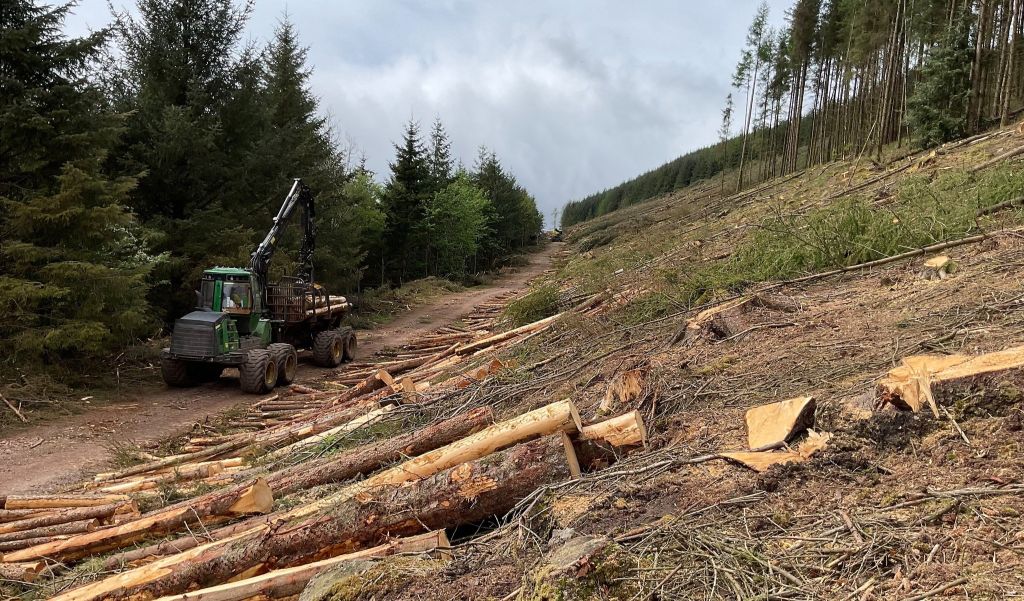
Landscapes across the Lake District are changing – but it’s not all bad news.
Cumbria’s forests and woodlands have been battling tree diseases like ash dieback and larch disease for several years now, which has resulted in swathes of felling and patches of dead trees appearing across the county.
Some areas have faced more significant visual changes from both diseases than others, with places like Ennerdale, Dent Fell, Whinlatter and Whitbarrow Scar being more visibly hit.
While empty patches of forest might look sad from a distance, behind the scenes, there is hope for the future.
But what exactly are these diseases? What makes them worse than others? Why do they result in felling and how can cutting down trees ever be seen as good?
We spoke with forestry experts from across the county to figure out why changing landscapes are not always a bad thing.
‘The plant destroyer’
Gareth Browning, area forester for Forestry England, for Ennerdale and Thornthwaite, said that in the case of phytophthora ramorum, known as larch disease, felling infected trees actually does more good than harm.
Phytophthora ramorum, or larch disease, is a highly destructive fungal-like organism that spreads through the airborne, water-borne, and human movement of spores.
The disease, of which its name translates in Greek to ‘plant destroyer’, causes trees to suffer severe bleeding bark cankers and needle infections. It was initially spread across the globe by plant trade.
While it is mostly known for quickly killing larch trees, it can also kill 150 other species of native trees and shrubs like oak, beech, birch and chestnut trees.
Without intervention, larch disease can cause serious widespread tree death as there is no cure, which makes keeping it under control an urgent situation.
Larch disease is considered such a threat, that under UK law, if diseased trees are found, landowners are served with a Statutory Plant Health Notice, by the Forestry Commission or Animal and Plant Health Agency.
The notice means landowners must fell the diseased trees within a specific period of time.
In Ennerdale alone, the disease was identified in 60 hectares of larch forest in the valley in 2022, which has led to felling across the area since, in locations such as Bowness Knott and Gillerthwaite.
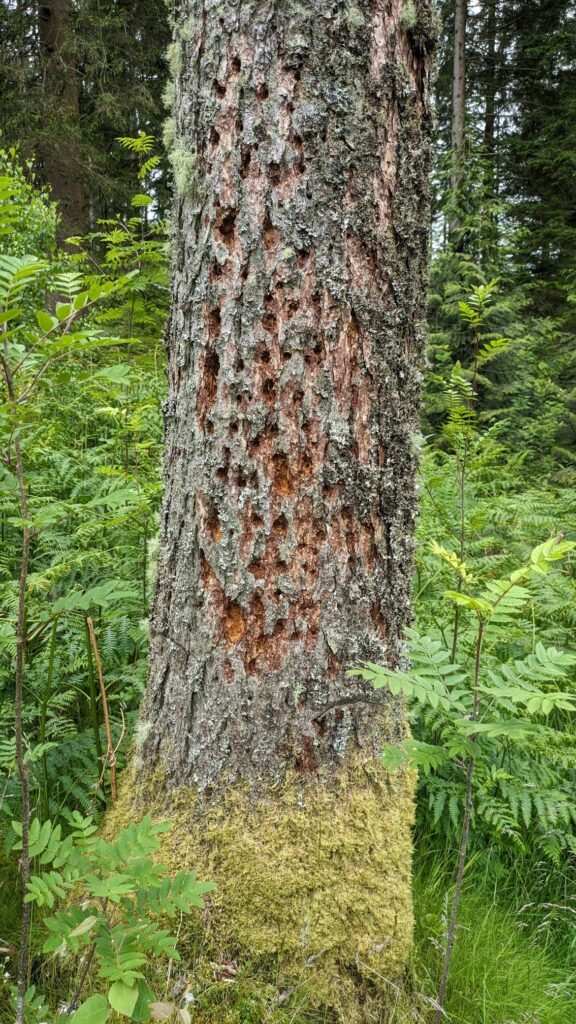
Gareth said that while felling the larch is a loss and disruption to ecosystems, it can also be a benefit to the neighbouring environment over time.
He added: “We have to fell trees with larch disease as we get served with a Statutory Plant Health Notice if we don’t, so the impact is more visible.
“For the likes of Ennerdale and Whinlatter in the last two years most of the harvesting work we’ve done is in response to fighting off larch disease.
“We’ve had to fell quite a number of trees in those areas and that is quite visible in the landscape now.
“But whilst we are sad to lose our larch, it is giving us the opportunity to introduce other native species, so we’re planting Scots pine, birch and oak mixtures.
“It is giving us the chance to do something we wouldn’t have done ourselves as we would not have felled these areas and it is a loss.
“But equally, there’s an opportunity to plant different native species that make our woodlands and forests more resilient going forward.”
Gareth said while it can be a shock to see larch felling, it’s also a tree that was never really meant to remain as part of the UK’s landscape.
He added: “Larch was introduced as a tree specifically for timber, so the majority of larch came into the country from Europe when the Forestry Commission was planting trees in the early 1930s to the 1960s.
“The commission came into being after WW1 in 1919, so from then on it was planting trees for timber and for rural employment after the war.
“So they were planted to be felled, but since the 2000s we’ve had initiatives like Wild Ennerdale where we’re trying to develop the values in wilder places.
“What was good about larch is you can grow trees beneath it quite easily and in Ennerdale we had been thinning the larch and doing underplanting and natural regeneration with native species.
“So where we have felled on the lakeshore, while we’ve lost the larch, there’s now an emerging native woodland coming through.”
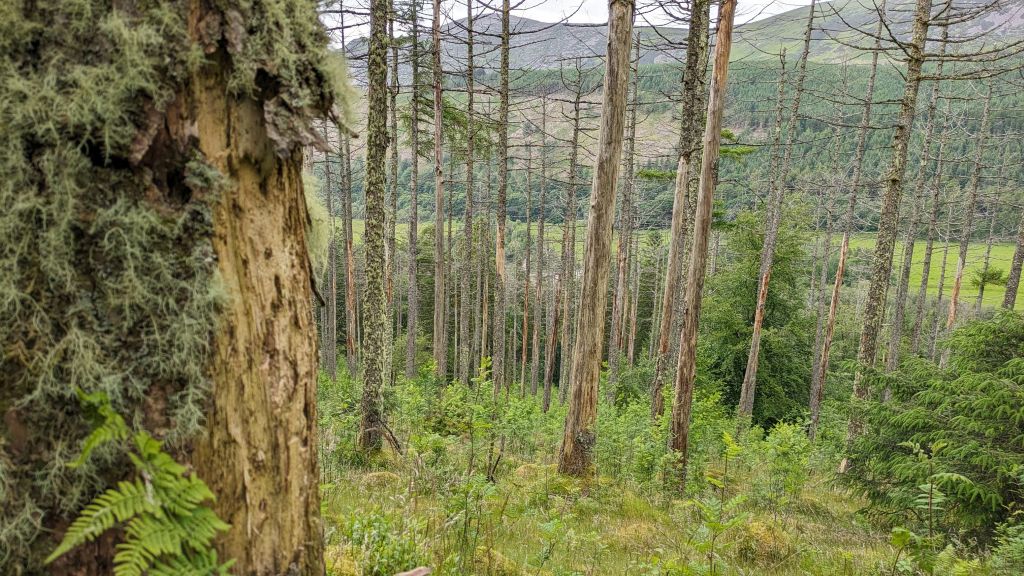
While the disease is a tree killer, it doesn’t impact how larch timber can be used once trees are felled.
Gareth added: “It is valuable and we can use larch and luckily, the timber quality of larch infected with the disease is not affected, so we are using the larch we are felling in Cumbria.
“But we can’t replant with larch because we’re not permitted too on infected sites, but we are diversifying our forests with other trees.”
Gareth said that around 80 per cent of timber felled in Cumbria, stays or goes to mills for use in the county.
He added: “It depends on the size of the timber, so smaller timber might go into fencing and quite a bit of it goes into chip wood, which is used to make furniture or cupboards for kitchens for example or cladding for houses.
“Some also goes to local companies for biofuel. Then with bigger diameter timber, some of that material comes into what we call logs, and those logs can go on to more different uses.
“A lot will go into the construction industry for things like roof trusses, purlins and door frames, any wood that is used for a house.
“Then we have intermediate size logs that can go into making pallets for transport and some might go back into fencing as well and obviously you’ve got things like toilet rolls, paper and card.”
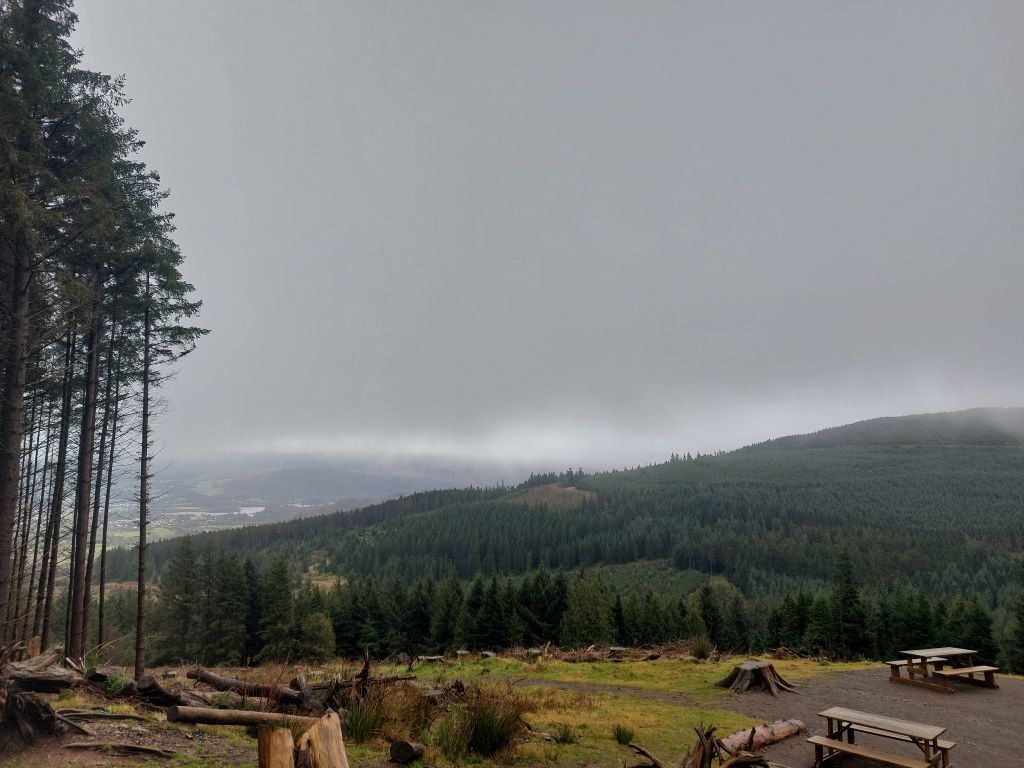
Some of the bigger trees grown in the Lake District for timber have also been sent overseas for use.
Gareth added: “In the forests around Keswick we have some very big Douglas fir, which you can see walking around Dodd.
“The last time we felled them, some of those trees went to Hamburg and even to Chicago. They’re used because they have a very durable heartwood and they’re used for port infrastructure.
“They’re wanted in long lengths and they’re often sold in lengths like 90 foot, 120 foot and 150 foot logs, so they’re quite long single sections of trees.
“A few of them last time also went down to Portsmouth to be made into masts for tall ships.”
Gareth said most of our forests across the Lakes are less than hundred years old – leaving room for new development.
He added: “A lot of our forests were planted very simply, with one of two species of trees. We didn’t really have a forest industry back in the 1920s, so we have had to learn.
“Now 100 years on, we’re able to think a bit more complex and we know that nature is very complex.
“But where these areas are having to be felled for disease like larch, it’s giving us that opportunity to put back multi-species forests that will be more resilient, more interesting, more full of wildlife and will give us new opportunities going forward.
“So forests are definitely changing and they’ll hopefully be more interesting going forward and they’ve done fantastically well in 100 years with everything that’s been thrown at them, but going forward, they will look quite different, but still be just as valuable.
“It’s a long-term, multi-decade process. I’ve been planting some oak recently in and amongst birch in Messengermire Woods, which is at the top end of Bassenthwaite Lake.
“There we’re planting the start of a process that could take 120 years. There might be three or four foresters who look after that before we finally finish that area.”
A light at the end of the ash dieback tunnel
A few years ago experts were widely predicting that Europe would lose over 80 per cent of its ash trees due to ash dieback.
But Joe Murphy, head of nature reserves for Cumbria Wildlife Trust, said the situation has started to show some signs of positive change.
Cumbria’s landscapes have been slowly suffering visually from dead, dying and felled ash trees since 2016 – and trees are still being felled where needed today.
Ash dieback is a highly destructive fungal pathogen that grows inside ash trees, blocking water transport systems and causing trees to develop dark patches and die.
It originated in East Asia, but spores of the fungus can travel in the wind, so it is possible that it arrived in the UK naturally.
It was also inadvertently imported on infected ash saplings from Europe, where the disease has been present for 30 years.
While it only affects ash trees, it also threatens the dozens of species that rely on ash trees and the biodiversity of woodlands.
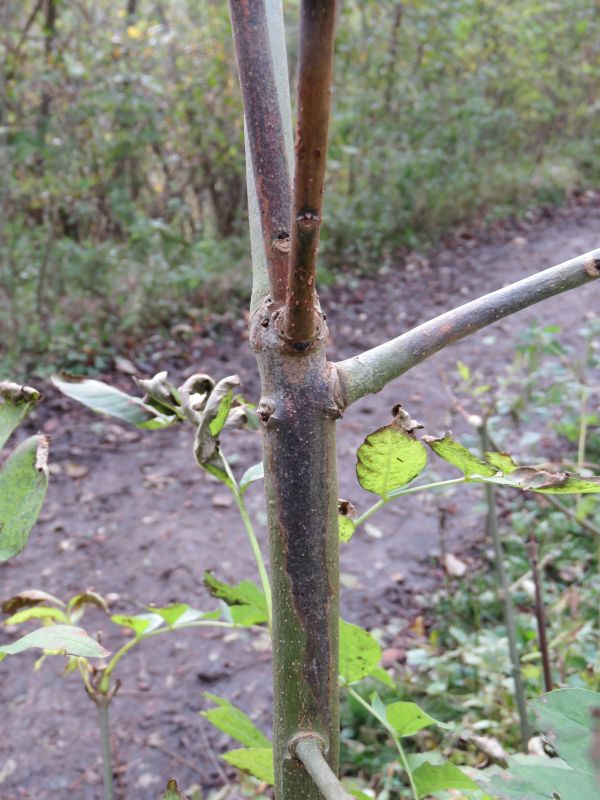
Joe said: “It was very much doom and gloom at the time because ash is such a huge component of our woodlands and hedgerows and parks.
“So it was going to be a landscape changing thing, but it hasn’t necessarily been as bad as everyone thought.
“There has been a lot of dead and dying ash and our hedgerows and woodlands are full of them, but it seems to be a very slow process.
“While studies from Europe were predicting we would have 80 per cent loss of our ash, I think the predictions are now 60 to 70 per cent, which is still a lot of trees.
“Felling wise, it works more with larch disease to halt the spread. Ash dieback is airborne and spreads in a different way, so it’s impossible to do anything about it and there doesn’t seem to be any cure.”
Joe said that for some landscapes and hedgerows in Cumbria, ash dieback has had a noticeable impact.
He added: “The Wildlife Trust manage some of the woodlands on limestone in the south of the county.
“Those woodlands can be predominantly ash, but the soil is also thin, so trees are already stressed and under pressure, then introducing a disease on top, they die off readily.
“So there’s a nature reserve on Whitbarrow Scar in the south, Hervey Memorial Reserve, that has a lot of open ground and those ash within that area are all dead.
“It’s also difficult to plant there as there is very little soil, so we are trying to promote any natural regeneration to protect it from browsing and grazing animals and promote some trees back.
“Some of our other woodlands on limestone have had quite dramatic changes in the fact a lot of ash has died.
“Some woodlands in parts of the country that are ash dominated, if its 90 per cent ash, the woodland changes dramatically, but luckily most of our woodlands are not as ash dominated.”
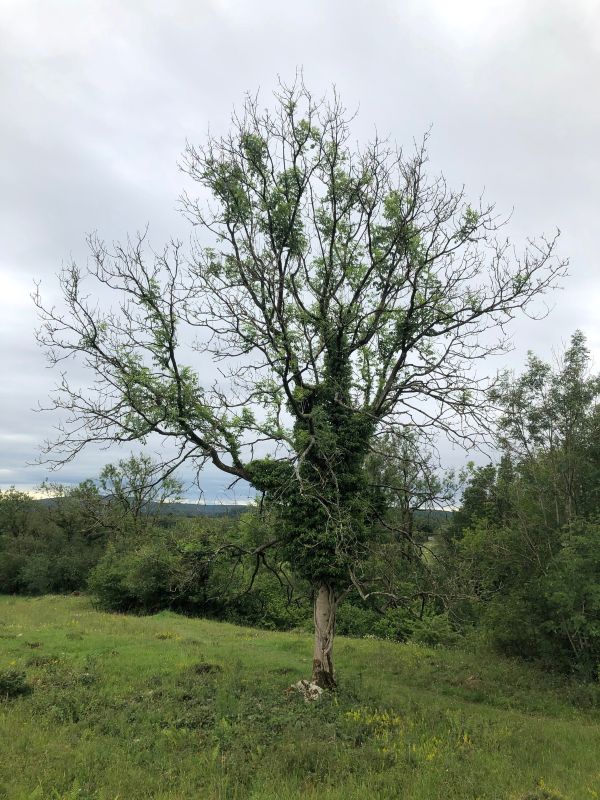
While ash dieback can be managed and often left alone in woodlands and forests – ash trees have to be felled if they pose a safety risk.
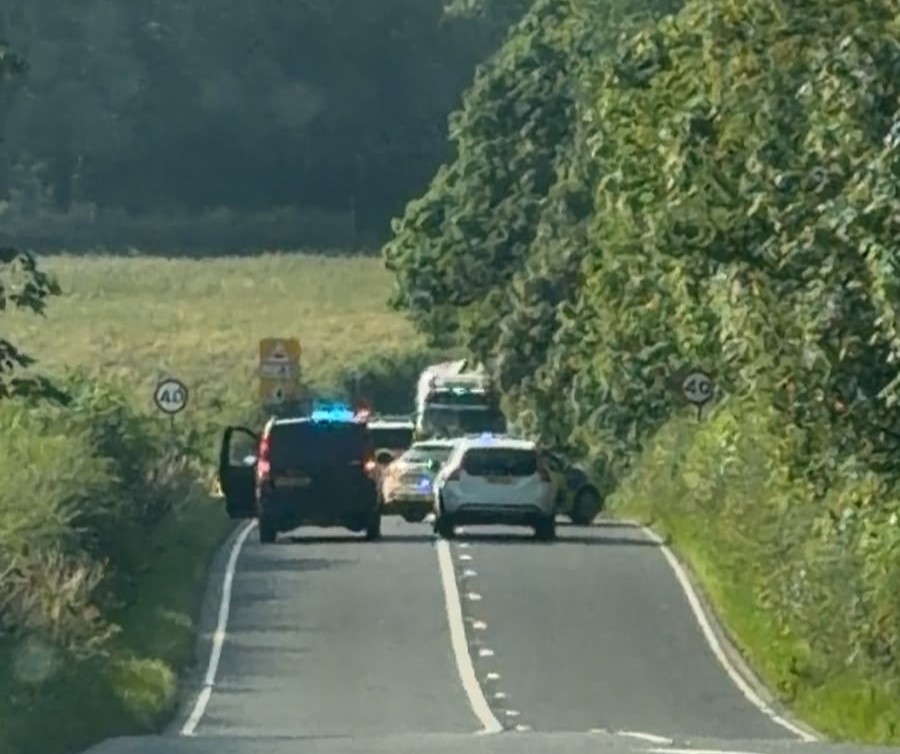
Thousands of ash trees have already been felled from roadsides across Cumbria over the past few years
Joe said: “The real big problem is the way the disease acts upon the trees, it produces a real safety problem over houses, railways and footpaths.
“The trees become brittle, lose branches at the top readily and keel over without any warning.
“Our policy has been to leave ash trees alone when we can, as some of them do seem to recover slightly, but whether or not they get ill again is another matter.
“But some of the smaller grows do appear to have some kind of tolerance and some genetic material seems to be more tolerant than others.
“Also deadwood is a brilliant thing for biodiversity in woodlands, so as long as there’s no problem safety wise, it’s our policy to leave it.
“But the safety thing is enormous – landowners, homeowners, councils, anyone with ash on the side of the road, have a big problem on their hands because of it.”
Joe said that for now, the trust is focusing on encouraging natural regeneration rather than planting to replace ash.
He added: “At the moment, we haven’t been replanting, we’ve been relying on natural regeneration of other species and of ash. There’s nothing really equivalent to ash and there’s around 40 or more species that are ash reliant, so it’s things like lichens, plants and invertebrates
“A lot of the smaller new growth ash died off very quickly if it’s infected, but if it isn’t being killed, then that is a really good sign
“But ash dieback coupled with climate change in the future, if we are going to lose a lot of trees, we would start thinking about what we’d like to replace the ash with.”
No totally immune ash trees have yet been identified, but Joe said that it is hopeful to see some young ash trees showing signs of tolerance to the disease.
Joe added: “We’re still losing a hell of a lot of trees, but it’s taking a lot longer and we’re learning from what has happened in Europe.
“It’s a very slow process but there are signs of trees showing tolerance to it and there is some hope there.
“There are countries who have had it for a lot longer than we have and they still have ash trees, so there’s hope in that too.”