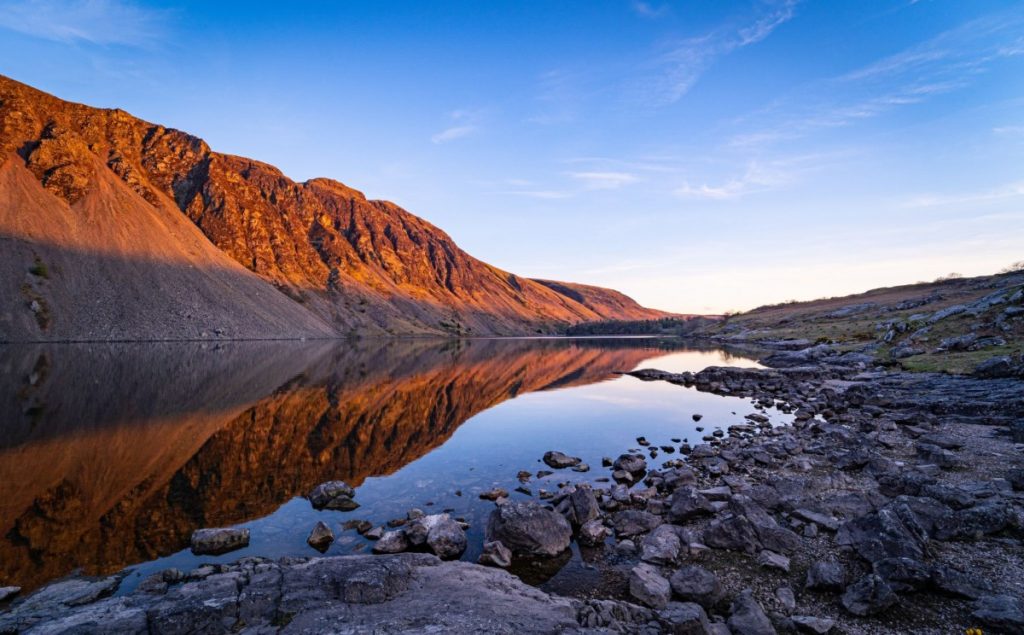
Plans have been lodged to better protect Sellafield Ltd’s Lake District pumphouse from erosion.
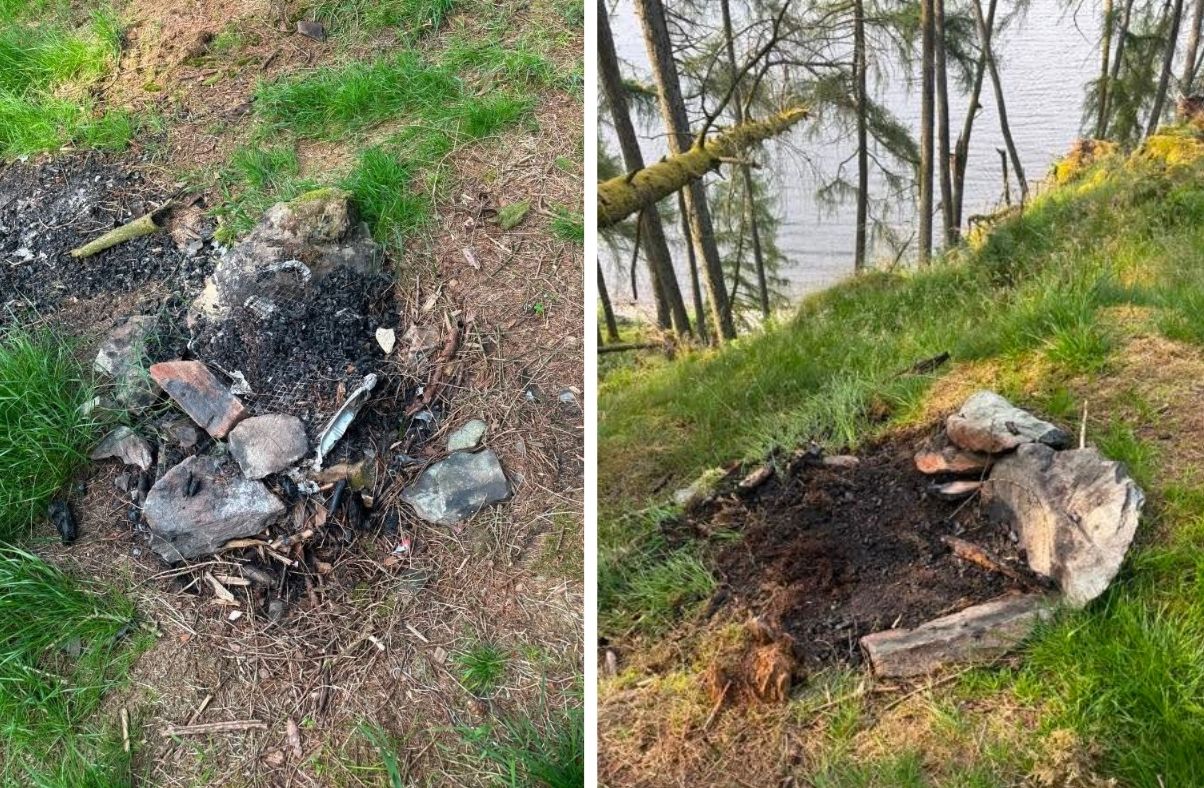
The firm wants to install a rock revetment at its Wastwater Pumphouse, in Wasdale, to replace existing worn out gabion baskets, that were first installed in 1986 to strengthen the shoreline.
Sellafield Ltd own the pumphouse and use it to transfer water from the Wastwater to the site for a range of site operations on behalf of the Nuclear Decommissioning Authority.
A rock revetment is a sloping structure built on a shoreline that is made up of large rocks that protect an area from erosion.
Gabion baskets are wire mesh cages that are filled with rocks. They also help control erosion.
The application – which has been lodged with the Lake District National Park Authority – states that the gabion baskets have become degraded over time.
It added that while the baskets are currently undergoing repairs to keep the shoreline protected in the meantime, a replacement is needed.
It said that Sellafield is hoping to replace the baskets with a revetment to maintain a more natural looking shoreline and provide better protection, following a consultation with Natural England.
The application said: “Future erosion of the foreshore area would expose the intake pipes and may destabilise the retaining wall located between the shoreline and the pumphouse building.
“As a result, it is necessary to repair and replace the shore protection in this area. Much of this work was completed in 2025, providing a like for like replacement.
“The proposed development is to replace a portion of the old gabions/wire-mesh mattresses with a section of rock revetment to maintain a more natural appearance, whilst providing increased protection to the retaining wall from wave action.”
But plans have also received one objection from the Lake District National Park Authority’s senior rights of way officer.
He said Sellafield Ltd needs to amend its plans to formally divert the legal line of public footpath that runs by the pumphouse.
He added that the proposed western end of the rock revetment appears to be where the public footpath first goes through the existing retaining wall, meaning any work carried out would affect the public footpath.
The officer said a temporary closure of the footpath would be required during the works – as while the path would be obstructed, walkers still have the legal right to use the path and scale the retaining walls.
He said: “The application appears to be silent as to their proposals in respect of the footpath – both long and short
term.
“I therefore object to the proposals in their current form. The applicants need to show how they are going to either make the legal line of the footpath fully usable, or apply for a diversion order to remove the path from the site and place it to the south of the boathouse.”
The footpath diversion would cost over £3,150 and a successful unopposed diversion can take around six months from application date.
Temporary closures cost around £1,000 and require 10 weeks notice to be processed.
The officer said that Sellafield Ltd was aware of the exact legal line of public footpath near the pumphouse.
He added that Sellafield Ltd had been approached twice, once in 2015 and once in 2021, by the Lake District National Park Authority, requesting them to divert the footpath, but no applications were received.
The first occasion followed plans to amend a slipway for the pumphouse while the second was regarding the replacement of a lake level monitoring probe.
If work was to go ahead at the pumphouse, Sellafield Ltd would also have to make sure it was environmentally sensitive.
As the pumphouse lies within the Wasdale Screes and Wastwater Sites of Special Scientific Interest and the Wastwater and Lake District High Fells Special Area of Conservation – Natural England have had to give assent to the plans.
Natural England gave assent in August 2025 which will remain in place until October 2026.
An ecological appraisal carried out by the Infrastructure Strategic Alliance said work would have to be carried out to mitigate any impact on the environment and seasonally timed to protect aquatic animals.
The proposed timing of the work is between June and September, to avoid charr spawning season.
Hand tools would also have to be used where possible to minimise the risk of species injury, disturbance, mortality and pollution incidents.
But the appraisal said that its habitats regulation assessment, approved by Natural England, states that overall, it believes the existing natural ecosystem function of the site would be improved as a result of the works.
It added if work is carried out in line with mitigation measures, it will ultimately leave Wastwater enhanced and will not have any significant residual negative effects on any important ecological features.
Rock used for the revetment would be Shap Blue or Millom Tuff as agreed with Natural England, as they are non-calcareous rocks, of appropriate chemistry for the Wastwater.