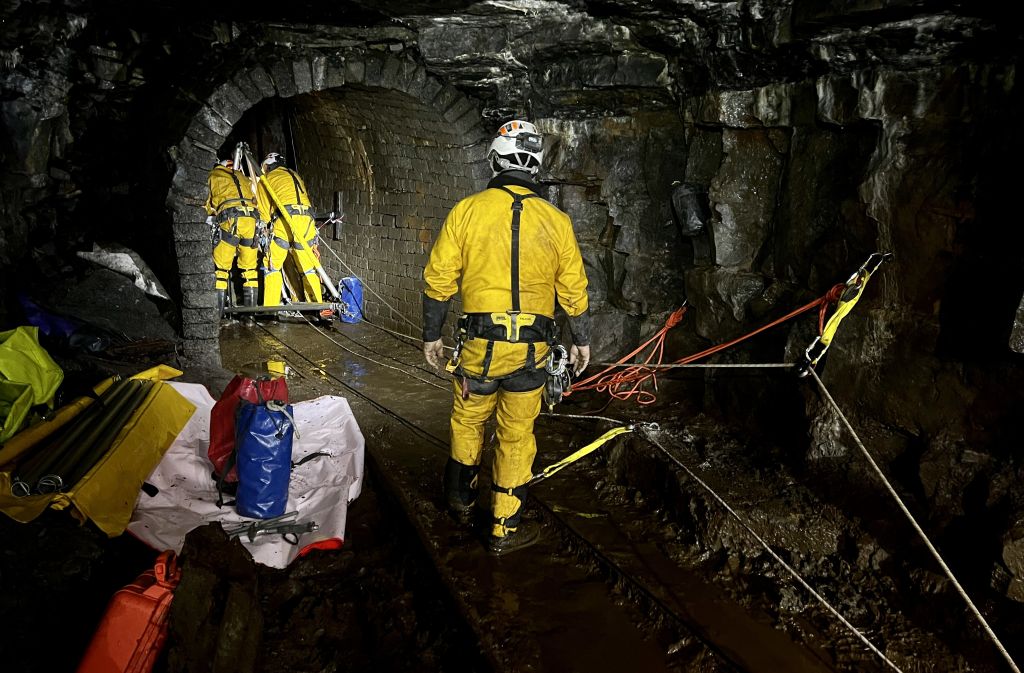
The Lake District is home to 12 mountain rescue teams who volunteer their time to save people in need.
Each team covers different areas of land across the national park, but for one of the teams, its area of expertise lies beneath the Lake District’s rolling fells and mountains.
Cumbria Ore Mines Rescue Unit has been operating since the late 1970s and is part of both the Lake District Search and Mountain Rescue Association and the British Cave Rescue Council.
The county is home to thousands of abandoned mines and it’s the team’s job to be prepared to rescue people and animals from them.
The team also supports surface mountain rescue teams where access to an injured person is restricted – which means they can be called out to caves, potholes, and even manmade structures.
It’s a team that is made up of highly skilled volunteers including people who are trained in everything from explosives to digging and complex rope rescues.
Around half of its team members are also surface mountain rescue volunteers while two are dog handlers and one is a drone search pilot. Some of the team also come from across the wider UK.
Chairman Paul Witheridge, 60, of Great Salkeld, has been part of the team for over 40 years and works alongside team leader Tracey Binks, 53, of Broughton in Furness, who has been part of the team for six years.
Both Paul and Tracey are lifelong cavers and also surface mountain rescue team members, with Tracey part of Duddon and Furness for 28 years and Paul part of Penrith Mountain Rescue Team for 40 years.
Paul said: “We have well over 1,000 abandoned mines in the Lake District which people sometimes don’t notice because they’re such an integral part of the landscape.
“But it does mean there’s an awful lot of holes in the ground for people to go exploring in.
“The calls we get tend to be quite varied, some of them are genuine underground explorers who have had a mishap.
“But then we’re also often called if there’s a search ongoing for a person, just to find out if there are any holes in the surface that could be a potential draw for somebody.
“Or if there’s a hole that is not particularly well protected, somebody could have ventured in unaware.
“If there are despondent people then sometimes they will venture off to places they would not normally go, so we are asked for advice on how to search for that.
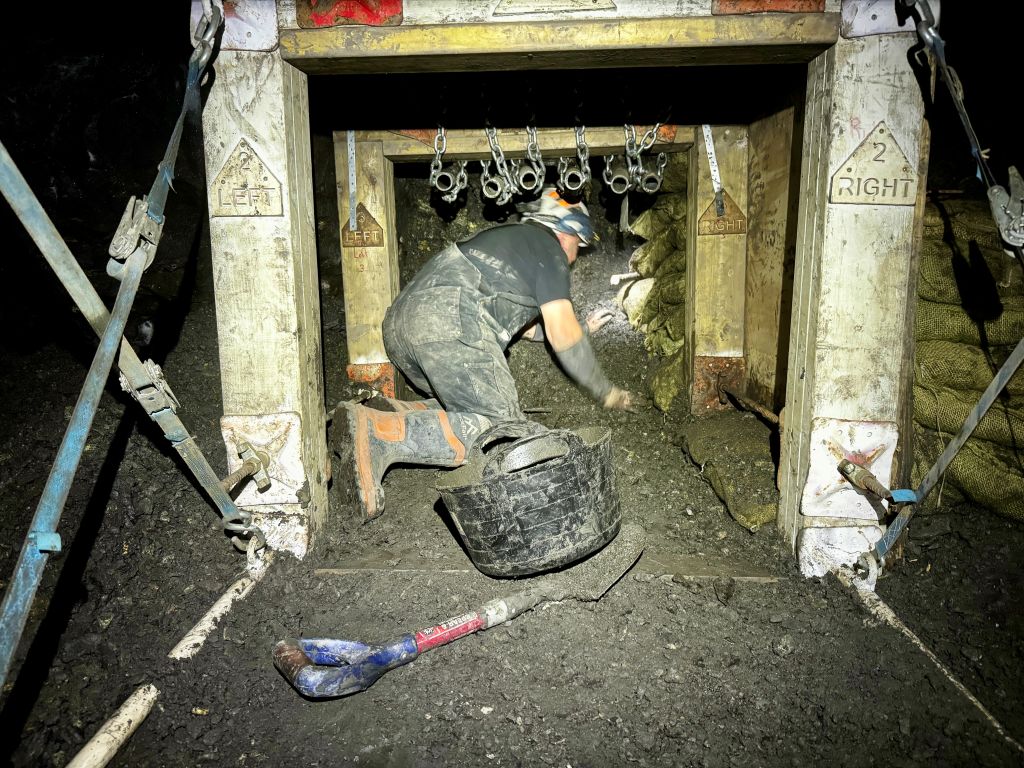
“Then because of the specialist skills we have for moving rocks, negotiating awkward spaces and dealing with quite technical ropework, we can be asked to support surface teams if they feel we have the necessary kit and skills to do that.
“We do keep a fairly low profile as an organisation, we’re not the most in the public eye of the rescue teams in the Lake District.
“But people only tend to call out an underground rescue team when it’s got pretty serious and nobody else wants to get involved.”
Training for underground rescue
While the team typically only gets around half a dozen call outs each year – they vary greatly.
Paul said: “We’ve been involved in all sorts, but when we’re called it’s because everyone else has started to scratch their heads a little bit.
“We’ve done underground rescues in Coniston Coppermines where people have fallen around 400 feet in total and we’ve gone down multiple pitches, which are drops down, to the ground to find somebody who obviously isn’t in the best of health.
“We’ve then spent around 14 hours recovering them and getting them back to the surface.
“But we’ve also picked up sheepdogs that have fallen down shafts and we’ve gone to the aid of farmers that have got stuck in holes.
“Some of us were also called out to Dixon’s Chimney when an incident happened there and we were involved to provide technical support and help with access. It is a really broad spectrum that we cover.”
The team can also be called to provide support at incidents that happen outside of the county.
Tracey said: “We have been called out to a particular mine in the North East twice in a row.
“The first call out was to some people who had descended into the mine without really understanding what they were undertaking and they sensibly called for help before they got too far.
“The second one was because there had been a bit of a collapse and flood water had risen which prevented them from leaving the mine.”
The team is called out to incidents in the same way surface rescue teams are, but extra planning takes place for how incidents are dealt with.
Paul said: “Between the different services involved there is a clear plan put in place as to how we’re going to approach the rescue.
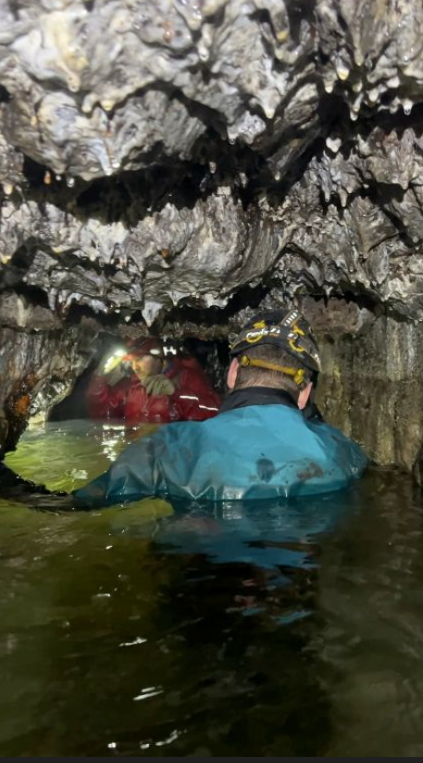
“That looks at whether the person is trapped, in deep water, attached to a rope and can’t get up or down and the distance in the mine that they might be.
“These factors then decide whether it’s an incident that can be dealt with by a small number of people and equipment or if more agencies will be required.
“If we feel the incident is serious enough to call in additional personnel, we will call in other cave teams.
“We then brief our team and start sending people underground to deal with the problem.”
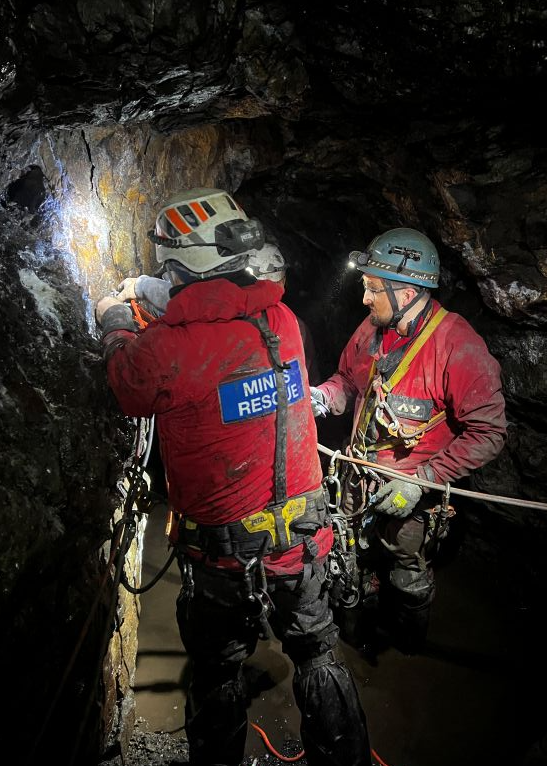
Rescuers are trained to deal with a range of underground dangers, which can require complex problem solving to overcome.
Paul said: “The team trains a full day a month, which is quite a commitment, because we have volunteers from all over the county and outside of Cumbria.
“But they’ll all come to a particular location in the Lake District and we’ll do the full days training underground. It can be on a variety of things, so it can be casualty care and first aid or it might be stretcher handling or technical ropework.
“It can also be digging, in terms of digging through a collapse where a mine level has fallen in or dealing with water and floating a stretcher underground.
“There’s also gas detection. There’s always a risk in certain mines of a build up of gas, so everyone has to learn how to use gas detectors and what to do in case the atmosphere becomes unsustainable.
“We even do off road driver training because we have two huge four wheel drive trucks that carry our equipment, so there’s a huge spectrum of different things we deal with.”
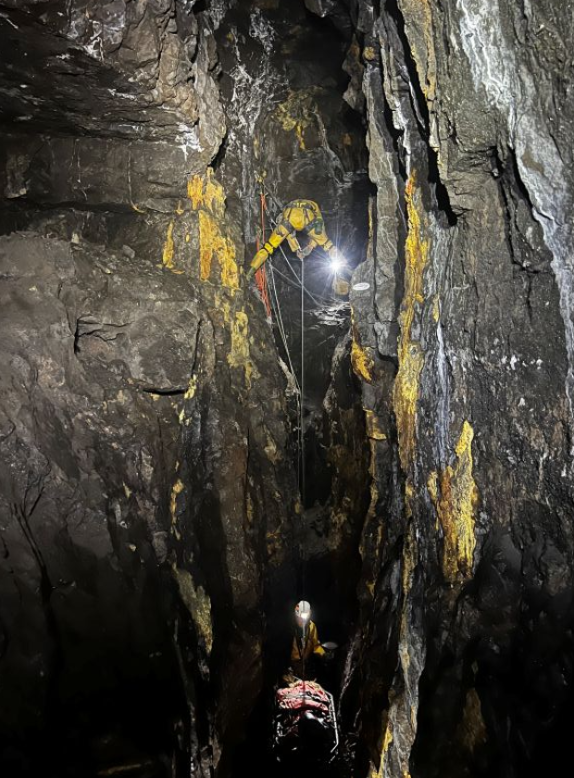
Tracey said that many of the team members also bring specialist underground rescue skills to the table.
She added: “We’ve got a huge amount of experience and skills in our team members. We’ve got folks who are great on the digging front and we have got team members who deal with explosives, although that’s not our first choice for rescues.
“But it all comes down to if there’s a collapse, we would be trying to get access through that collapse.
“Some of the dangers underground are visible, but a lot of them are invisible. The accumulation of toxic gasses and the depletion of oxygen can occur quite a lot in the mines.
“So people may not be aware and just wander in. There’s also false floors in mines where you think you’re walking on solid floor, but it’s actually 200 year old wood and there’s potential for these to collapse underneath you.
“There’s a lot of things that can trip up the unwary in the mines for sure.”
Social media and the quest for perfect pictures
Tracey and Paul said similar to the Lake District’s surface mountain rescue teams, social media and its influence is a constant concern.
Paul said: “It is one of our concerns with the way things are going forward.
“In the past underground exploration was done generally by people who had started out likely through university going on a caving trip and then had progressed into doing their own trips.
“They were quite competent at venturing underground and they got a good idea of what it was all about and what equipment they needed.
“But now people look at an image on social media and go ‘That’s amazing, I want to go there’.
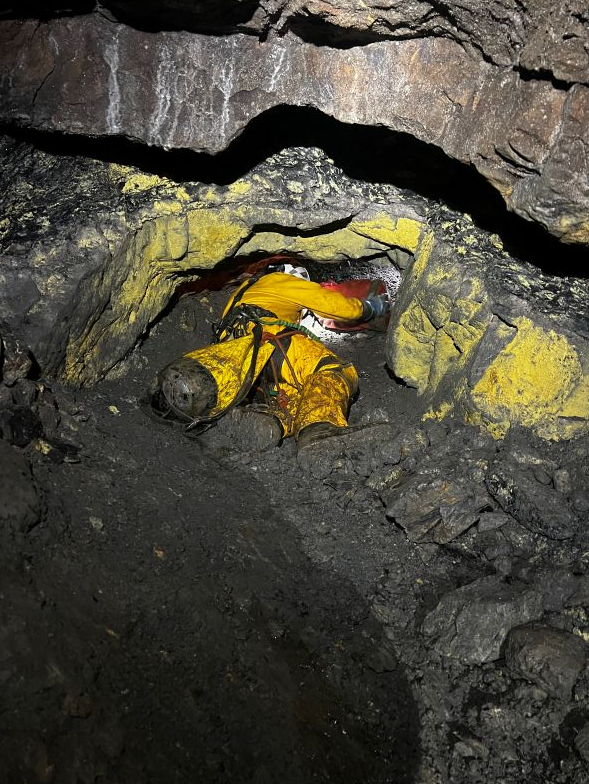
“With a little bit of information they find their way to the place itself and there’s an assumption they can take 20 steps underground and be at this amazing photo opportunity.
“But it’s not like that, there’s a lot of risks there for the unwary and there’s a lot of places that legally you just shouldn’t go anyway.
“There’s abandoned mines where nobody really takes ownership of them and there are others that are clearly on people’s private land and others that are still owned by people.
“It’s the same with all underground spaces whether it’s nuclear bunkers or mines. The risk is if somebody looks at an underground site on social media, decides to wander off there, and then gets stuck.
“Not all of these people will have thought to leave a message behind as to where they were going. Because they thought they were just going to go take a picture, post it to social media and go out to the pub later.”
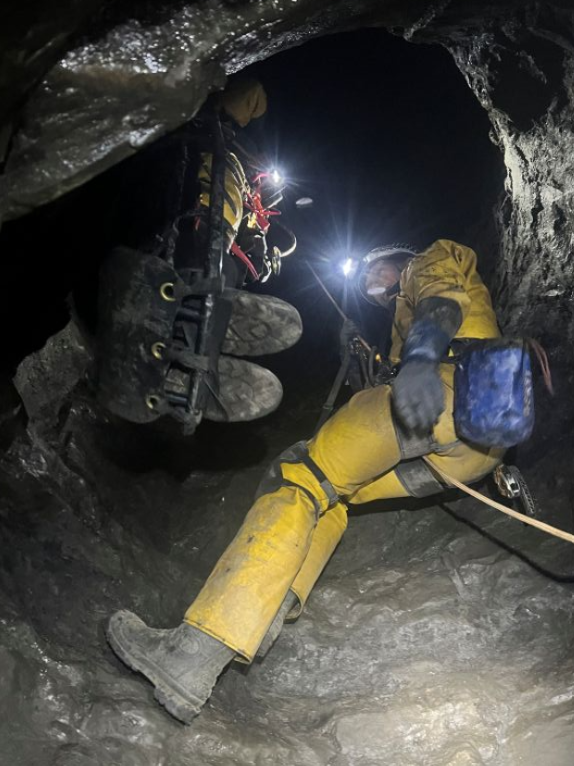
Tracey added that the team strives to help educate the public on the dangers of venturing underground unprepared where possible.
Tracey said: “We do keep an eye on social media to see where people are going and what they’re doing and part of our remit is a bit of education where we can.
“But it is really difficult to get messages out to the people who follow those trends online, because they’re likely not looking at the same stuff that we are.
“But there are a lot of mine history societies around that hold open days where people can safely join in.
“The British Caving Association is also able to put folks in touch with their local caving club where they can learn the skills they need to safely go underground.”
The future of mine rescue in Cumbria
While the rescue unit currently keep their equipment in the homes of volunteers, the team are looking for a base.
Plans were originally put forward for the team to share Penrith Mountain Rescue Team’s upcoming new base, but plans changed earlier this year.
Paul said: “Originally we were working alongside Penrith Mountain Rescue Team with the intention being that the base would have permission to allow the mines team to store its equipment and vehicles within the same building.
“We’ve worked on that closely for the past five or six years and 18 months ago it was publicly announced.
“However since then the world has changed and funding opportunities have really started to dry up. Having reviewed it, we felt it wiser that the two teams split in terms of the base project.
“For Penrith to be able to achieve its base need, which is reasonably urgent, in a sensible timeframe, at a cost that is potentially manageable, it would be better if it wasn’t as big.
“So we said we would happily withdraw from the project. They can build a smaller building, get it done quicker and more cost effectively and that will allow the Penrith team to maintain the critical service it provides.
“We’re not in a position where we need a base quite as urgently. We have managed by storing kit at people’s houses and things for many years and if we have to wait a few more, that’s okay.
“We’re now hoping to rent a small space just to allow us to put the bulk of our equipment into one accessible site and store one vehicle under cover. Currently both our vehicles stand outside, which is a huge burden on those who look after them.”
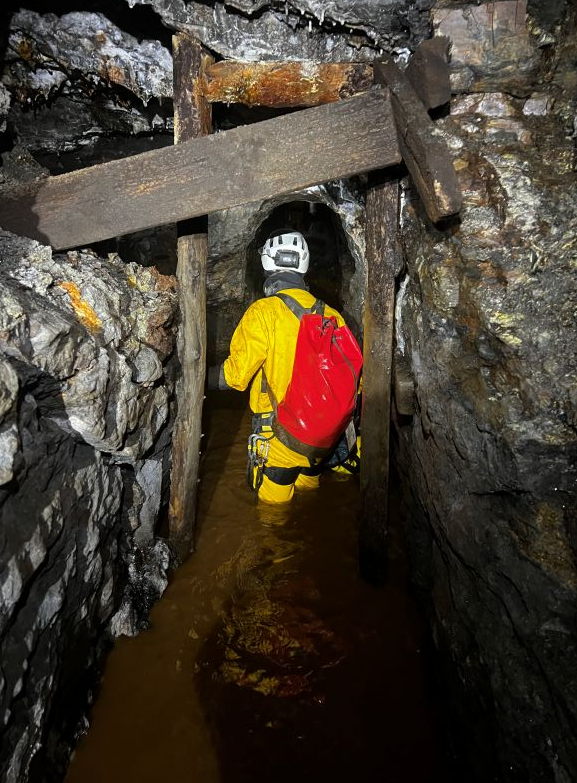
Both Paul and Tracey said that it’s a desire to give back that keeps them going in their surface and underground roles.
Paul added: “I think for both me and Tracey it’s the same, it’s all about giving back into a sport or interest that you have a personal feeling for. I think that’s what drives an awful lot of people in our teams.
“But we’ve got people from Todmorden, Durham and Manchester, and they all have a desire to get involved with underground rescue in Cumbria.
“I think that’s really admirable, because they see that as an area that is close to their heart and those people have a huge range of skills that they bring free of charge to help other people
“We have people who work as height instructors, rescue trainers, accountants, lawyers, engineers all of which put their varied skills into the team.
“It brings so much in terms of thought processes and ingenuity for dealing with a hazard we’re about to face underground.
“It’s a huge benefit to the people of Cumbria that we have a group like this who are prepared to give up their time freely to do it.”