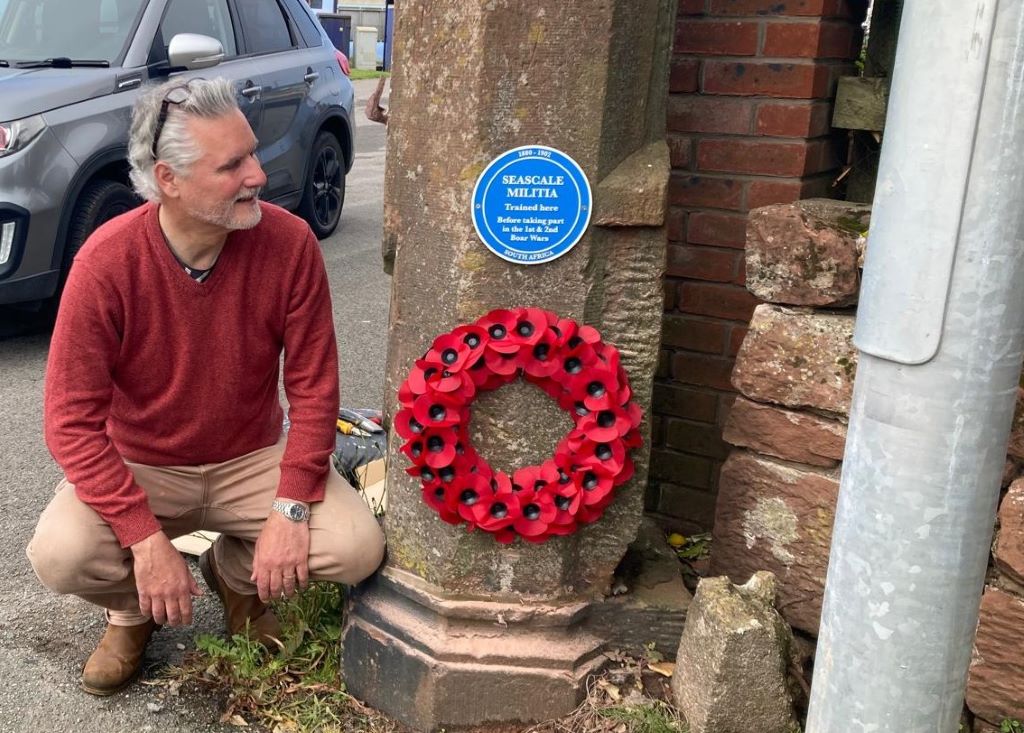
Seascale’s long-overlooked Boer War veterans have finally been recognised, bringing to a close a gap in the village’s history lasting more than three decades.
For years, Seascale had no permanent memorial to those who travelled thousands of miles to fight in the Boer Wars in South Africa at the turn of the 20th century — many of whom never returned. That absence has now been addressed with the unveiling of a new blue plaque.
Installed by local historian Jason Rushworth, the plaque commemorates the men of Seascale who left the village by train to serve their country.
In 1901, residents had come together to honour those sacrifices by funding the construction of Pretoria Hall at the cricket ground — Seascale’s first Boer War memorial.
The hall stood for nearly a century before being demolished in the 1990s, leaving the village without a dedicated tribute ever since.
The new plaque has been placed on the last surviving structure on the site, once used by the Seascale Militia for drills and band practice before departing for war.
It now joins the village’s other war memorials — the First World War monument outside St Cuthbert’s Church and the Second World War memorial carved into the church’s altar rail — ensuring Seascale’s full military history is once again represented.
Mr Rushworth said the project had been a long time coming.
Plans to install the plaque were delayed after unexpected railings appeared across the proposed site.
“With backing from the Parish Council, encouragement from the Imperial War Museum and negotiations with Network Rail, we’ve managed to have the railings removed so the plaque can be mounted at last,” he said.
The installation marks the culmination of a determined community effort to restore a fitting tribute to Seascale’s Boer War soldiers — and to ensure their sacrifice is not forgotten once again.
Between 1880 and 1902, as the conflict in South Africa continued to shape British history, the small coastal village of Seascale emerged as a beacon of fierce patriotism, celebrating the return of its brave sons while establishing a magnificent permanent monument to the local lads’ triumphs.
Seascale and the Boer War: A coastal village’s part in a distant conflict
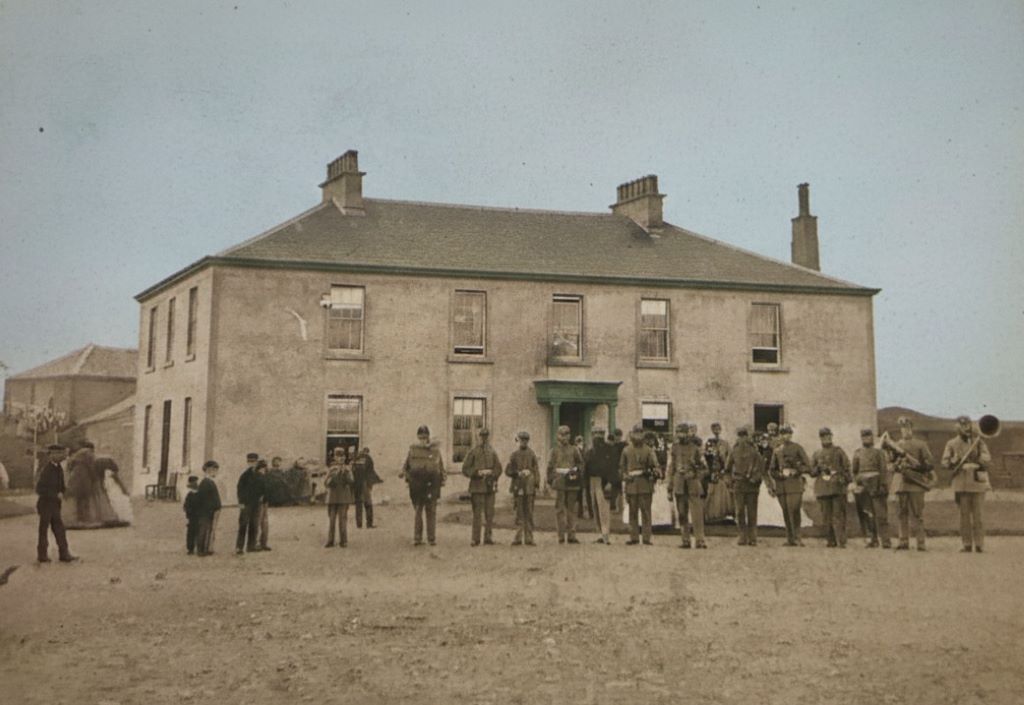
At the turn of the 20th century, as Britain fought the Anglo‑Boer War in South Africa, the small West Cumbrian village of Seascale found itself closely bound to events thousands of miles away. Through letters, departures, celebrations, and acts of remembrance, the war left a lasting imprint on local life.
Several Seascale men served in South Africa. Among them were Private Henry Clements and Private John Spencer Southward of the 2nd Railway Pioneer Regiment, Sergeant William Thomas Farquharson of the Border Regiment, and Sergeant Thomas Mashiter of the Scots Guards.
Others, such as William Harrison and EW Woodward, joined specialist corps, while Trooper Lees served with the Imperial Yeomanry. Their service reflected the village’s strong contribution to the national war effort.
News of the conflict reached Seascale through letters from local men stationed in South Africa.
Writing from Maritzburg in late 1899, one correspondent described the tension of awaiting Boer advances, the constant drilling, and the distant sound of battle at Ladysmith.
Later letters spoke of censorship, the uncertainty of military movements, and the brutality of warfare, including reports of hospital buildings coming under fire. By early 1900, optimism appeared, with news of Boer General Cronje’s surrender raising hopes that the war might soon end.
The reality of combat was vividly conveyed in a letter from Sgt Mashiter, who wrote of the horrors of the battlefield—men killed by shellfire and wounded soldiers burned in veldt fires.
Despite such grim accounts, his safe return in 1901, after illness, was warmly welcomed, along with fellow soldier Sergeant John Robinson. The two were honoured at a public ball and later presented with commemorative timepieces.
At home, the war stirred both patriotic enthusiasm and community action. Public celebrations marked key events such as the relief of Mafeking and the capture of Pretoria. Seascale hosted processions, bonfires, and gatherings where children received flags and sweets, and speeches praised the British forces. Even local children contributed to national efforts, raising funds for relief causes.
Out of this patriotic spirit arose one of the village’s most significant developments: the Seascale Institute. Originally proposed as a permanent memorial to the war—particularly the entry of British troops into Pretoria—the idea gained widespread support. Central to its success was Mrs Caroline Warden, whose generosity, leadership, and determination ensured the project’s completion.
With funds raised through local subscription and the promise of further support, the Reading Room and Recreation Ground were built in a remarkably short time. Opening on New Year’s Day 1901, the Institute provided a much‑needed social and educational facility for residents and visitors alike. It stood not only as a tribute to the war but also as a symbol of community unity and progress.
The Institute quickly became a focal point of village life, offering newspapers, books, and recreation.
Its success, along with the continued involvement of returning soldiers and ongoing support for those still abroad, demonstrated that the Boer War’s influence in Seascale extended far beyond the battlefield.