
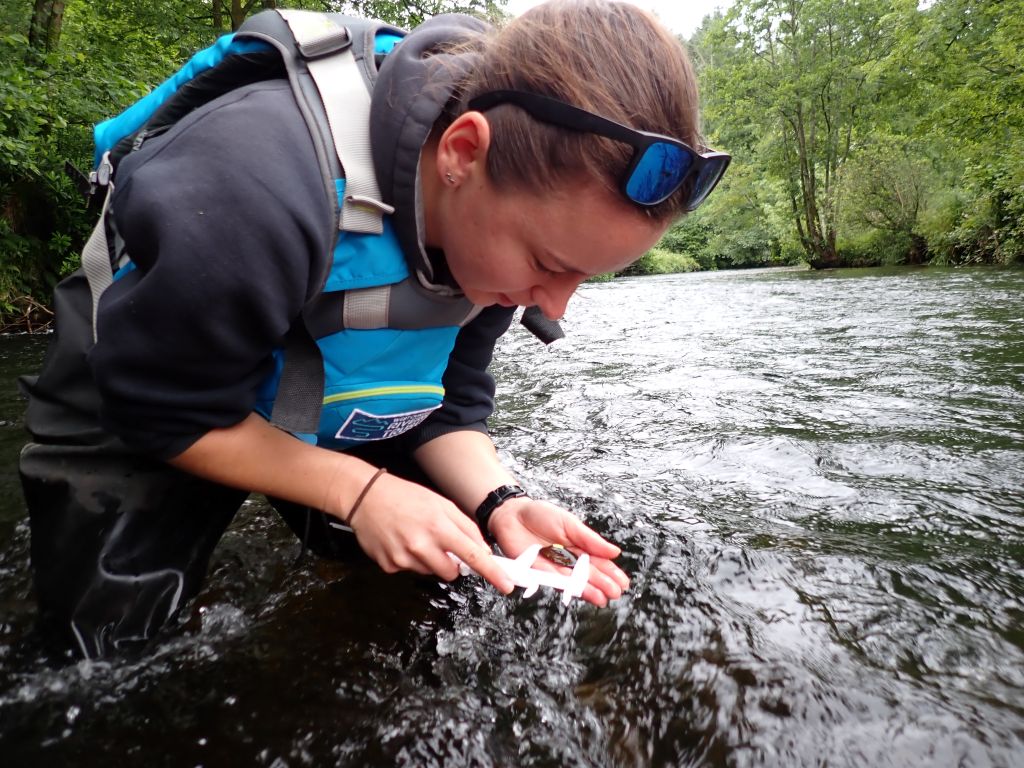
West Cumbria Rivers Trust has secured £820,000 through Natural England’s Species Recovery Programme to deliver major river restoration and freshwater pearl mussel recovery work across Cumbria.
While the project aims to conserve freshwater pearl mussels as one of the UK’s most endangered species, benefits will extend far beyond, improving river habitats for fish, invertebrates, birds and wider wildlife across the River Ehen, River Irt and surrounding catchments.
The programme combines targeted habitat restoration with species recovery work, bringing together the trust, Eden Rivers Trust, South Cumbria Rivers Trust, the Freshwater Biological Association, farmers and landowners to deliver practical improvements for river health and biodiversity.
Planned work includes floodplain restoration, embankment lowering, riverbank improvements and measures to reduce sediment entering rivers.
The trust said these actions would help create cleaner, cooler and more resilient rivers better able to support wildlife and adapt to climate pressures such as flooding and drought.
Freshwater pearl mussels are one of the UK’s most endangered species and are highly sensitive to pollution and habitat decline, making them an important indicator of river health.
The trust added: “By restoring conditions needed for mussels to survive, the project will also improve habitat quality for Atlantic salmon, trout, and many other species that depend on healthy rivers.
“The project also includes conservation breeding and rearing work led by the Freshwater Biological Association at its Windermere facilities.
“Freshwater pearl mussels have a remarkably complex lifecycle, spending part of their early development attached to the gills of host fish before dropping into river gravels.”
Around 9,000 juvenile mussels reared by FBA will be released into the River Irt and River Ehen to reinforce vulnerable populations and help prevent local extinction.
The funding package has been designed to maximise value for money by combining the Species Recovery Programme grant with wider environmental funding and partnership support wherever possible.
West Cumbria Rivers Trust is aligning restoration works with schemes including the Sustainable Farming Incentive (SFI), Countryside Stewardship (CS), England Woodland Creation Offer (EWCO), Cumbria Community Forest and Catchment Sensitive Farming (CSF).
This blended approach allows larger and more ambitious restoration projects to go ahead while reducing costs for farmers and land managers, it said.
The project will also strengthen understanding of freshwater pearl mussel populations through extensive survey and monitoring work.
This includes analysing 176 environmental DNA (eDNA) samples across six Cumbrian rivers to identify potential remnant populations, alongside habitat surveys and population assessments.
Chris West, project manager for West Cumbria Rivers Trust said: “This funding is a significant boost for river restoration work across Cumbria.
“While freshwater pearl mussels are at the heart of the programme, the benefits will be much wider, improving river habitat, water quality and resilience for a whole range of wildlife. It also strengthens long-term partnership working across catchments, which is essential if we are to restore and protect freshwater pearl mussels.”