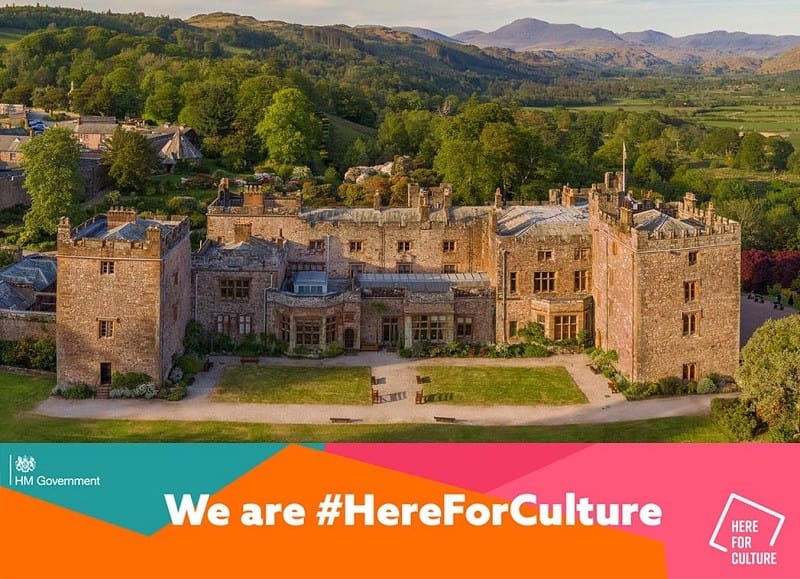
Muncaster has been awarded up to £479,000 to safeguard and increase the castle’s cultural heritage offering and attract a more diverse audience. New quality activities will be developed and the funding will enable Muncaster to go deeper in terms of education, cultural richness and heritage access while not excluding its already diverse visitor base.
This vital funding is from the Culture Recovery Fund for Heritage and the Heritage Stimulus Fund – funded by Government and administered at arms length by Historic England and the National Lottery Heritage Fund. Both funds are part of the Government’s £1.57 billion Culture Recovery Fund which is designed to secure the future of Britain’s museums, galleries, theatres, independent cinemas, heritage sites and music venues with emergency grants and loans.
433 organisations will receive a share of £67 million from the Culture Recovery Fund for Heritage to help with costs for operating, reopening and recovery. This includes famous heritage sites across the country, from Wentworth Woodhouse in Yorkshire to Blackpool’s Winter Gardens, Blyth Tall Ship to the Severn Valley Railway, the International Bomber Command Centre in Lincolnshire to the Piecehall in Halifax. The funds will save sites that are a source of pride for communities across the country.
12 organisations, including English Heritage, Landmark Trust, Historic Royal Palaces and the Canal and River Trust, will receive £34 million from the Heritage Stimulus Fund to restart construction and maintenance on cherished heritage sites to preserve visitor attractions and protect livelihoods for some of the most vulnerable heritage specialists and contractors in the sector.
The Architectural Heritage Fund (AHF) has also been awarded a grant from the Culture Recovery Fund through Historic England. The AHF will use the funding to support charities and social enterprises occupying historic buildings to develop new business plans and strategies for organisations affected by the pandemic.
Culture Secretary Oliver Dowden said: “As a nation it is essential that we preserve our heritage and celebrate and learn from our past. This massive support package will protect our shared heritage for future generations, save jobs and help us prepare for a cultural bounceback post covid.”
Lucy Worsley, Chief Curator, Historic Royal Palaces, said: “There’s no truer way to experience the past than to walk in the footsteps of those who have lived it – that’s why preserving our built heritage is so important.
“At Historic Royal Palaces, we care for six nationally significant buildings, opening them to the public and preserving them for future generations. Sadly, the pandemic meant that we had to stop some of our critical conservation work. The grant we have received from the Culture Recovery Fund will enable to this work to resume – so we can give some of Britain’s most historic buildings the care and attention they deserve, while supporting the specialist craftspeople who are vital for the future of our national heritage. We are enormously grateful to the Government for this support.”
Peter Frost-Pennington from Muncaster says: “We are absolutely delighted to hear that our application for funding from the Culture Recovery Fund for Heritage has been successful. This lifeline gives us hope for the future, enabling us to plan for next year and beyond, and we are looking forward to sharing and enhancing Muncaster’s fabulous cultural heritage with our visitors for many years to come. Thank you from the bottom of our hearts to the Government and their Culture Recovery Fund initiative.”
Muncaster Castle has been the ancestral home to the Pennington Family for over 800 years and is reputedly built on Roman foundations. The castle sits majestically in 77 acres of wild, woodland gardens with breathtaking views of the Lake District Fells, including Scafell Pike, England’s highest mountain. Allegedly haunted, the castle is home to fabulous collections of art, antique furniture & textiles.
Muncaster is also home to the Hawk & Owl Centre which offers brilliant flying displays daily during the season. The expert bird staff enthral visitors with how everyone can help conserve these amazing birds of prey and their environments in the wild.
Duncan Wilson, Historic England’s Chief Executive said: “It is heartening to see grants, both large and small, from the Government’s Culture Recovery Fund helping heritage sites and organisations across the country which have been hit hard by the effects of Covid-19. These grants range from giving skilled craft workers the chance to keep their trades alive to helping heritage organisations pay the bills, and to kick-starting repair works at our best-loved historic sites. The funding is an essential lifeline for our heritage and the people who work tirelessly to conserve it for us all, so that we can hand it on to future generations.”
Ros Kerslake, Chief Executive of the National Lottery Heritage Fund said: “It is absolutely right that investing in heritage should be a priority during this crisis and this support by Government is crucial. Heritage creates jobs and economic prosperity, is a major driver for tourism and makes our towns, cities, and rural areas better places to live.
“All of this is so important for our wellbeing and will be particularly vital when we start to emerge from this incredibly difficult time. “Our heritage is still facing a perilous future – we are not out of the woods yet. But this hugely welcome funding from Government, and the money we continue to invest from the National Lottery, has undoubtedly stopped heritage and the organisations that care for it being permanently lost.”
Kate Mavor, Chief Executive of English Heritage, said: “This support for our nation’s heritage is fantastic news. Over the last few months, our teams have been working hard to welcome visitors back safely to the great castles, stone circles, abbeys and historic houses in our care. This funding will help us invest to safeguard the historic fabric of these much-loved places, which everyone can learn from and enjoy.”
Muncaster opening times depend on the season and more information can be found at www.muncaster.co.uk.