Across the media, yes, even at Cumbria Crack Towers, all the talk is about rising inflation and the cost-of-living crisis, and it is easy to see why.
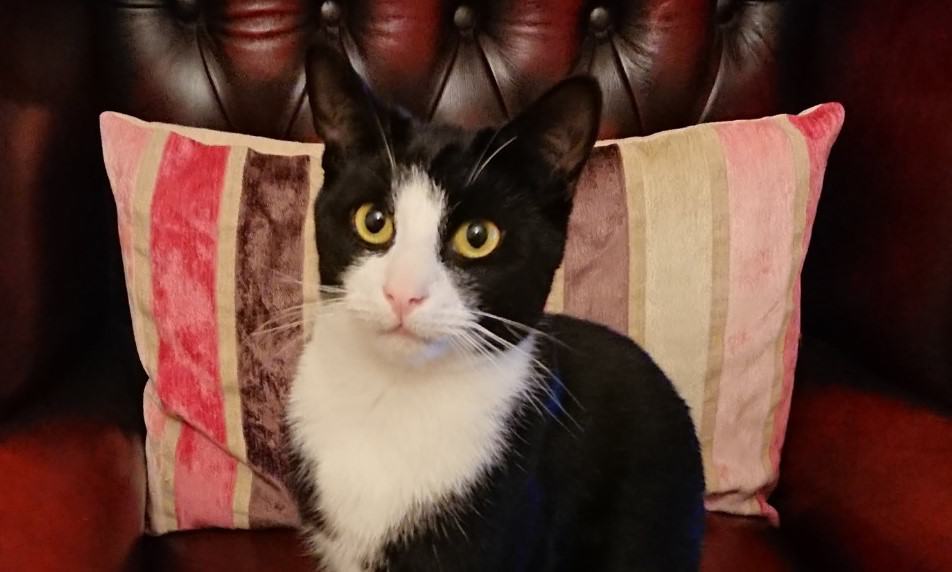
Apparently, I am not earning my keep and even though I point out to the servants that the mouse count is not rising, there are suggestions that if I don’t improve productivity then it will be the end of brand names in my food cupboard.
So, why do we have a problem now and what will be the economic fall out?
While the reasons are, inevitably, complicated, let’s look at energy, especially oil.
- While the UK economy was coming to terms with Brexit, we were hit by a worldwide pandemic that shook business confidence and where share prices, that barometer of business confidence, alongside oil prices fell off a cliff in March 2020.
- Energy prices started to rise as we came out as demand returned with oil going from barely $20 a barrel in April 2020 to $94 in February this year
- Then Russia rolled tanks over the border into Ukraine and the price of oil rose to $122 a barrel which, combined with the fall in the value of the pound against the dollar, saw diesel prices approaching and sometimes passing £2 a litre.
- Fortunately, there is some respite from these high prices but only because the markets see a fall in demand if/when the world falls into recession.
Much of western Europe has become dependent on gas and oil from Russia and it has been difficult to turn off the taps without damaging those western economies. This has meant that energy prices rose dramatically in the early days of the war. However, energy prices were already rocketing before the Russian invasion. There were supply issues in 2021 and as countries came out of the COVID downturn the demand for energy went up. The Ukraine situation simply made things the proverbial ‘10 times worse’.
So, where does this leave us in terms of our cost of living? Prices go up as measured by inflation, currently at 9.4 per cent and expected to rise to 13 per cent or 15 per cent by next year and our spending power is significantly curbed unless we can arrange for our incomes to go up to compensate.
And, as the Government has emptied the barrel of quantitative easing, the only levers they have left are interest rates and Government spending.
Hence the 1.75 per cent interest rate announced this week that directly affects anyone with borrowing tied to interest rates – tracking mortgages being the one that will cause most pain for home owners but with it filtering through to rent rises, a reduction in house building and renovation projects.
The second lever is government spending and the main thrust of that will be ensuring public servants get a below inflation pay rise. After all, they have already said they will maintain the triple lock on state and public service pensions so the axe will fall on current workers.
So, costs rise – costs for food, for energy and for borrowing – while incomes don’t keep up. Eventually, and no one this week is predicting exactly when this will be, prices/inflation will come down – well prices will rise less quickly – as the Government suppresses demand.
And a note of caution: while we are all aware of many workers demanding higher wages, as these pay increases will not feed through until next year, it is foolish to blame these workers. They are not the problem. What is, in this cat’s eyes, a problem is those business sectors that are reaping the financial windfall of our pain.
The oil sector has seen profits rise to unprecedented levels as the price of oil rises so do their profits. Even the profits of the Russian oil companies where the Russian economy not, so far, being damaged by sanctions as they have compensated by vastly increased oil revenues even when they sell at cut price to countries in Asia and Africa! BP, as an example, will make hay – profits – while the sun shines – oil prices are high and set much of these aside to ride the coming recession where worldwide demand for oil will, inevitably fall.
Recession is where the economy shrinks. Growth means more jobs, companies being profitable and paying their staff more and increasing shareholder earnings. Recession means less jobs, companies being less profitable and less incentive to invest.
When we have growth, tax revenue increases and the Government can then invest the tax pounds on capital projects or pay off some of the debt built up in these recent exceptional times. In recession, tax revenues fall, government spending falls and the long-term debt burden isn’t reduced.
What is clear is that every person will see the impacts of events outside of our control. We aren’t responsible for COVID, for Russian Imperialism or for energy prices yet we will pay the price and it isn’t going to be pretty. After all, who wants to eat cheap Dreamie lookalikes?
Have you been thinking about the interest rate rise? How will it affect you? Are you worried about your mortgage? Cumbria Cat would like to know – email him via [email protected]
About Cumbria Cat
Born in Cumberland and, from 2023, will be back living in Cumberland, having spent most of the past 50 years in some place called Cumbria, this cat has used up all nine lives as well as a few others.
Always happy to curl up on a friendly lap, the preference is for a local lap and not a lap that wants to descend on the county to change it into something it isn’t. After all, you might think Cumbria/Cumberland/Westmorland is a land forged by nature – the glaciers, the rivers, breaking down the volcanic rocks or the sedimentary layers – but, in reality, the Cumbria we know today was forged by generations of local people, farmers, miners, quarriers, and foresters.
This cat is a local moggy, not a Burmese, Ocicat or Persian, and although I have been around the block a few times, whenever I jump, I end up on my feet back in my home county. I am passionate about the area, its people, past, present and future, and those who come to admire what we hold dear, be it lakes and mountains, wild sea shores, vibrant communities or the history as rich and diverse as anywhere in the world.