
A Cumbrian suicide survivor has shared her story of recovery.
Sharon Wendy Tait, 52, of Dalton, has dealt with mental health issues for over 20 years and has survived two suicide attempts.
She began self-harming aged 29, which gradually began to get worse and led to her first attempt to take her own life in 2004.
She said: “Things got very complicated at work and in my personal life and I started self-harming, and it progressed quite rapidly to trying to break my own arm.”
While self-harm is often stigmatised as a mental health condition affecting teenagers, it affects people of all ages.
Drinking too much, overexercising, gambling, substance abuse and overworking can all be considered forms of self-harm alongside causing physical harm to the body.
After Sharon attempted suicide a second time in 2017, she was hospitalised on a psychiatric ward for three months, where she says her recovery began.
She added: “There’s been lots of different types of recovery for me but at first it was on the hospital ward and it was the words of one of the nurses that helped me a lot.
“She said ‘I really really really like you and I want you to do well, but I don’t ever want to see you back here again’, and that had a massive impact on me. It’s often just the little words people say that may seem insignificant to others, but meant so much to me at that time.”
She added that while she was hospitalised, the biggest thing she was grateful for was her friends.
She said: “Regardless of what you do or have done your friends won’t leave you.
“When I was on the psychiatric ward there was people who didn’t get in touch because they were afraid, but the people who did and said they didn’t know what to say, but were still there – I think you’re very lucky in life if you have those people around you.”
Sharon, who also lives with borderline personality disorder, said that while she can’t spot the signs she is struggling herself, other people are able to spot it quickly.
She said: “Part of BPD is very rapid cycling, to the point that you don’t really know how quickly your mood will change. I can be completely fine one minute and then completely drop and my mood can be really bad.
“Luckily it’s other people that tend to notice me, so I can withdraw or be really manic, and people might say you’re talking a lot and very fast, but I can’t really spot it so much myself.”
Finding the right kind of support
The 52-year-old said she was lucky to have been able to access several different kinds of therapy that have helped her develop techniques for managing her mental health.
She added: “It has all helped me find strategies for managing my mood. I had cognitive behavioural therapy and I was actually in a therapeutic community for a year-and-a-half.
“But the one that really did start to work for me was one to one counselling because if you get the right person, it does make a massive difference. I’m also trained in arts and painting, art therapy and exercising has also really helped me, it’s just helped me express myself.”
She added that Cumbria’s health and wellbeing officers, who work as part of the council’s public health team had also made a huge difference to her life.
She said: “They were the first people to help me with practical things I was struggling with, like going to the bank or hairdressers or making phone calls and it made me feel like I was part of normal society.”
Sharon’s health and wellbeing officer also introduced her to Cumbrian suicide prevention charity Every Life Matters through one of their self-harm safe kits, which include a first aid kit, crisis resources and safety planning leaflets.
Sharon said that above everything else, one of the bravest things a person can do when they’re struggling is talk about it.
She added: “To say you’re struggling is actually a really big thing and also being honest with people instead of just saying you’re fine is hard.
“I think people who fight suicidal thoughts are really strong and brave and I think what I would say to other people struggling is to remember that you are still here and you are still battling.”
Having the strength to talk and how it saves lives
On average, one person a week dies by suicide in Cumbria, which is more than double the amount of people who die on the county’s roads.
Cumbria’s suicide rates remain higher than the national average, with 199 people recorded as dying by suicide in the latest ONS statistics from 2019 to 2021.
During this period, Barrow also had one of the highest suicide and self-harm rates in England, sitting at twice the national average.
Every Life Matters are working to change the high statistics.
Shaun Blezard, suicide survivor and suicide safer community’s co-ordinator for Barrow said: “The statistics are purely based on people coming forward, so myself and Sharon will both be in those figures.
“But we know people who have been really rocky but have not gone to the doctors, so they’re really just the tip of the iceberg.”
He added that high rates of deprivation, rural isolation, long waits to see a GP are all contributory factors to poor mental health in the county.
Shaun added that the month of January can be extra difficult for many, with post-Christmas blues weighing heavily on the public consciousness.
He said: “It’s a tough month, you’ve had your Christmas and you’re waiting on wages and worried about affording heating. It’s important for us to look out for people.
“It doesn’t have to be tell me all about your suicidal thoughts, it can be about finding tools and distractions to help people.”
For Every Life Matters, keeping the conversation about suicide open is an essential part of the work they do.
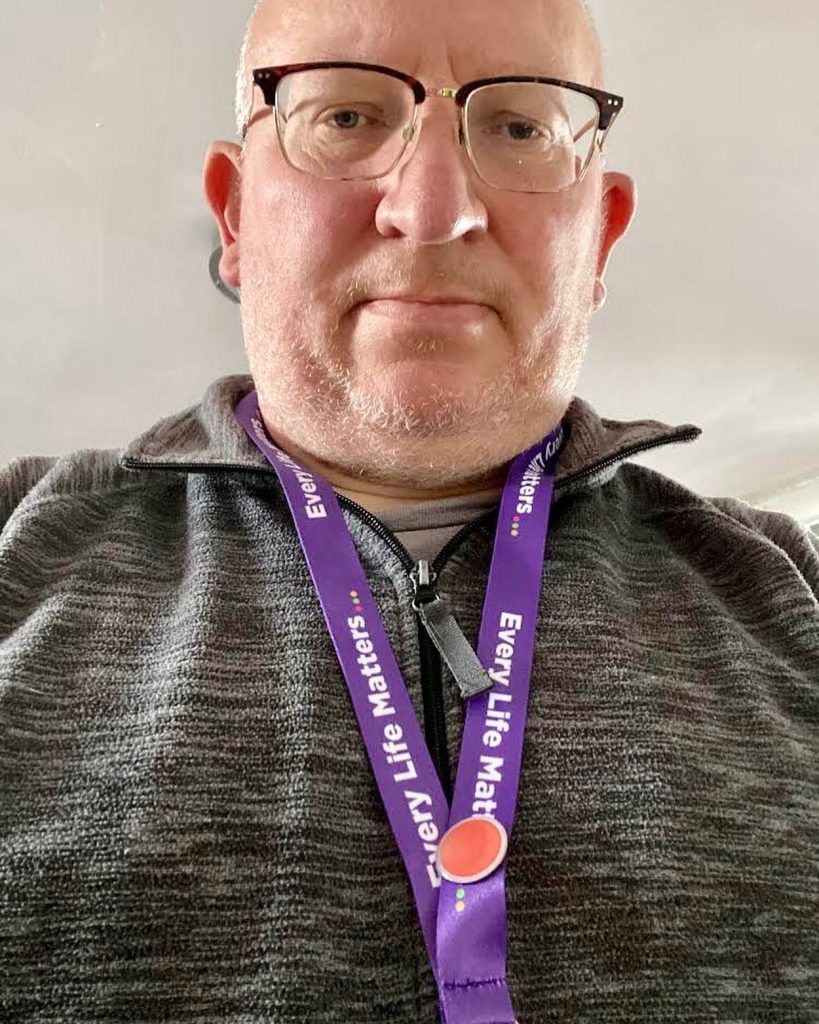
Shaun added: “It’s important to keep the conversation about suicide and self-harm going so we don’t lose people, it’s as simple as that.
“If I had followed through with things, I wouldn’t be here having this conversation, the more conversations we have the better.
“The more we talk, the more we normalise the conversation around suicide and you can stand in a room and say ‘hi I’m Shaun, I’ve tried to kill myself’ – it’s a profound thing to do.
“It helps us look after our communities, our friends and ourselves and if we see someone crying in the street it makes us think maybe I should ask if they’re okay, because we’re more mindful of it and it ultimately saves lives.”
Sharon added that she planned to continue talking openly about her story and works as a volunteer arts worker. She was also recently invited to do some training to deliver courses for Every Life Matters.
She added: “Because I talk openly about my situation, I’ve found other people come to me to say they’re struggling, so if everyone talks openly, it spreads and more people become willing to ask for help, which means life will only get better.”
If you need to talk to someone urgently the Samaritans are available 24/7 on 116 123.
Mindline Cumbria offers support and guidance about mental health over the phone on 0300 561 0000 or text ‘Mind’ to 81066. You can also go online and chat to trained professionals.
Togetherall is a service offering free online support to anyone aged 16 and over, 24/7 you just need a Cumbrian postcode to register. It provides online peer-peer support, access to an anonymous community and lots of information, as well as courses and resources covering a range of mental health and wellbeing topics.
Kooth is a free online service for young people over 11.
Every Life Matters have produced a guide to looking after yourself and others. It contains practical information about things you can do now to look after your mental health and wellbeing, and how you can support others. Call 07908 537541.
If you are worried about someone you know and want to help support them it can be difficult to know the right thing to say or do. The Samaritans and Time to Change have information on their websites to help you start these conversations.