The remarkable careers of the Lumberjills – who played a vital role in the war effort of the Second World War – are to be celebrated in a photography exhibition at Grizedale Forest.
In 1939 Britain was the largest timber-importing nation in the world, with 96 per cent of the country’s timber needs coming from overseas and only 14,000 men employed in the domestic forestry industry.
With the outbreak of the Second World War, there was a sudden need to produce millions of tonnes of timber, just as thousands of young men were being conscripted to the army.
As a result, the Women’s Timber Corps was established in 1942 and up to 18,000 young women aged between 17 and 24 left their homes to take up axes and saws – challenging gender stereotypes as well as felling trees.
Battling discrimination, the women referred to as the ‘Lumberjills’ rose to the challenge of the hard physical labour involved.
Their commitment and dedication made a huge difference to the war effort, with the timber produced used in railways, mining, aircraft and even for charcoal gas mask filters.
While many people will have heard of the Women’s Land Army, the story of the Lumberjills has been all but forgotten, until now.
Hazel Stone, arts manager at Grizedale Forest said: “It’s been amazing to see so many individual memories come together to tell the incredible story of the Lumberjills, not only here at Grizedale but right across the country.
“The exhibition includes text by Joanna Foat, author of ‘Lumberjills: Britain’s Forgotten Army,’ and also includes photographs and artefacts from a series of private and public sources including the Imperial War Museum.”
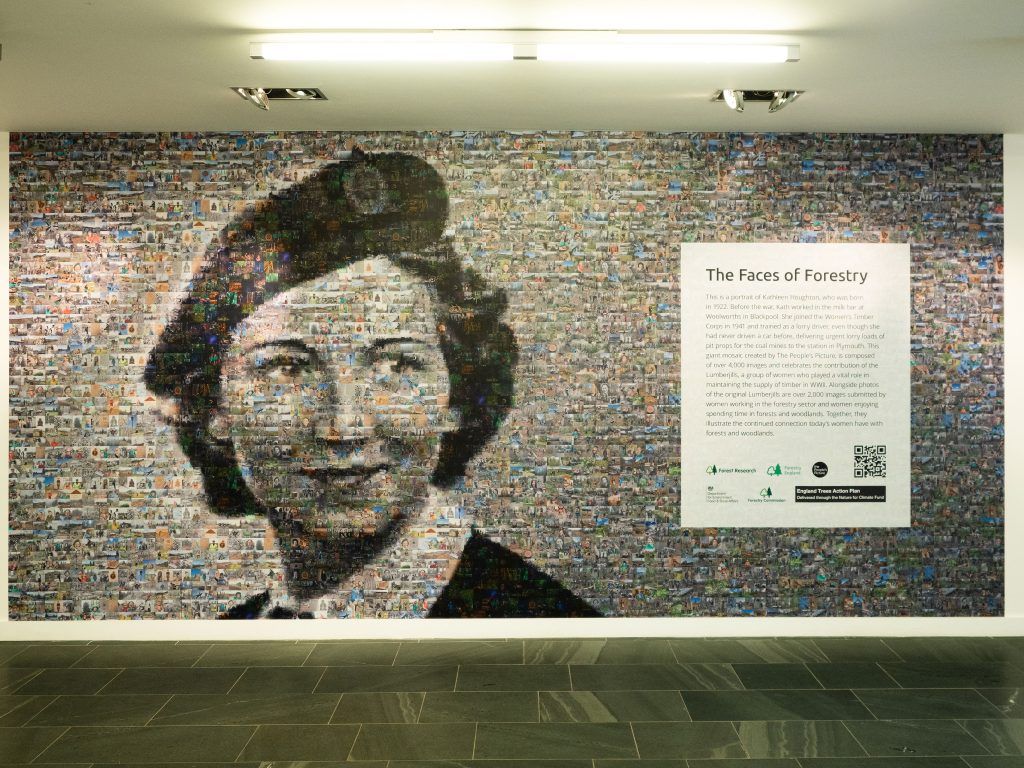
The exhibition also includes a giant photo mosaic created by the People’s Picture featuring over 2,000 publicly submitted photographs, past and present, of women from across the forestry sector and general public.
This first of its kind celebratory image has been commissioned jointly by the Forestry Commission, Forestry England and Forest Research and will be on display for the length of the installation, which is running until 10 December.
As well as celebrating the achievements of the past, the exhibition aims to inspire the next generation of women in forestry to expand, protect and improve our forests, woods and trees.
Forestry minister and member of parliament for Copeland, Trudy Harrison, said: “The remarkable story of the Lumberjills highlights the important role women play in forestry sector, which is fundamental to the country’s tree planting and net zero ambitions.
“We must create a diverse and inclusive sector, and open up even more careers for women – from foresters to ecologists, woodland officers and business planners. I’m encouraging women from all backgrounds to join this growing sector.”