
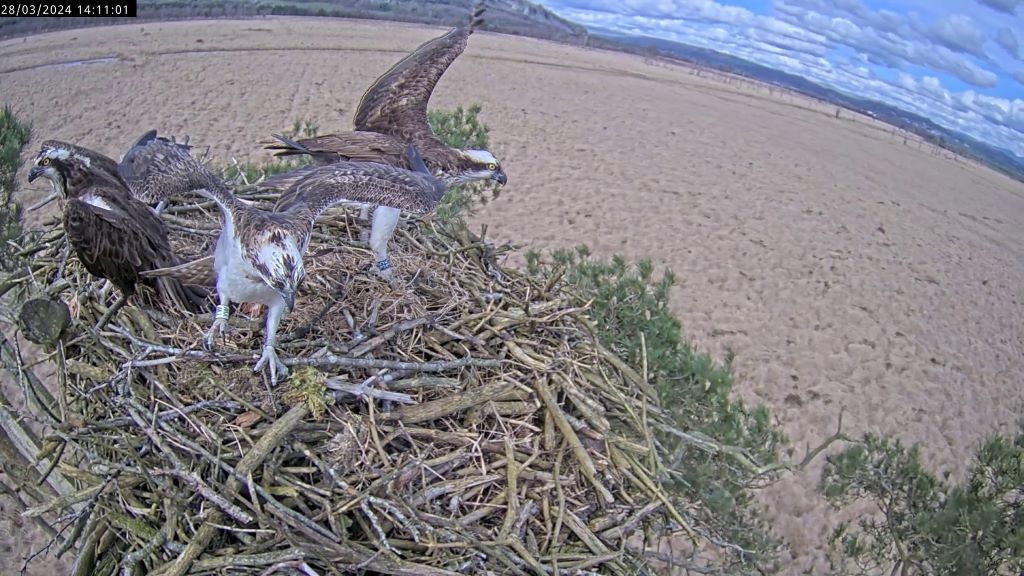
A pair of breeding ospreys have returned to a South Lakeland nature reserve for the 12th year.
The osprey pair, known as Blue 35 and White YW, first nested at Foulshaw Moss Nature Reserve, near Witherslack, in 2013 and a year later raised their first chicks. Since then they have successfully raised 27 chicks.
The male, White WY, arrived last Sunday, March 24, and female Blue 35 followed on Thursday.
Her return was quite dramatic as she arrived to find her mate and an intruder osprey in the nest, which she quickly dispatched!
Paul Waterhouse, reserves officer for Cumbria Wildlife Trust, said: “Last year we had a few nerve-wracking days, as White YW returned first but his mate Blue 35 didn’t arrive till five days later.
“She arrived a few days later this year too, but we’re delighted to see them both now back at their summer home here at Foulshaw Moss Nature Reserve, having once again safely made the 4,000-mile migration.
“Last year we celebrated a real landmark – the 10th consecutive year of osprey chicks at Foulshaw Moss. This year, will we reach another landmark? Maybe 30 osprey chicks raised here since 2014?
“What a great conservation success story this pair of ospreys are! These amazing birds of prey had been wiped out in the early 1900s by persecution, but since then, thanks to brilliant conservation efforts, their population has slowly grown. It’s fantastic to see the year-on-year breeding success of the Foulshaw pair playing a key part in this recovery.”
To view the ospreys close up, watch the 24-hour live streaming osprey cam, with sound, at https://www.cumbriawildlifetrust.org.uk/osprey-cam.
Visitors are welcome at Foulshaw Moss Nature Reserve, which is open daily and located near Witherslack, off the A590. Staff will be on hand throughout the season to ensure you get the most out of your visit, including helping you use telescopes to see the osprey nest from one of the viewing platforms.
Ospreys Blue 35 and White YW started nesting at Foulshaw Moss Nature Reserve in 2014, following major habitat restoration by Cumbria Wildlife Trust. This large-scale conservation success story saw a 900-acre site, previously drained and used for commercial forestry and farming, being transformed back into a healthy wetland, teeming with wildlife.
The nature reserve is now home not only to migrating ospreys, but other birds of prey including peregrine and marsh harrier. In the summer months, it’s alive with dragonflies and butterflies, wetland-loving plants such as Sphagnum moss and bog rosemary, and adders and lizards can be seen basking in the sun.